A long-standing Canberra family business, with three generations of 'diesel in the veins', came within days of permanently closing its doors in early 2025, a victim of the capital's punishing cost environment known locally as the 'Canberra premium'.
The Brink of Closure for a Family Legacy
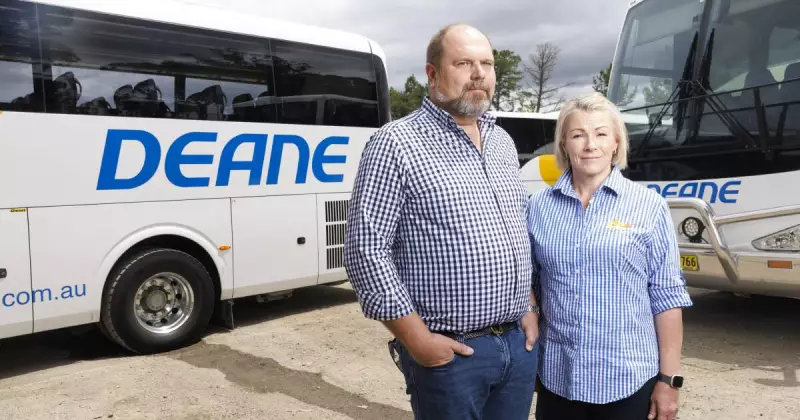
Brenton and Alyson Deane, the owners of Deane Coaches, made the painful decision to discuss shutting their Fyshwick bus depot. Facing a combination of soaring land and depot costs, alongside steep workers' compensation premiums, the financial equation had become untenable.
"I'm going to be honest, we were very close to closing this depot down," Mr Deane admitted. "It just wasn't worth it." For a family whose grandfathers started bus lines in the 1960s, retreating from the capital would have marked a bitter end to a deep-rooted legacy.

The 'Canberra Premium' and Supply Chain Isolation
The Deanes' struggle highlights a paradox in the ACT's business landscape. Despite recording the highest business growth rate by state in 2025, the territory also suffered the nation's highest rate of insolvencies. Data from the Australian Bureau of Statistics revealed the ACT had the worst four-year business survival rate in Australia.
Beyond pure costs, Canberra's isolation from major freight routes creates a significant operational hurdle. Mr Deane describes the city as "almost a rural and regional area" for logistics. Being off the main Hume Highway corridor means parts for heavy vehicles often arrive a day later than in Sydney or Melbourne, adding cost and downtime.
Administrative burdens further complicate operations. The Deanes noted a stark contrast with NSW, where a driver's licence can be verified instantly online. In the ACT, the process is manual, requiring monthly paperwork submissions to Access Canberra that can take weeks to process.
A Lifeline Partnership and Ongoing Challenges
The fate of the Fyshwick depot turned around when Deane Coaches entered a partnership with intercity operator FlixBus to run the Canberra-to-Sydney service. "FlixBus is us," Mr Deane said. "It's made it viable again." The routes are now running at 70% load capacity, and the business is planning to open a new depot in Sydney in January.
Yet, broader pressures on Canberra businesses remain intense. Before the 2025 ACT budget, Canberra Business Chamber chief executive Greg Harford warned about 40% of chamber members anticipated not being profitable, largely due to government fees, taxes, and levies.
A key cost differentiator is insurance. The Chamber's 2024 sentiment report found cross-border businesses reported workers' compensation insurance was 47% higher in the ACT than in NSW. Increased rates, new levies, and stricter payroll tax enforcement are squeezing profitability.
Despite the difficulties, the Deanes acknowledge Canberra's unique advantages. Its status as a hub for school trips, government conferences, and international tourism offers revenue opportunities unmatched by regional towns. "From a revenue point of view, Canberra is great. From our point of view [on costs], it is difficult," Mr Deane summarised.
For now, the family business is committed to the capital. But for medium-sized operators grappling with the cross-border cost disparity and bureaucratic duplication, the road ahead remains expensive. "It's just keeping up with costs," Mr Deane said. "That's the biggest challenge."