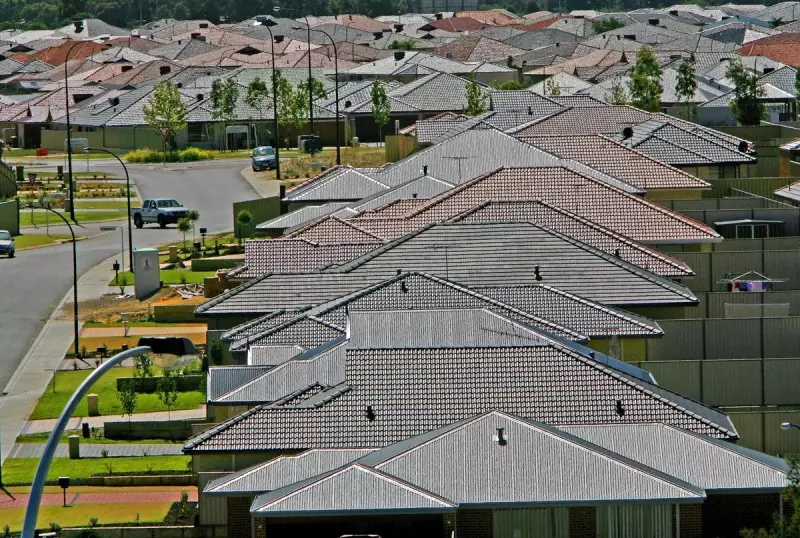
Western Australia's ambitious housing construction target for this decade is slipping further from reach, with alarming new statistics revealing the state now sits more than 4,500 homes behind its required building schedule.
Construction Numbers Paint Grim Picture
The latest Australian Bureau of Statistics data shows just 5,150 homes were completed in WA during the September quarter, representing an 11 per cent decline compared to the same period last year. This marks the third consecutive quarter of reduced home completions and represents the lowest quarterly building output since the National Housing Accord was established in mid-2024.
Under that national agreement, which aims to construct 1.2 million homes across Australia by June 2029, Western Australia committed to building 130,000 homes as its "fair share" contribution. This translates to approximately 26,890 homes annually, a target that now appears increasingly challenging to achieve.

Multiple Factors Constraining Construction
Property Council WA executive director Nicola Brischetto expressed deep concern about the state's backward progress toward its housing goals. "We need to quickly reverse this troubling trend, or affordable housing will become a distant memory for many West Australians," she warned.
Brischetto highlighted additional worrying patterns in the data, noting that residential infill projects like apartments and townhouses continue to decline. Less than 15 per cent of homes built during the September quarter came from such infill developments.
"With chronic labour shortages and rising construction costs, it is more important than ever that we look to modern methods of construction and innovative housing solutions to get more new homes into the market," she emphasized.
Workforce Shortages Exacerbate Crisis
The Cook Government's attempt to address skilled worker shortages through $10,000 relocation bonuses for eastern states and New Zealand tradespeople yielded just 1,146 workers last year. This falls dramatically short of the estimated 12,000 new tradespeople needed annually to meet construction demands.
Master Builders WA chief executive Matt Moran stressed the urgent need for both additional workers and reduced bureaucratic obstacles. "Without more tradies and skilled professionals, housing supply will not meet the demand," he stated bluntly.
Moran advocated for stronger incentives for employers to take on apprentices and emphasized the critical importance of housing remaining a top priority in the upcoming State Budget.
Political Responses and Differing Perspectives
Premier Roger Cook defended his government's efforts, asserting that WA continues to lead national performance on the Housing Accord targets. "We are substantially increasing our construction workforce through both our apprentice incentive and our worker incentives to come to Western Australia," he explained.
The Premier outlined additional strategies including working with industry to create opportunities and exploring preconstruction fabrication methods through expressions of interest to fabricators.
A State Government spokesperson pointed to positive indicators, noting that WA has experienced extraordinary growth in housing construction since COVID-19. They highlighted that 22,627 new home commencements in the year to September represented a 30 per cent increase from the previous year, the strongest growth of any state.
However, Opposition Leader Basil Zempilas offered a starkly different assessment, criticizing the government's approach as ineffective. "The Premier should be embarrassed by the ABS housing statistics," he declared. "He and his Housing Minister John Carey love to tell us they're pulling every lever or they're laser focused on Western Australia's housing crisis, but it's not working."
Glimmers of Hope Amidst Challenges
Despite the concerning completion numbers, some positive indicators emerged from the data. More than 22,600 homes commenced construction in WA in the year to September, representing a substantial 30 per cent increase from the previous twelve months.
The State Government spokesperson noted there were more than 22,000 home completions in the year to September quarter, 15.6 per cent higher than the same period the previous year, again representing the strongest increase nationally.

"We are seeing some consolidation in the housing market following this period of rapid growth," the spokesperson acknowledged, "but our State government is rolling out new measures to increase supply, with a focus on density and embracing new methods of construction."
Zempilas remained unconvinced, warning that "without a sustained lift in commencements, housing stress becomes structural rather than cyclical." He argued that WA is failing to build enough homes to meet population growth, let alone address the existing housing deficit.
The housing pressure continues to strain Perth's population, with the city's median house price recently surpassing the $1 million mark, further highlighting the affordability challenges facing West Australians.