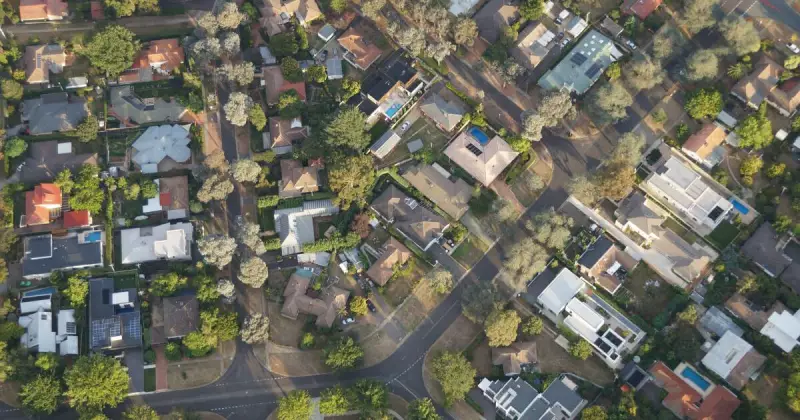
Architects Call for Heritage Safeguards in Canberra's Housing Overhaul
The Australian Institute of Architects has urged the ACT government to implement clearer planning rules that prioritise the adaptation of existing homes, arguing this approach is essential to protect heritage areas as Canberra pushes forward with 'missing middle'-style housing reforms across its suburbs.
Detailed Heritage Guidelines Needed
In a submission to a parliamentary inquiry, the institute, representing over 14,600 members nationally, stated that more detailed heritage rules are a critical component of the planned planning system overhaul. The goal is to open up Canberra's suburbs to increased density through townhouses, duplexes, walk-up apartments, and terraces, but without sacrificing potentially significant homes.
The institute emphasised that heritage policies and guidelines should be reviewed immediately to support development in appropriate areas. It recommended drawing on 'bluefield' housing models, which focus on retaining and adapting existing buildings rather than encouraging knock-down-rebuild projects.

Bluefield Approach to Preserve Character
'Such an approach could support increased density and housing choice in heritage precincts,' the submission noted. 'Undertaking a bluefield housing approach can also encourage greater consideration of future heritage value. Thoughtful design can make use of existing dwellings to ensure housing of potential heritage significance, such as mid-century homes, are not lost in densification processes.'
The Legislative Assembly's environment and planning committee is currently examining the ACT government's proposed planning changes, which Planning Minister Chris Steel aims to adopt as soon as possible. These changes are designed to facilitate missing middle housing, a term referring to medium-density options like duplexes and townhouses that bridge the gap between single-family homes and high-rise apartments.
Concerns from Heritage Advocates
The National Trust's ACT branch has expressed concerns that the proposed heritage rules may not adequately protect Canberra's unique character and its Garden City legacy. In its submission, the organisation warned that the changes could disproportionately affect inner suburbs, including heritage-listed precincts such as Ainslie, Wakefield Gardens, Braddon, Reid, Barton, Kingston/Griffith, Forrest, and Blandfordia 5.
'Unsympathetic or highly distinctive new development within these areas risks undermining the integrity of special character zones and diminishing the historic and aesthetic qualities of established neighbourhoods,' the National Trust stated.
To address these issues, the National Trust recommended a stronger and less subjective design guide, the retention of existing planning controls in heritage-listed precincts, and the implementation of different rules that reflect the distinct character of Canberra's various suburbs.
Community and Industry Perspectives
The Reid Residents' Association raised alarms about the draft missing middle housing design guide, describing it as lacking good design principles, relying on 'opaque statements,' and missing compliance mechanisms. The association argued that this threatens the heritage-registered parts of Reid, potentially leading to a loss of aesthetics, coolness, and heritage value.
'If the current 'reform' is adopted, such a laissez-faire approach would result in losing the aesthetics, coolness and heritage of the Reid Housing Precinct and other similar heritage-listed precincts. This would be a loss to the unique character of Canberra,' the residents' group said.
Conversely, the Property Council offered a different perspective, advocating for more suburban blocks to be converted from RZ1 to RZ2 zoning to allow further development. The industry group also suggested increasing height limits in RZ2 areas and reviewing the system for third-party appeals against missing middle housing projects.
'The criteria for upzoning should be carefully considered to strike the right balance between increasing housing supply and preserving Canberra's urban character,' the Property Council noted.

Balancing Development and Preservation
As the inquiry progresses, the debate highlights the tension between addressing housing shortages through densification and safeguarding Canberra's architectural and historical heritage. Architects and heritage groups are pushing for a balanced approach that ensures new housing developments do not compromise the city's distinctive character.
The National Trust summarised this sentiment, stating, 'The trust supports housing reform that is balanced, well-designed and sustainable. We encourage the Committee to recommend stronger, clearer and enforceable planning controls ... to ensure that increased housing supply does not compromise Canberra's heritage and environmental values or distinctive character.'