Western Mines Group Sharpens Focus with New Nickel-Copper Projects in Western Australia
Western Mines Group has strategically expanded its exploration footprint in Western Australia by acquiring two new greenfield projects, following a comprehensive review of its portfolio. The company has exited non-core assets to clear the way for growth, securing large-scale nickel-copper opportunities along the margins of the Yilgarn Craton.
Strategic Land Acquisition and Portfolio Restructuring
In a calculated move, Western Mines has pegged two exploration tenements covering 400 square kilometres across two distinct structural margins of the Yilgarn Craton. One of these, the Fraser Range project, is located on the southwestern cratonic margin. This lease includes ground previously explored by Legend Mining, which identified the mineralised Octagonal Intrusion, a Nova-Bollinger style nickel-copper target.
The Fraser Range project is situated just 120 kilometres southeast of Western Mines' rapidly developing Mulga Tank nickel project on the Minigwal greenstone belt and 245 kilometres east of Kalgoorlie. The broader Fraser Range region is a significant tectonic zone, stretching 425 kilometres long and 50 kilometres wide, formed during an ancient Proterozoic collision.

Previous exploration by Legend Mining highlighted the potential for a major magmatic nickel-copper system, using the Nova-Bollinger model. This model refers to high-grade metamorphic mafic-ultramafic intrusions often found in orogenic belts, characterised by geophysically conductive "eye-shaped" aeromagnetic anomalies that can host sulphide mineralisation.
Second Project and Portfolio Cleanout
The second new project, near Mt Narryer, shifts focus to a greenfield hunt for anomalous copper-nickel geochemistry along the northwestern cratonic margin, 214 kilometres northeast of Kalbarri in the Mid West region. While earlier stage than Fraser Range, Mt Narryer sits in a favourable margin position with historical geochemical anomalism suggesting magmatic nickel-copper-cobalt-PGE sulphide prospectivity.
Both projects were pegged over vacant ground, providing Western Mines with a low-cost entry into large, strategically positioned exploration areas. The company leverages its established expertise in magmatic nickel sulphide systems to maximise these opportunities.
To offset the new acquisitions, Western Mines has sold its Melita exploration licence near Leonora, which was held for gold and copper-lead-zinc volcanogenic massive sulphide targets, and surrendered its Pinyalling project in the southwest Yilgarn, focused on gold and lithium pegmatite mineralisation. This portfolio cleanout has freed up time and capital while reducing holding costs, allowing the company to concentrate on nickel-copper sulphide exploration in proven cratonic margin settings.
Flagship Mulga Tank Project Remains a Priority
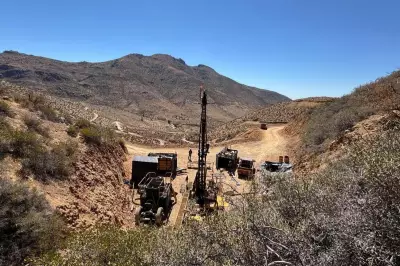
Despite the portfolio changes, Western Mines emphasises that its flagship Mulga Tank project remains a firm priority. Already hosting Australia's largest nickel sulphide mineral resource, drill work continues to target higher-grade zones within the extensive nickel system. Earlier this month, the company reported high-grade nickel assay results, including a standout intercept of 4.35 per cent nickel, reinforcing the project's potential for higher-grade sulphide lenses.
Additionally, Western Mines recently signed a memorandum of understanding with Magnium Australia to investigate the potential supply of oxidised near-surface magnesite from Mulga Tank. If successful, this could unlock a new value stream from material typically considered waste.
With a refreshed portfolio mix and new ground in proven mineral belts, Western Mines believes it is well-positioned to advance growth through discovery while continuing to develop its globally significant Mulga Tank nickel asset.