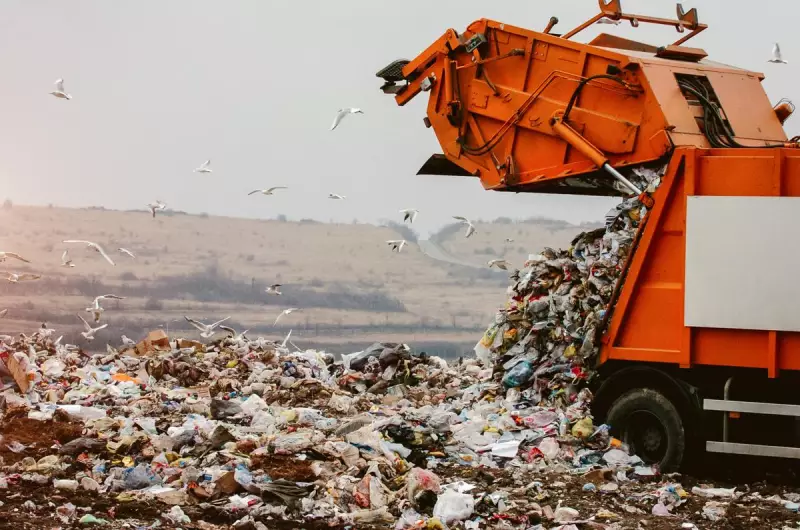
Australia is drowning in a sea of its own packaging, and a damning new report points the finger squarely at the companies that produce it. Despite years of promises and national targets, manufacturers are failing spectacularly to make their products recyclable, leading to a staggering 1.2 million tonnes of packaging waste being dumped in landfill each year.
National Targets Missed as Waste Piles Up
The latest annual review by the Australian Packaging Covenant Organisation (APCO) paints a bleak picture of progress. The report assesses performance against the 2025 National Packaging Targets, a set of goals agreed upon by industry and government to create a circular economy for packaging.
The results are dire. A critical target for ensuring all packaging is reusable, recyclable, or compostable by 2025 is completely off track. Currently, only 84% of packaging meets this standard, a figure that has barely budged in recent years. The shortfall means hundreds of thousands of tonnes of packaging are designed for the bin from the outset.

Another key goal, to have 70% of plastic packaging recycled or composted, is also failing. The rate has stagnated at just 16%. This systemic failure is a primary driver behind the collapse of major recycling initiatives like the REDcycle soft plastics program, which was overwhelmed by materials that were difficult or impossible to process economically.
The Heavy Toll of Inaction
The consequences of this corporate inaction are severe and multifaceted. Environmentally, the 1.2 million tonnes of packaging sent to landfill annually represents a massive waste of resources and contributes significantly to pollution and greenhouse gas emissions.
For consumers, it creates confusion and frustration at the kerbside. Well-intentioned Australians are left trying to decipher complex recycling symbols on packaging that often isn't recyclable in practice. This leads to contamination of recycling streams, which drives up costs for councils and can result in entire loads being rejected.
Financially, the burden falls disproportionately on taxpayers and local governments who manage waste collection and disposal. The report highlights that the lack of progress is undermining billions of dollars of investment in local recycling infrastructure, as facilities cannot secure reliable supplies of suitable material.
A Call for Mandatory Rules and Producer Responsibility
The APCO report is a clear signal that voluntary agreements are insufficient. For years, manufacturers have operated under a covenant that lacked strong enforcement mechanisms. The time for gentle encouragement is over.
Experts and environmental groups are now demanding the federal and state governments step in with mandatory regulations that enforce true producer responsibility. This means making companies legally and financially accountable for the entire lifecycle of their packaging, from design to disposal.
Potential measures could include:
- Mandatory design standards requiring all packaging to be easily recyclable.
- Financial contributions from producers to cover the cost of collection, sorting, and recycling.
- Bans on problematic and single-use plastics that consistently pollute the environment.
The message from the data is unambiguous: without legislative teeth, the 2025 targets will be missed, and Australia's packaging waste problem will continue to grow. The power—and the responsibility—to fix this crisis lies with the manufacturers who create the products, and the governments who must now hold them to account.