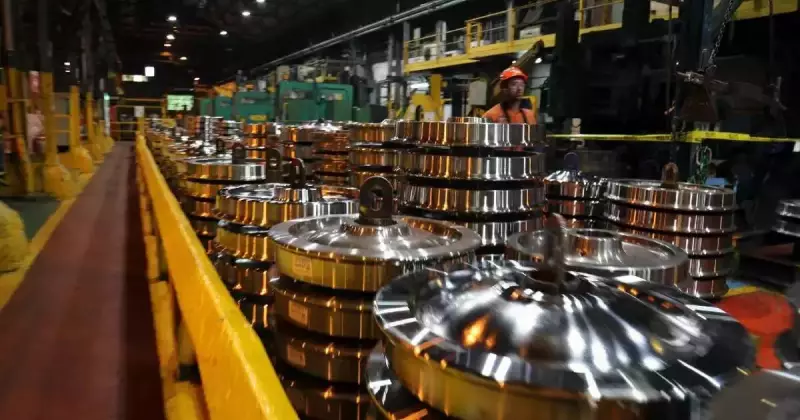
The Anti-Dumping Commission (ADC) has put forward a significant proposal to impose a 36.9 per cent duty on train wheels imported from China. This move aims to safeguard manufacturing jobs in the Hunter region, where local industry has been severely impacted by what authorities describe as dumping practices.
Protecting Local Jobs and Industry
This preliminary determination follows urgent warnings from Waratah-based company Molycop, which highlighted last year that Chinese dumping threatened the employment of approximately 150 workers. The situation is particularly acute given Molycop's recent history; the company was forced to cut 250 positions in September 2023 when cheaper Chinese-imported steel led to the closure of its Newcastle steel-making operations.
Despite these challenges, Molycop continues to produce a range of essential steel products, including train wheels, axles, and fasteners. However, the market share for locally manufactured railway wheels has plummeted dramatically. Where Australian manufacturers once supplied all wheels for the state's trains, that figure has now fallen to less than 30 per cent.

Commissioner's Findings on Material Injury
In his preliminary report, Commissioner David Latina stated that the investigation revealed sufficient grounds to conclude that brackets exported from China were being sold at dumped prices. This unfair pricing has caused what he termed material injury to the Australian industry producing similar goods.
The Australian Manufacturers Workers Union (AMWU) has welcomed this development. Brad Pidgeon, AMWU NSW & ACT state secretary, emphasised the severe pressure on businesses and workers in the rail manufacturing sector. He praised the Commonwealth government for taking decisive action to support highly skilled workers and highlighted ongoing consultations around a Jobs First Commission in NSW to further protect livelihoods and build a resilient manufacturing future.
Industry and Government Responses
Gregor Dalziel, Molycop's general manager of rail, expressed cautious optimism about the commission's determination. He noted that such an outcome is uncommon and reflects the seriousness of the issues at hand. Dalziel stressed the importance of addressing Chinese subsidisation through timely countervailing and anti-dumping measures.
He also called for clarity and certainty to allow the company to plan confidently, pointing out that securing new orders remains critical for viability. In particular, Dalziel urged the NSW state government to take decisive action on local content policies and direct Transport for NSW to actively protect Australia's sovereign manufacturing capabilities.
This issue arises against a broader backdrop of China increasingly targeting countries like Australia with underpriced goods, partly in reaction to US tariffs on Chinese products. Late last year, Industry Minister Tim Ayres met with Hunter and western Sydney manufacturers, including representatives from MolyCop, Capral, Orica, Bekaert, Sandvik, and Milltech Martin Bright, to discuss the impact of Chinese goods on local jobs and industries.
Senator Ayres acknowledged the challenging global environment, stating that unfair subsidies overseas are forcing uncompetitive products into the Australian economy, making it tougher for domestic industries to compete.