Under-Insurance Epidemic Sweeps Australian Homes Amid Soaring Costs
Millions of Australian homeowners are gambling with their financial security by adopting what experts describe as a "risky" approach to property insurance. New research reveals a widespread failure to adequately protect homes and possessions against disasters, with some properties lacking any insurance coverage whatsoever.
The Growing Crisis of Under-Protection
Families grappling with relentless cost-of-living pressures report increasing difficulty finding room in strained budgets for insurance premiums that continue to escalate due to extreme weather events and other economic factors. "We are witnessing an epidemic of under-insurance across Australia," declared Marty Sadlier, director at MCG Quantity Surveyors and property insurance specialist.
"Countless homeowners simply don't comprehend what it would genuinely cost to rebuild their property in today's market," Sadlier explained. "Demolition expenses, compliance with updated building codes, professional fees—all these elements accumulate significantly. Without a proper replacement cost assessment, people are essentially guessing, and that guessing becomes dangerously risky when your home represents your most valuable asset."

Understanding Under-Insurance and Its Consequences
Under-insurance occurs when policyholders lack sufficient financial protection to fully cover the replacement value of their insured items. The Insurance Council of Australia (ICA) highlighted this concerning trend, noting that "under-insurance is unfortunately common... making it challenging for affected Australians to restore their standard of living—whether rebuilding their home or replacing belongings to equivalent standards—if their property suffers severe damage or destruction."
Without adequate coverage, homeowners face potentially devastating out-of-pocket expenses to bridge insurance shortfalls. Compare The Market spokesperson Chris Ford warned, "Depending on individual circumstances, damage severity, existing coverage levels, and desired rebuild specifications, this gap could amount to tens of thousands or even hundreds of thousands of dollars."
The Alarming Scale of Under-Insurance
Recent polling by the Australia Institute indicates approximately 1.4 million Australian homes remain either uninsured or under-insured. Sadlier's firm suggests the rapid escalation of construction costs and inflation might mean under-insurance affects close to 90 percent of Australia's 11.4 million residential dwellings.
"The average house construction cost has surged approximately 29 to 30 percent since 2019," Sadlier noted. "Consequently, numerous Australians who believed their property insurance was 'adequate' just two years ago now find themselves significantly under-protected."
Why Australians Are Falling Short on Coverage
Escalating premiums present a critical concern for households experiencing what experts term "extreme home insurance affordability pressure," with many contemplating abandoning coverage entirely. Australia Institute senior economist Matt Grudnoff observed, "Australian families confront an almost impossible dilemma regarding home and contents insurance. They must either locate funds for exorbitant premiums or risk losing everything they own."
A recent Compare The Market survey discovered 52 percent of respondents noticed home insurance premium increases over the past year, though Ford suggested, "We suspect the actual number experiencing bill increases could be higher, given many people auto-renew or simply set and forget their policies."
Beyond premium shock, the ICA identified insufficient calculation of property and belongings' replacement values as a primary cause of under-insurance. Sadlier emphasized additional overlooked expenses including demolition, surveyor services, and temporary accommodation costs. "Under-insurance doesn't always represent a deliberate cost-saving measure—more frequently, it originates from poor understanding of actual rebuild costs and insurance mechanisms," he clarified.

Current Insurance Costs Across Australia
Analysis by Canstar revealed Australians faced 14 percent higher home and contents premiums last year, with average households paying $2,795 in 2025. Residents in North Queensland and the Northern Territory confronted the highest costs, averaging over $4,600 per policy.
Compare The Market's research demonstrated substantial quote variations between insurers. Ford cited examples including a $2,853.78 gap for identical properties in Sydney's Sans Souci and a $1,490.88 difference between cheapest and most expensive quotes for a Brisbane bayside property in Wynnum. "This evidence clearly shows the benefits of shopping around," Ford remarked.
Drivers Behind Premium Increases
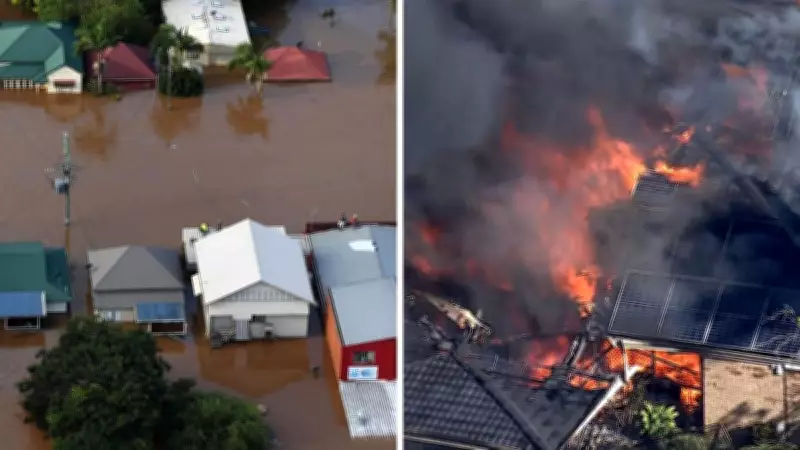
Natural disasters nationwide have exposed inadequately covered households and prompted what the Australia Institute describes as "exponential premium increases" by insurance companies. ICA data indicates extreme weather caused nearly $3.5 billion in insured losses during 2025, a year that witnessed five significant or catastrophic weather event declarations.
"For comparison, insured losses from extreme weather totalled $581 million in 2024 and $2.35 billion in 2023, illustrating the unpredictable nature of extreme weather annually," the council reported. "The initial weeks of 2026 have already seen substantial extreme weather activity, from Victorian bushfires to North Queensland monsoonal conditions."
Rebuilding expenses and reinsurance costs have also served as "major drivers" of premium pressure, while administration and staffing costs affecting multiple industries contribute additional pressure according to Canstar. However, premium increase extent depends on individual customer circumstances and chosen insurers, with existing customers potentially experiencing different changes than new policyholders.
Expert Recommendations for Adequate Protection
Insurance specialists emphasize that disaster preparedness requires confidence your coverage will sufficiently extend when needed. They recommend:
- Regular policy reviews to account for renovations and upgraded appliances
- Considering current inflation and building costs rather than historical figures
- Engaging professional surveyors to determine accurate rebuild costs
- Avoiding reliance on generic or insurer online calculators
"Those tools can prove wildly inaccurate since they frequently omit demolition, compliance costs, consultant fees, escalation factors, or detailed construction realities," Sadlier cautioned.
Despite high living costs, experts unanimously advise against reducing coverage or cancelling policies. Sadlier characterized insurance reduction as "one of the most dangerous areas to attempt saving money." Canstar data insights director Sally Tindall suggested, "If you're struggling between affording coverage or going without, consider shopping around as your initial approach."
While soaring property prices pushed Australia's 11.4 million residential dwellings toward $12 trillion in total value by late 2025, Ford warned against "insuring your home for its real estate value." "That typically includes land value. Following that approach could result in over-insurance and unnecessary premium payments," he explained.
All information contained within this article remains general in nature and does not consider individual personal circumstances. Readers should always seek independent, professional financial advice from licensed experts before making any financial decisions.