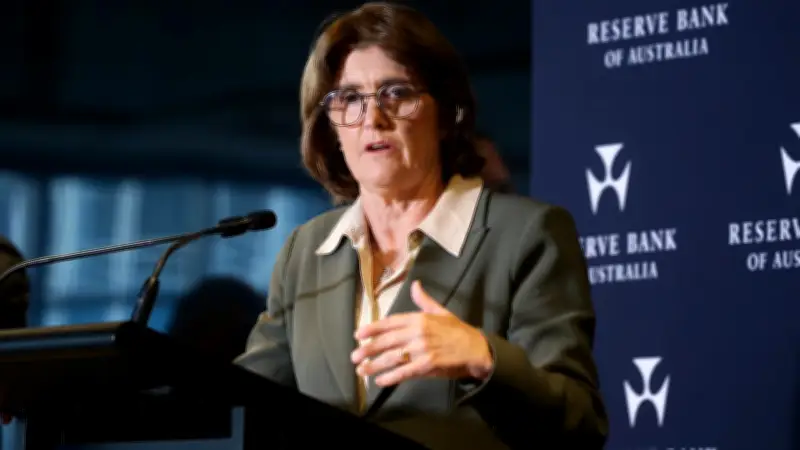
Australia’s high cost-of-living could persist for two more years, although early signs suggest higher interest rates are slowing inflation. Reserve Bank governor Michele Bullock acknowledged that many households are feeling the pinch, but emphasized that higher rates over time will help ease rising cost-of-living pressures.
Rate Hikes and Inflation
“As you know, the monetary policy board has increased the cash rate by 75 basis points in total this year,” she told a Senate budget estimates committee on Thursday. “These increases have been necessary to tighten financial conditions and slow growth in demand in the economy to ensure we get on top of inflation.”
“We have already seen some signs that this tightening has worked, but it will take one to two years for the full effects to flow through the economy,” Bullock added.

The central bank has lifted the cash rate by 25 basis points at each of its three meetings so far this year in a bid to curb rising inflation.
Impact on Households
“What these increases will do, however, is help to contain the domestic inflationary pressures and second-round effects from higher oil and commodity prices,” she said. “Now I recognise this is a difficult time for many households facing cost-of-living pressures, but it is important we bring inflation under control.”
Ms. Bullock described lifting interest rates as the least worst option, noting that higher inflation has longer-lasting impacts on everyone. “High inflation hurts everyone; it reduces the purchasing power of all Australians and it disproportionately affects vulnerable people in the community,” she said.
The governor also stated that the board would go as far as necessary to eliminate Australia’s inflation problem. “Having raised the cash rate three times, monetary policy is well placed to respond to developments,” she said. “Inflation is too high, and the board will do what it considers necessary to achieve our mandate of price stability and full employment.”
External Factors
Ms. Bullock acknowledged that the board’s actions would not stop international factors affecting inflation, such as higher fuel costs due to the US/Israel and Iran war.
Australian Bureau of Statistics data show yearly headline inflation fell from 4.6 per cent in March to 4.2 per cent in April. This decline was partly due to the Australian government temporarily halving the fuel excise and returning the GST, which eased some inflationary pressures.
However, the more important trimmed mean inflation rate—which the RBA monitors because it strips out volatile and seasonal items—rose to 3.4 per cent for the 12 months to April, indicating that underlying price pressures remain in the Australian economy. Both figures are above the Reserve Bank’s 2-3 per cent target. In its latest forecast, the Reserve Bank said it would get inflation back into target by mid-2027.