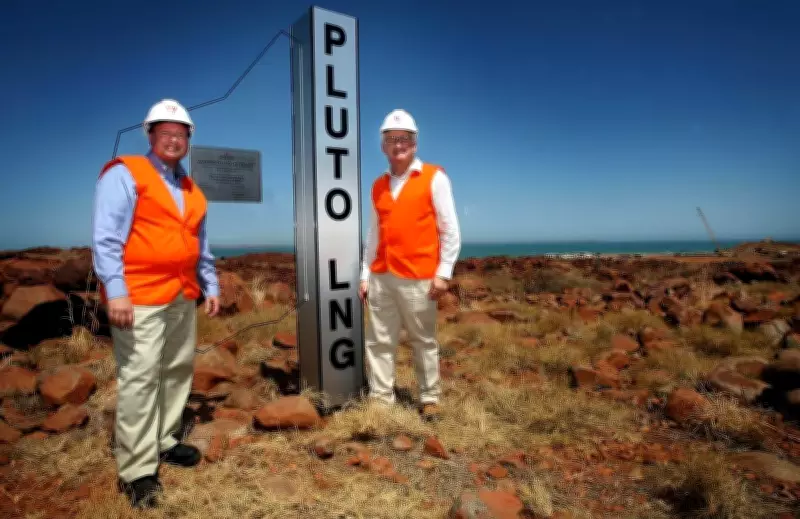
Former Western Australian Premier Alan Carpenter, widely regarded as the father of the state's pioneering gas reservation scheme, has thrown his support behind the federal Labor government's proposed national gas reservation policy, describing it as 'better late than never' while cautioning that delays could exacerbate supply challenges.
Carpenter's endorsement of Labor's gas plan
Carpenter, who served as premier from 2006 to 2008 and spearheaded WA's Domestic Gas Reservation Policy, said the Albanese government's plan to set aside a portion of gas for domestic use was a necessary step to secure Australia's energy future. He noted that WA's policy, introduced in 2006, has successfully ensured affordable and reliable gas supplies for households and businesses, and that a national approach could replicate those benefits.
'It's a welcome move, but it's come later than many would have hoped,' Carpenter told The West Australian. 'The experience in Western Australia shows that reservation policies work, and they are critical for energy security. A national scheme should have been implemented years ago.'

Lessons from Western Australia
WA's gas reservation policy requires liquefied natural gas (LNG) exporters to set aside 15% of their output for the domestic market. Carpenter said this model has insulated the state from price spikes and supply shortages seen in eastern Australia. He argued that the federal policy must be designed with strong enforcement mechanisms to avoid loopholes.
'The key is to ensure that the reservation is mandatory and enforceable, not just a voluntary arrangement,' he said. 'Without teeth, the policy risks being ineffective, and we could see the same problems that have plagued the east coast.'
Concerns over timing and implementation
While supportive of the policy direction, Carpenter expressed concern that the federal government's timeline may be too slow. The Labor government has indicated it aims to introduce legislation by mid-2025, but Carpenter warned that market conditions require urgent action.
'We are already seeing tight supply in some regions, and delays could push us into a crisis,' he said. 'The government needs to move quickly and decisively.'
He also highlighted the importance of including all gas projects, including those in the early stages of development, to ensure the policy has broad coverage. 'If new projects are exempt, the reservation will be less effective,' he added.
Political and industry reactions
The federal opposition has criticised Labor's plan, arguing it could deter investment in gas exploration and production. However, Carpenter dismissed these claims, pointing to WA's experience where investment continued despite the reservation policy.
'The industry has adapted and thrived under WA's regime,' he said. 'There is no reason why a national scheme cannot achieve the same outcome.'
Industry groups have expressed mixed views, with some warning of regulatory burdens while others acknowledge the need for policy certainty. Carpenter urged stakeholders to focus on the long-term benefits of energy security.
Broader energy context
The push for a national gas reservation policy comes amid ongoing debates about Australia's energy transition and the role of gas as a 'transition fuel'. Carpenter emphasised that gas remains essential for firming renewable energy and supporting manufacturing.
'Gas is not the enemy; it's a vital part of the energy mix,' he said. 'A reservation policy ensures that we have enough gas to support our economy while we transition to net zero.'
He also noted that the policy could help lower electricity prices for households and businesses, which have been under pressure due to global energy market volatility.
Carpenter's backing adds weight to the Labor government's proposal, as his WA policy is often cited as a successful example of government intervention in energy markets. The federal government is expected to release further details of its plan in the coming months.