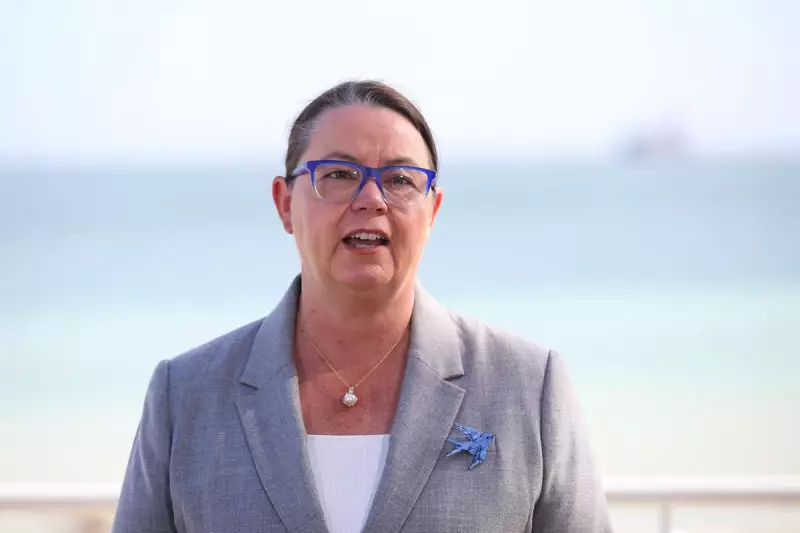
Federal Resources Minister Madeleine King has issued a stark warning that the proposed $13.5 billion sale of Western Australia's RAC could have severe consequences for local households, potentially stripping them of vital community services.
Minister's Dire Warning on Service Cuts
In a significant intervention, Ms. King expressed deep concerns that the lucrative sale of the member-owned institution to a private equity-led consortium might come at a high cost to everyday West Australians. The minister fears that the $13.5 billion deal could lead to the erosion of crucial local services that RAC currently provides to its members and the broader community.
The proposed acquisition is being spearheaded by a group known as the BGC Consortium. This consortium is backed by several major financial players, including global investment firm Macquarie Capital and the Australian Retirement Trust, which is one of the nation's largest superannuation funds.

Ms. King's primary apprehension centres on the fundamental shift from a member-focused organisation to a privately-owned entity driven by profit motives. She argues that services like roadside assistance, community grants, and advocacy on transport and mobility issues could be scaled back or become more expensive under new ownership focused on delivering returns to investors.
The Stakes for WA Members and Communities
The scale of the transaction underscores what is at stake. The $13.5 billion valuation represents one of the largest-ever deals for a member-based organisation in Australian history. For RAC's 1.2 million members in WA, the sale would translate to a substantial cash payout, but Ms. King questions whether this short-term financial gain is worth the long-term loss of reliable and affordable services.
"The risk is that these essential local services, which families and individuals rely on every day, could be diminished or disappear altogether," Ms. King stated. She emphasised that RAC's current model allows it to reinvest profits into services for members and community projects, a principle that may not survive under a for-profit structure.
The minister's warning adds a significant political dimension to the debate, placing the potential social impact of the sale squarely in the public eye. It raises critical questions about the future of member-owned assets in an era of corporate consolidation and whether such sales serve the broader public interest beyond a one-off windfall for members.
Broader Implications and Regulatory Scrutiny
This intervention signals that the proposed sale will likely face intense scrutiny, not just from regulators but also in the court of public opinion. The transaction will require approval from the Australian Competition and Consumer Commission (ACCC) and the Federal Treasury, processes where Ms. King's concerns could carry considerable weight.
The debate touches on wider themes of corporate responsibility and the role of long-standing institutions in supporting local communities. For many West Australians, RAC is more than just an insurance provider; it is a trusted entity that has contributed to road safety, tourism, and community resilience for over a century.
As the BGC Consortium progresses its bid, it will now need to address these concerns directly. The consortium may be required to provide binding commitments on maintaining service levels, pricing, and community investment to secure regulatory and member approval for the historic deal.
The outcome will set a precedent for how similar member-owned organisations are treated in future transactions, balancing immediate financial benefits against the enduring value of local, community-focused services.