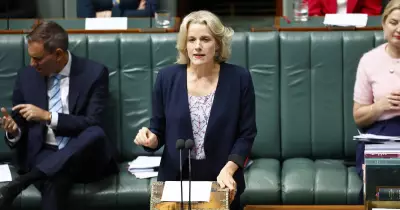
In a significant move to protect Australian consumers, the federal government, led by Assistant Minister for Productivity, Competition, Charities and Treasury Andrew Leigh, has secured a national agreement to legislate against a raft of egregious corporate rip-offs.
The End of 'Ka-Ching' Tactics and Warranty Woes
The proposed legislation, agreed to by all states and territories, aims to outlaw the frustrating and costly tricks that have become commonplace. These include stealthy recurring credit card charges that are difficult to cancel, and the practice of drip-pricing, where an item advertised for $50 balloons to $80 by the time you reach the online checkout.
It will also tackle the voiding of entire warranties due to minor delays in initial servicing, with critical details often buried in fine print. Assistant Minister Leigh, in a speech on December 1, 2025, highlighted that these are not just annoyances but the result of corporations deliberately exploiting consumer psychology.

"Corporations can engage clever psychologists to work on consumer vulnerabilities and inattention to trick them into making decisions that they would not have made if the corporation had been upfront," he stated.
A Profound Shift in Corporate Mantra
The minister's intervention comes as Roy Morgan research places trust in Australian corporations at its lowest level since measurements began in 2017. This erosion of trust is not accidental but stems from a fundamental change in corporate philosophy.
Gone is the old adage, "the customer is always right." For many large oligopolies, the modern business model now categorises customers differently. "Good" customers are passive assets who sign up, pay automatically, and never complain. "Bad" customers—those who seek service, help, or refunds—are viewed as liabilities on the balance sheet, to be discouraged or ignored through endless call centre loops and poor service.
"To lose a customer improves the bottom line. Hence, the endless la-la lines," the analysis notes, pointing out that the pre-recorded message about "higher than usual call volumes" is often a cover for understaffing designed to cut wage costs.
Building a Law for Future Tricks
A key challenge for the new legislation is ensuring it is future-proof. While banning specific practices like drip-pricing is crucial, there is a strong argument for the law to include a broad, overarching prohibition against all unfair and unreasonable conduct.
This would be backed by a stated purpose of protecting consumers. Such a framework would allow regulators to act against new psychological tricks and manipulative schemes as soon as they emerge, rather than waiting for lawmakers to play catch-up.
The success of the crackdown will ultimately depend on a fearless and well-funded consumer watchdog with the power to impose substantial fines. There are also calls for provisions allowing significant aggravated damages for consumers subjected to time-wasting run-arounds or deceptive marketing spawned by corporate misuse of behavioural science.
As Australians grow increasingly weary of corporate tactics that prioritise seamless profits over basic service, this legislative push marks a critical attempt to restore balance and fairness to the marketplace.