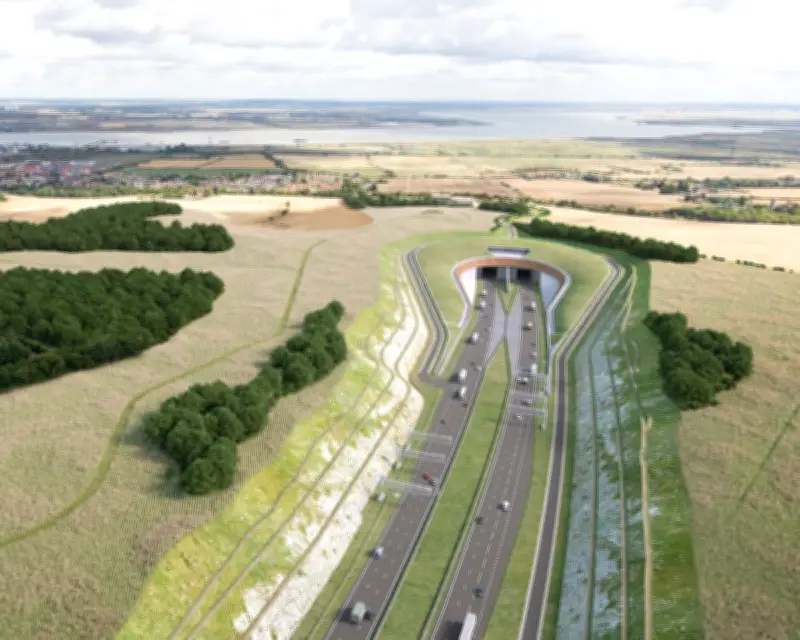
The UK's National Audit Office (NAO) has launched an investigation into the Lower Thames Crossing project, a major road tunnel scheme intended to ease congestion east of London. The probe comes amid concerns that the project's budget has ballooned to £9bn, significantly exceeding initial estimates.
Project Scope and Rising Costs
The Lower Thames Crossing, a proposed 14.5-mile road tunnel connecting Kent and Essex, was originally estimated to cost between £5bn and £7bn. However, recent reports suggest the final price tag could reach £9bn, prompting the NAO to scrutinize the project's financial management and timeline. The scheme is designed to double road capacity across the Thames east of London, including a 2.6-mile tunnel under the river.
According to the NAO, the investigation will examine the Department for Transport's handling of the project, including cost estimates, procurement, and risk management. The watchdog has the authority to summon witnesses and demand documents as part of its inquiry.

Political and Environmental Concerns
The project has faced criticism from environmental groups who argue it will increase carbon emissions and damage natural habitats. Local residents have also raised concerns about noise and air pollution. Politically, the scheme has been backed by successive governments as vital for economic growth, but delays and cost overruns have led to calls for a review.
Transport Secretary Mark Harper said the government remains committed to the project but acknowledged the need for robust oversight. "We are determined to deliver this infrastructure efficiently and within budget," Harper said. "The NAO's investigation will help ensure taxpayer money is well spent."
Previous NAO Investigations
The NAO has a track record of investigating major infrastructure projects, including HS2 and Crossrail, both of which faced significant delays and cost increases. The watchdog's reports often lead to parliamentary scrutiny and changes in project management.
The Lower Thames Crossing is currently in the pre-application phase, with a final decision expected in 2025. The NAO's findings are expected to be published later this year, potentially influencing the project's future.