One year on from the Albanese Government's resounding election victory, questions are emerging about whether the Prime Minister and his team have taken on more than they can handle. Leading up to Tuesday's Budget, a common critique had taken hold: that the government's control of 94 seats in the 150-seat House of Representatives gave it the power to be bold on policy—a once-in-a-generation opportunity to enact significant changes. Yet, Anthony Albanese's team appeared cautious, more focused on avoiding criticism than achieving lasting accomplishments.
High-Risk Tax Changes
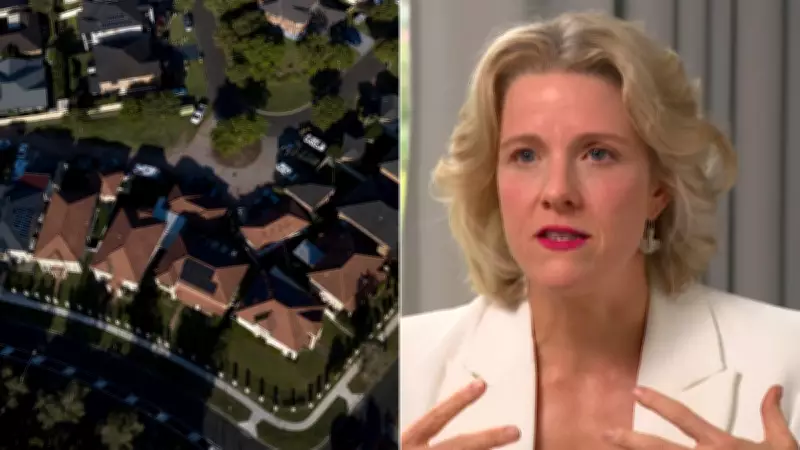
Regardless of one's stance, the Budget's capital gains and negative gearing tax changes are undeniably high-risk. The Prime Minister describes them as "the most significant reforms to tax policy and housing policy that Australia has seen." Housing Minister Clare O'Neil proudly states she is leading "without question, the most ambitious Australian agenda on housing that a government has had in this country for 70 years."
O'Neil discussed the reforms on the 7NEWS podcast 'The Issue,' insisting that her move from the high-profile home affairs portfolio to housing two years ago was not a demotion. The central role housing now plays in the government's agenda supports her claim.

"Housing is such a fundamental shaper of the lives we lead. It affects everything, your senses, safety, security," she said. "This is the foundation on which every Australian is living a life in this country, and that's why what's going on in housing just stresses me so much, especially as it affects young people."
Opposition and Critics Speak Out
The need for change is widely acknowledged. Even many baby boomers who have benefited from old tax advantages to buy multiple investment properties recognize that something is wrong when their children and grandchildren can barely hope to own a home in their working lifetimes.
"It's not just one problem," O'Neil said. "There's no silver bullet here. It's actually lots of really difficult problems that are bound together."
The Opposition has launched a full-scale attack on the changes. Shadow Treasurer Tim Wilson warned: "They're going to increase rents, build fewer homes, and kneecap young Australians by taxing their first home deposit when it's invested."
Prominent property investor Sam Gordon, who built a real estate empire on the Gold Coast after dropping out of high school, echoed these concerns. Now 36, Gordon has bought about 150 homes. He described the tax reforms as "an absolute joke."
"There's no way this isn't gonna cause massive rental stress and pressure. Immediately pulling rentals off the market. Supply is gonna dip. We're going to see big rental increases," he said. According to Gordon, his investments will be fine, but the changes will hurt those who can least afford it.
Government's Defense
O'Neil has evidence to counter these claims. "The treasury modelling says that rents might increase by about $2 a week. We get for that 75,000 renters who get to move into home ownership," she said.
Only time will tell who is right. What is clear today is that a government once seen as risk-averse is now taking a considerable gamble in housing policy—an area where mistakes could have severe consequences for many Australians.