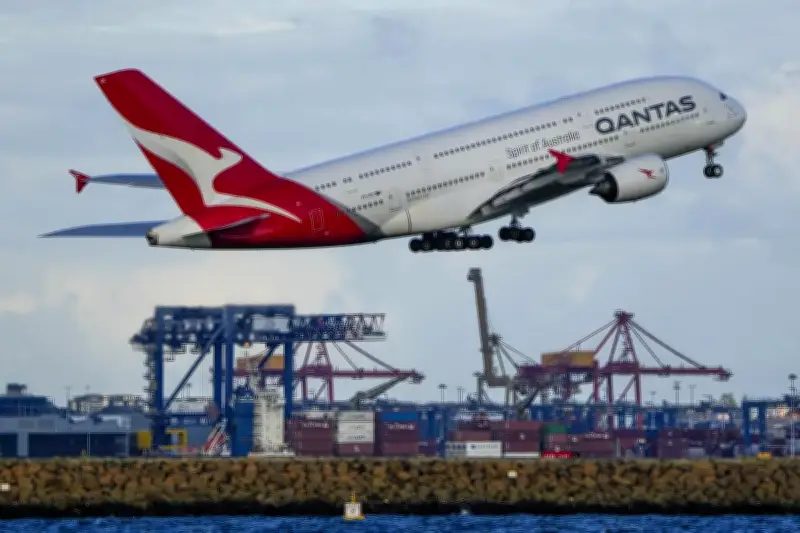
Emergency Directive Issued After Wing Spar Cracks Detected
The European Union Aviation Safety Agency (EASA) has issued an emergency airworthiness directive affecting 16 Airbus A380s, including one operated by Qantas, after cracks were discovered in a critical wing structure. The directive, issued on June 22 and effective Wednesday, identifies a “potential unsafe condition” linked to cracking in the wing mid spars, a load-bearing component essential to the aircraft’s structural integrity.
“The cracks found on certain aeroplanes could reduce the structural integrity of the wing,” EASA stated. “Airbus determined that an additional special detailed inspection has to be accomplished.” The affected fleet includes 15 aircraft operated by Emirates and one by Qantas.
Inspection Requirements and Impact on Operations
Under the directive, five Emirates A380s must undergo inspections before their next flight, while the remaining 11 jets—including the Qantas aircraft—must be checked within 25 flight cycles. Any aircraft found to have defects must be repaired before returning to service. Aviation fleet records show the affected Qantas aircraft has been undergoing heavy maintenance in Dresden, Germany, since March.

A Qantas spokesperson confirmed to 7NEWS.com.au: “We have one A380, which requires additional inspections. The aircraft was already in scheduled maintenance and we will comply with any additional requirements as a result of this airworthiness directive. There is no impact to Qantas flights as a result of the airworthiness directive.”
Recurring Wing Spar Issues
The EASA directive is the latest in a series of problems involving the A380’s wing structures. Regulators first ordered checks on some aircraft in 2019 after cracks were found in wing spars, with further inspections and repairs carried out in subsequent years. In 2022, Emirates president Sir Tim Clark noted that some A380s had been delayed returning to service while wing spar repairs were completed. Airbus has consistently maintained the aircraft remains safe to operate provided required inspections and repairs are completed.
Background on the A380 Fleet
The A380 entered service in 2007 and remains the world’s largest passenger aircraft. Airbus ended production of the superjumbo in 2021 after building 251 aircraft. Emirates, headquartered in Dubai, is the world’s biggest superjumbo carrier, operating more than 115 of the double-decker aircraft. Qantas operates 10 of the giant jets on international routes including London, Los Angeles, Dallas and Johannesburg.