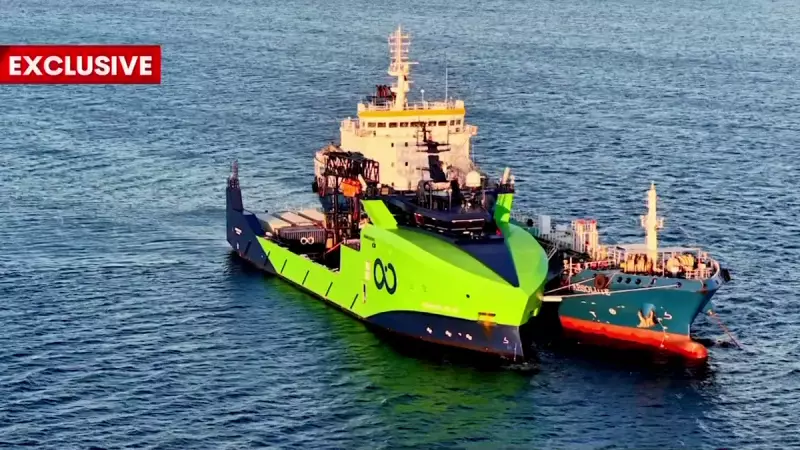
A renewed bid to solve one of aviation's greatest mysteries is now underway, as an American robotics company has departed Perth on its third major attempt to locate the wreckage of Malaysia Airlines flight MH370.
A Decade-Long Mystery Sparks New Hope
More than ten years after the passenger jet vanished with 239 people on board, the search has been reignited. The aircraft disappeared from radar in March 2014 while flying from Kuala Lumpur to Beijing. Among those on board were six Australians.
The company leading the charge, Ocean Infinity, recently resupplied in Western Australia before sailing southwest to a remote area of the Indian Ocean. This zone is defined by the last known satellite communication, or 'ping', from the doomed Boeing 777.

For families of the victims, this latest effort brings a painful mix of hope and anguish. Jeanette Maguire, sister of Australian victim Cathy Lawson, told 7NEWS she remains desperate for answers. "You can only hope and pray that this time they've got it," she said, describing herself as "very hopeful." She added, "Gut feeling is they're in the right area."
Why This Search Could Be Different
This marks Ocean Infinity's third pursuit of the missing airliner. A previous search in 2018 proved unsuccessful, and an earlier attempt in 2025 was aborted due to severe weather conditions. However, the team believes their latest underwater technology could finally crack the case.
The mission's success hinges on a fleet of sophisticated autonomous underwater vehicles (AUVs). These robots are tasked with creating highly detailed 3D maps of the seabed at extreme depths, reaching down to six kilometres below the ocean's surface.
The financial terms of the mission are equally striking. The Malaysian government has agreed to pay Ocean Infinity a sum of $100 million, but only on the condition that the company successfully locates the aircraft wreckage.
The Unprecedented Challenge of the Black Box
If the search is successful, it would achieve a historic first for global aviation. No flight recorder, or 'black box', from a commercial aircraft has ever been recovered after spending more than two years submerged in the ocean, let alone over a full decade.
Despite the immense timeframe, aviation experts maintain that the devices are built to survive. Commercial pilot Duncan Watkinson explained their resilience, stating, "They withstand that 20,000 feet of water or 6,000 metres, so essentially there's no reason why they shouldn't work." Finding the recorders could provide crucial data to finally understand the sequence of events that led to the plane's disappearance.
As the vessels continue their journey to the search zone, the world watches, waiting to see if advanced robotics and determined resolve can finally bring closure to a mystery that has endured for more than ten years.