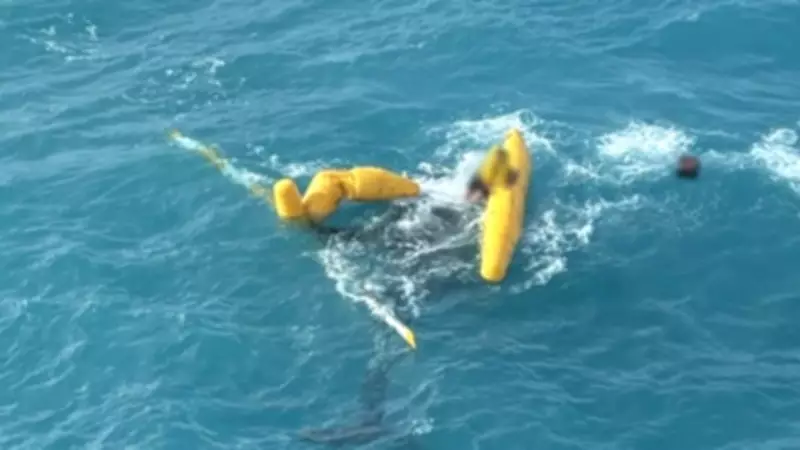
Safety Report into Helicopter Crash Prompts Urgent Call for Escape Training
A comprehensive safety report into a recent helicopter crash has sparked an urgent call for mandatory escape training for passengers and crew. The report, released by the Australian Transport Safety Bureau (ATSB), highlights critical deficiencies in emergency preparedness that could have contributed to the severity of the incident.
The crash, which occurred in a remote area near Cairns, involved a helicopter carrying five people. While all occupants survived, the investigation revealed that a lack of training on how to exit the aircraft quickly and safely in an emergency significantly hampered their escape efforts. The ATSB noted that similar scenarios have been observed in other helicopter accidents globally, where passengers struggled to operate door handles, release seatbelts, or locate emergency exits under duress.
Key Findings of the Report
The report identified several key issues: inadequate pre-flight safety briefings, complex door mechanisms that were difficult to operate in a panic, and a general lack of awareness among passengers about emergency procedures. It also pointed out that crew members, while trained, were not always able to assist all passengers effectively due to the chaotic nature of the crash.

According to the ATSB, helicopter accidents often involve rapid descent or impact, leaving only seconds to react. In this case, the pilot managed to execute an autorotation landing, but the helicopter rolled onto its side, trapping some occupants inside. The report praised the pilot's skill but emphasized that escape training could have reduced the time taken to evacuate.
Urgent Call for Industry Change
In response to the findings, aviation safety advocates are calling for immediate regulatory changes. They argue that helicopter operators should be required to provide hands-on escape training, including practice in opening emergency exits and using safety equipment, before flights. Currently, such training is not mandatory for most commercial helicopter services in Australia.
"This report is a wake-up call," said a spokesperson for the Australian Helicopter Industry Association. "We cannot afford to wait for another tragedy. We need to implement robust escape training programs now." The ATSB has recommended that the Civil Aviation Safety Authority (CASA) review its regulations to include specific requirements for passenger escape training.
Broader Implications for Aviation Safety
The report also has implications for other sectors of aviation, including fixed-wing aircraft. While airplanes have more rigorous safety standards, the report suggests that helicopter-specific training could save lives in other types of aircraft as well. The ATSB has urged airlines to consider incorporating elements of helicopter escape training into their own safety briefings.
Passengers who survived the crash have shared their harrowing experiences, describing moments of panic as they struggled to unbuckle seatbelts and push open doors that seemed jammed. One survivor said, "We were told where the exits were, but no one showed us how to use them. It was terrifying."
The ATSB's report is expected to be discussed at the upcoming International Helicopter Safety Symposium, where experts from around the world will debate the best ways to improve emergency preparedness. In the meantime, some operators have already begun offering voluntary escape training, and there is growing pressure on regulators to make it compulsory.
The call for mandatory escape training comes amid a broader push for enhanced safety measures in the aviation industry, following several high-profile incidents. The ATSB has stressed that while helicopters are statistically safe, the consequences of accidents are often severe, and every second counts during an evacuation.