A new report into a fatal mid-air collision near Sydney has revealed the two aircraft involved should have been able to see and hear each other in the moments before impact.
Investigation details eight-second window
The Australian Transport Safety Bureau (ATSB) released an updated interim report on December 4, 2025, detailing its investigation into the crash that occurred on October 26, 2024. The collision happened in uncontrolled airspace near The Oaks aerodrome in south-west Sydney.
The ATSB found the two planes "were likely within line of sight and range" for the entire period after one aircraft took off from Camden Airport. Crucially, recovered video footage shows the planes were on relatively constant flight paths for about eight seconds before the collision, with one aircraft visible through the windscreen of the other.

A tragic convergence of flights
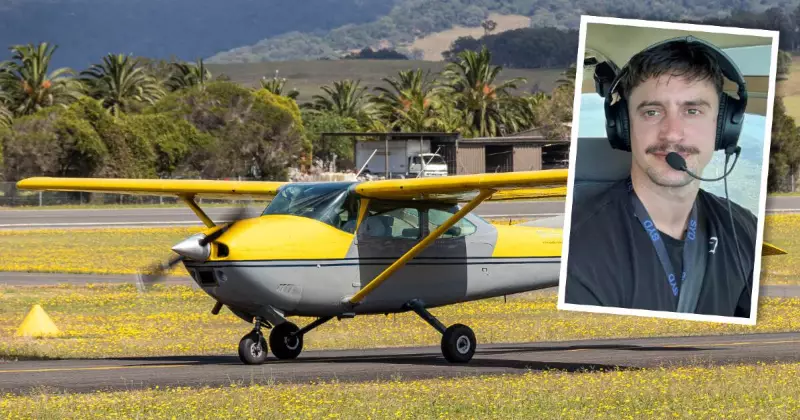
The crash claimed the lives of three pilots. Jake Anastas, 29, from Dapto, was undergoing his final commercial pilot's licence test alongside retired Qantas pilot Gary Criddle, 72. They were flying a Cessna that had departed Shellharbour Airport.
The pilot of the other aircraft, a Jabiru, was Khadervali Gagguturu, 60. Mr Gagguturu held a Recreational Aviation Australia pilot certificate and had taken off from The Oaks aerodrome. Footage from an on-board camera in the Jabiru shows him looking forward and to the right while transmitting over the flight radio during his final approach to land.
At the moment of impact, the Cessna was climbing while the Jabiru was flying straight and level. The ATSB report states there was "no avoiding action evident by either pilot."
Dreams cut short and an ongoing investigation
Jake Anastas had dreamed of being a pilot since childhood, first taking flying lessons at just eight years old. By the day of the accident, he had accrued over 237 hours of flight time. His instructor, Gary Criddle, brought immense experience with more than 25,200 hours.
Khadervali Gagguturu had recorded more than 168 hours of flying time. Prior to the collision, he had radioed friends flying in the same area to say he would return to The Oaks to land due to turbulence.
The ATSB confirmed the recovered video showed no evident technical problems with the Jabiru. The bureau also noted that any radio transmission from the Cessna on The Oaks frequency would likely have been detected by the Jabiru.
This interim report provides only factual information. A final report containing analysis and findings is scheduled for release in the second quarter of 2026.