Queensland Hot Air Balloon Incident Highlights Dangerous Repair Decision
A commercial hot air balloon flight carrying two dozen passengers narrowly avoided catastrophe when its experienced pilot decided to proceed despite significant damage to the aircraft's envelope. The Australian Transport Safety Bureau has detailed how a temporary repair using specialized adhesive tape failed during the flight, creating a potentially disastrous situation.
Launch Site Incident and Questionable Repair
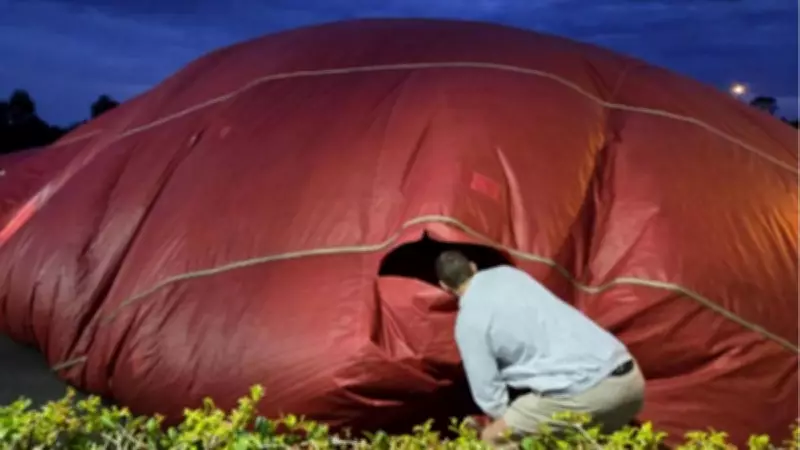
The Kubicek BB142P balloon was being prepared for a sunrise sightseeing flight near Beaudesert, Queensland, on October 18, 2025, when weather conditions took an unexpected turn. During the cold inflation process around 5am, a sudden wind shift pushed the partially inflated envelope across a field and into two light posts near a shopping centre carpark.
This impact created a substantial 45-centimetre tear in the upper section of the balloon's envelope, precisely in the area where heat and structural loads are most concentrated during flight. Despite weather forecasts indicating light winds and clearing rain, this unexpected gust caused significant damage that should have grounded the aircraft immediately.

The pilot, who also served as the balloon's maintainer, assessed the damage and made a fateful decision. After recovering the balloon with passenger assistance, he applied specialized adhesive tape over the tear and determined the aircraft could safely proceed with the scheduled flight. This decision would later be revealed as dangerously misguided.
Mid-Air Failure and Continued Flight
The balloon departed from the Beaudesert launch site with 24 passengers aboard, drifting south instead of following the intended flight path. Approximately 30 minutes into the journey, about five to ten minutes before reaching a newly planned landing site, the temporary repair began to fail.
Heat at the top of the balloon likely weakened the adhesive tape, partially reopening the 45cm tear and causing small, uncontrolled venting of air. Remarkably, the pilot reported he was not concerned by this development and continued to the planned landing site at Kerry, approximately 17 kilometres south of Beaudesert. The balloon landed safely around 6.20am, with no injuries reported among passengers or crew.
Manufacturer Limits Exceeded and Safety Violations
ATSB transport safety director Dr Stuart Godley emphasized the severity of the repair violation. The resulting tear, which the pilot estimated as 45cm, was far in exceedance of the 2.5cm limit defined by the manufacturer for this type of field repair, Godley stated. The pilot admitted he did not fully understand the manufacturer's guidance and failed to review written requirements before proceeding.
According to aviation safety standards, damage of this magnitude and location requires a sewn panel repair conducted by qualified personnel before any further flight operations. Manufacturer instructions explicitly require immediate landing after any in-flight envelope damage occurs, yet the pilot continued for another five to ten minutes to reach his planned landing site.
Commercial Pressure Influenced Dangerous Decision
The investigation revealed that perceived passenger expectations likely influenced the pilot's questionable decision-making. After hot inflating the balloon and observing no immediate degradation of the repair, the pilot likely perceived the expectations of the 24 passengers, who had already arrived for the flight, as a strong motivator to continue, Dr Godley explained.
This commercial pressure created a situation where the pilot sought solutions to proceed with the flight rather than cancelling and rescheduling for proper repairs. The weight of the perceived passenger expectation would likely have the pilot searching for solutions to allow the flight to proceed, rather than cancelling and rescheduling the flight to conduct required repairs, the safety director noted.
Safety Warnings and Industry Implications
The ATSB issued strong warnings about non-approved repairs normalizing unsafe practices and exposing passengers to serious harm. These repairs must be conducted in accordance with the manufacturer's instructions, Godley emphasized. Non-approved repairs represent a significant risk to those on board.

This incident occurred against a backdrop of concerning safety statistics for hot-air balloon operations. The ATSB released a safety study in November finding that hot-air balloons face a far higher risk of incidents than light planes or helicopters. The Queensland case demonstrates how commercial pressures can override safety protocols, with potentially catastrophic consequences.
The pilot held a commercial pilot licence from the Civil Aviation Safety Authority and had been operating sightseeing flights and private charters in southeast Queensland since 2015. Despite this experience, the investigation revealed critical gaps in safety understanding and procedure adherence that nearly resulted in disaster.