Australia's economy has hit its "speed limit," and with oil prices briefly doubling and three rate hikes looming, the worst may be yet to come, according to major banks that have slashed growth forecasts.
GDP Growth Expected to Be Flat
Growth in the Australian economy is expected to be flat when new data is released on Wednesday, but Treasurer Jim Chalmers is talking up its resilience in the face of global uncertainty. Major banks have slashed their growth expectations as surging fuel costs from the US-Iran war return the Australian economy to its natural "speed limit."
In a grim forecast update, the Commonwealth Bank has downgraded its gross domestic product (GDP) outlook to 0.0 per cent over the March quarter, or 2.1 per cent over the year. This would be below the Reserve Bank of Australia's estimates that the national economy would grow at 2.6 per cent for the 12 months until March.

In a similar warning, National Australia Bank also predicts the economy to slow to just 0.3 per cent over the March quarter or 2.4 per cent over the past 12 months.
Treasurer's Optimism Amid Gloomy Forecasts
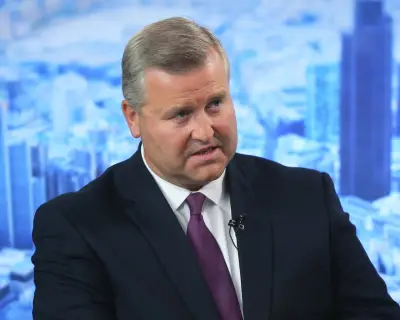
The Treasurer indicated that he would be happy with such a result, but his political opponents are expected to pounce on Wednesday's GDP data release. "Any through-the-year growth with a two in front of it would be a very welcome reminder that we confront this period of substantial global economic uncertainty and volatility from a position of genuine economic strength," he said on Tuesday.
But this could be the high point, with the CBA predicting three interest rate hikes, higher inflation, and offshore uncertainty will drag the economy lower in the June quarter.
Factors Behind the Downgrade
Both major banks have downgraded their predictions due to a larger-than-expected hit from net exports, which the Australian Bureau of Statistics said on Tuesday will take 0.8 per cent or $5.2bn out of national growth. This was due to higher oil prices and a large investment in data centres.
"We saw a significant lift in import volumes, a lot of that was chips for data centres," CBA head of Australia economics Belinda Allen said. "We are expecting net exports to detract a large number from GDP in the March quarter. We also saw some weakness in export volumes over the quarter, due to weather-related disruptions to the mining sector."
While the economy is tipped to slow in March, Ms Allen said the private sector, which is made up of businesses and household spending, held up over the first three months of the year. Spending from the federal government declined 0.2 per cent in the three months until March, far weaker than market expectations of a 0.8 per cent increase. The headline fall in consumption was driven by declines in national defence and state and local government spending.
This follows outsized strength in December 2025, in which defence spending rose 2.1 per cent over the quarter, while state and local government spending lifted 1.0 per cent. Household consumption is expected to have increased by 0.7 per cent over the first three months, accelerating from 0.4 per cent in the December quarter.
Household Spending and Company Profits
While households have spent more, it was largely thanks to electricity rebates ending, pushing quarterly consumption higher. At the same time, company profits are predicted to have slowed by 1.5 per cent in the March quarter, although this is in part due to adjusting for inventories. The fall came after two quarters of gains in company profits, which through the year is predicted to be up 3.2 per cent after taking into account inventories.
Ms Allen said overall Wednesday's GDP figure is likely to show a "not bad" result, but it was too early for the full impacts of the US-Iran war to have impacted the economy. "I think it reiterates the Australian economy was in a decent position leading into these additional headwinds," she said. "On our forecasts GDP is still around 2.1 per cent and around our potential growth forecast or speed limits of the national economy."

Impact of the US-Iran War
Before the Middle East conflict in January, oil prices were about $US56 ($A80) per barrel, before temporarily touching $US120 (A$167) per barrel, its highest price since mid-2022. This was due to the critical Strait of Hormuz, which had around 20 per cent of the world's oil and gas flowing through, shutting down in response to the war in the Middle East.
Ms Allen said a lot of the issues facing the Australian economy were due to overseas issues. "If you look at a measure of the domestic economy, it is still relatively solid," she said.