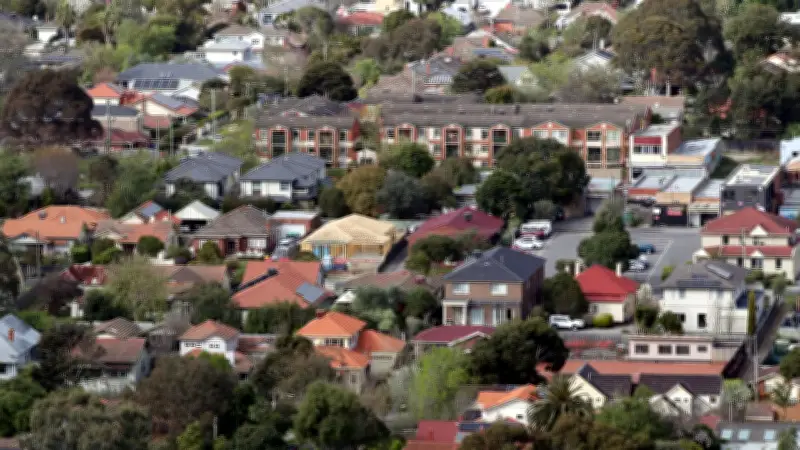
Property prices are falling across Australia’s housing market as higher interest rates and Labor’s housing tax changes weigh on buyer confidence.
Price Declines in Major Cities
New figures from property data firm Cotality show Sydney and Melbourne property values continued to decline through May, while auction clearance rates slumped to levels not seen since the pandemic. Sydney dwelling values fell 0.9 per cent last month, declining 2.1 per cent over the past three months. Melbourne values dropped a further 0.8 per cent in May, taking quarterly declines to 2.3 per cent.
The downturn comes after Treasurer Jim Chalmers unveiled sweeping changes to negative gearing and capital gains tax in last month’s budget, while the Reserve Bank lifted interest rates to 4.35 per cent.

Auction Clearance Rates Slump
New figures from Cotality show the national average clearance rate across capital cities was about 50 per cent in the second half of May. Sydney’s housing downturn has been driven primarily by detached houses. The city’s median house value fell from above $1.6 million in February to about $1.58 million. In Melbourne, median house values slipped to $958,000 after another monthly decline, while Canberra also recorded weaker conditions.
Government Response
Housing Minister Clare O’Neil has rejected suggestions that Labor’s housing tax changes are the primary cause of falling prices, arguing higher interest rates are playing a larger role. Treasury modelling forecasts the government’s reforms will reduce house prices by about two per cent, although some industry figures have warned the decline could be significantly larger. “I don’t get into a speculation about what happens with property prices in this country,” Ms O’Neil told the ABC on Sunday. “What I can tell you is that our government is fiercely committed to building more homes and getting more first-time buyers.”
Industry Warnings
Azura Financial director Tom Hawley believes the market has not yet fully absorbed the impact of Labor’s housing reforms, warning conditions are likely to deteriorate further in coming months. “I think the data is a bit delayed... it's a bit worse than people think,” he told Sky News on Monday. Mr Hawley said recent property figures largely reflected sales from earlier in the year, before Labor announced major changes to negative gearing and capital gains tax arrangements. He said borrowing power for investors had already fallen sharply. “The borrowing capacities for investors have reduced by up to 15 per cent now because of these negative gearing changes,” he said. Mr Hawley warned the impact would become clearer over the coming months as more recent transactions flowed into housing data.
Interest Rate Outlook
The warning comes as economists continue to forecast further pressure from interest rates. Barrenjoey head of economic forecasts Jonathan McMenamin told Sky News that a June rate rise appeared unlikely. However, he does not believe the Reserve Bank's tightening cycle is finished. “We do think that we'll still see another rate rise in August,” he said. Mr McMenamin said underlying inflation remained too high for the Reserve Bank to declare victory. “We're expecting the RBA's preferred measure of inflation to annualise around four per cent come the June quarter,” he said. “Clearly four per cent at an annualised rate is well above the RBA's target of 2.5 per cent.” He said another increase would push mortgage repayments to a new peak. “It means that people would be paying a new high in their monthly mortgage repayment, something they haven't experienced yet,” he said.

Impact on Buyer Sentiment
The prospect of further rate rises is already weighing on buyer sentiment, according to Mr Hawley. “If you have bought in the last six or 12 months, I guess you'd be feeling somewhat deflated with the direction the property market is going,” Mr Hawley said. He argued property markets typically required a major catalyst before changing direction, with “the catalyst in this instance being interest rates rising”. “Another sort of kick in the gut, I guess you'd say, was these tax changes has led to a rapid loss of confidence,” he said. Mr Hawley said many buyers who had planned to purchase property were now delaying those decisions. “I think it's a lot of people thinking, 'Well, I was going to buy a property, but I'm going to reconsider my plans because I'm not really sure what's happening',” he said. He said slowing economic activity was adding to uncertainty. “The business community, the economy seems to be slowing down and confidence is slowing down,” he said.
Self-Fulfilling Prophecy
For the housing market, Mr Hawley believes falling confidence risks creating its own momentum. “If the property market's moving lower, what is the reason to go out and buy something?” he said. “That sort of creates then a self-fulfilling prophecy of prices continuing lower.” He said he was already seeing that trend emerge. “I know in our market in particular, the prices are resetting significantly lower already.”
First-Home Buyer Concerns
While the government has argued its housing reforms will improve affordability and help first-home buyers, Mr Hawley questioned whether some recent policies were working against one another. He pointed to Labor's expansion of schemes allowing buyers to enter the market with deposits as low as five per cent. “They expanded this five per cent scheme and encouraged a significant amount of people to go and buy their first home with a five per cent deposit,” he said. “A lot of those buyers would literally be sitting in negative equity now and probably going to go through a pretty tough period.”