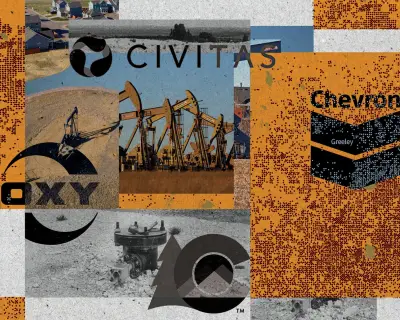
An investigation by the Guardian and DeSmog has revealed that Colorado regulators allowed the state's three largest oil companies to avoid providing over $1 billion in financial guarantees for cleaning up thousands of old and polluted well sites. The state's energy and carbon management commission (ECMC) waived bonding requirements for more than 14,600 plugged wells where cleanup had not been completed, undermining a key incentive for timely restoration.
Billions in cleanup costs unsecured
Colorado law requires oil companies to post financial collateral — like a security deposit — before drilling, which is released only after wells are plugged and land is restored. However, the ECMC exempted thousands of plugged wells from this requirement, even though they still need remediation and reclamation. The three biggest operators — Chevron, Oxy (Occidental Petroleum) and Civitas Resources — collectively own over 14,600 such dead wells, overlapping with more than 6,000 open spill sites where toxic chemicals may contaminate soil and water.
Had the ECMC followed its own rules, it could have demanded up to $1.3 billion in bonds from these companies. Instead, it collected just $146 million — about 7% of estimated cleanup costs. At the current pace, restoration will take decades.

Regulatory failure despite reform
In 2019, Colorado passed SB-181, a landmark law intended to shift the ECMC's mission from fostering oil and gas development to regulating it in the public interest. The law mandated that the commission collect enough bonding to eliminate public risk. But during rulemaking, the ECMC allowed companies to exclude plugged wells from bonding calculations, directly contradicting its own rules requiring all wells to be covered until cleanup is complete.
“It is unambiguous that these obligations are owed to the people of Colorado,” said Dwayne Purvis, a petroleum engineering consultant. “I don’t see any reason that the work should not be done promptly, and I don’t see any reason that it shouldn’t be fully bonded.”
Falsified data and slow action
The investigation also found that contractors for Chevron, Oxy and Civitas falsified environmental paperwork at hundreds of sites, including reports on pollution levels in water and soil. The ECMC has acknowledged the falsifications but has not fined the companies or increased their bonding. Meanwhile, the agency's director has failed to complete legally required annual reviews that could trigger additional bonding.
“Exempting plugged wells that haven’t passed final reclamation from full bonding requirements subverts the entire financial assurance process and explicitly violates the statute,” said Dan Leftwich, an environmental lawyer who helped draft SB-181.
Public health and environmental toll
Residents near drilling sites report headaches, nosebleeds and respiratory issues. Christiaan van Woudenberg, a software developer turned activist, mapped thousands of spills in Weld County, one of the most heavily drilled areas in the U.S. “We’re trying to show the oil and gas infrastructure burden on this state,” he said. “There’s heaps and heaps of it. It is everywhere.”
The ECMC defended its actions, stating it uses a “risk-based system” and that Colorado's framework “strikes an important balance.” Chevron said its approach is consistent with state rules. Oxy and Civitas did not respond to requests for comment.
With oil production past its peak in Colorado and cleanup costs rising, experts warn that delaying action will only increase the burden on taxpayers and the environment. “The easiest time to pay for the cleanup of Colorado, for the benefit of future generations, is right now,” Purvis said. “It only gets harder the longer you wait.”