WA Mouse Plague Horror Stories Emerge as Infestation Worsens

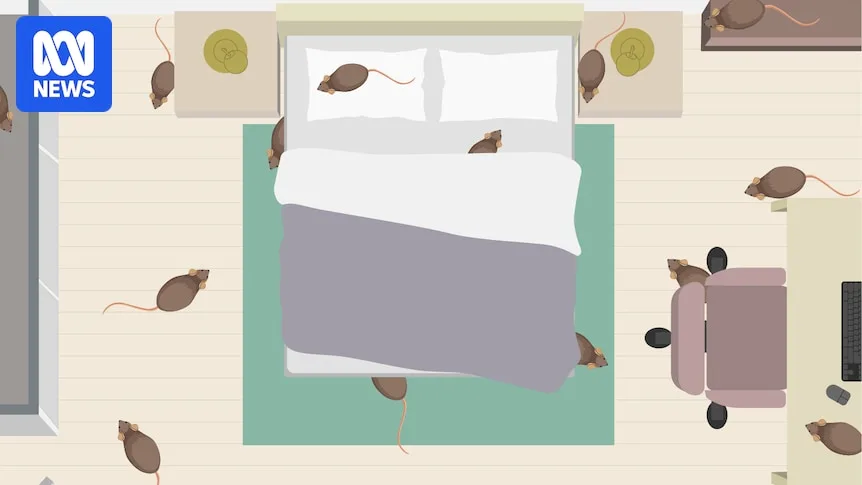
As Western Australians battle a rodent plague, regional residents have begun recounting horrifying experiences of mice in beds and cars. Thousands of rodents and burrows have been found in crops across the Mid West, Wheatbelt and Goldfields regions over the past month, with agriculture experts warning the so-called “mouse plague” could cost the industry more than $1 billion.

CSIRO Mouse Researcher Reports Alarming Numbers

CSIRO mouse researcher Steve Henry said a mouse plague is typically declared at roughly 800 mice per hectare, but WA landholders have reported more than 8000 in recent weeks. As the infestation continues, West Aussies across the regions have been candid about how the influx of rodents has impacted their everyday life.

Horrifying Encounters in Beds and Cars

One concerned South Australian farmer revealed his daughter, who lives in the Shire of Moora in WA’s Wheatbelt, was awoken to one of the pesky rodents crawling inside her bed. “I have learned to mouse-proof our house . . . it’s pretty horrific,” he told Daily Mail about the infestation.

Wide Pickt banner — collaborative shopping lists app for Telegram, phone mockup with grocery list

A woman in Gidgegannup revealed the rodent problem at her home had become so bad, mice had started to eat their way through the wiring of her vehicle. “My car’s wiring was chewed by the mice . . . they did about $9000 in damage,” she posted on social media.

A Wheatbelt woman revealed she was “dreading” the impacts of the current plague, after her belongings were left irrevocably damaged by mice last year. “We had extensive damage, they ate the electric cables on our four-wheel-drive and right through the child’s car seat and seatbelt,” she lamented.

Business Owners Seek Advice

Elyssa Giedraitis, a Wongan Hills business owner, took to TikTok to ask for advice on safely dealing with the infestation while having children in the home. “I live in town, I thought I was safe from this mouse plague,” she said in a video. “I was not: there are mice everywhere . . . how am I supposed to get rid of these things?”

Local Government Officials Speak Out

Shire of Morawa president Karen Chappel has spoken out about the impact of the plague, telling the MidWest Times that her evening commute now sounds like “driving over bubble wrap that you pop”. Ms Chappel also shared the experience of a Morawa local, who she said had their toe bitten in the night by one of the rodents. “It’s quite mentally distressing, it’s having a huge impact on businesses,” she said.

Economic Impact on Agriculture

Wheatbelt farmer Duncan Young, who is the western regional director for Grain Producers Australia, said the WA outbreak was just the latest challenge affecting the agricultural industry. “You’ve got massive fertiliser hikes due to the war (in Iran), you’ve got fuel shortages and fuel price hikes,” he told Daily Mail. “This outbreak is another cost on top of that, and potentially in a year where budgets were already pretty tight before the war began. Farming is a very big revenue driver for Australia with our exports. Potentially, you could be talking about over a billion dollars worth of damage.”

Farmers across the State are already hundreds of thousands of dollars down due to the plague, with Latham farmer Dylan Hirsch revealing the mouse plague has already cost his farming operation $1m. “We’ve spent approximately $100,000 on mouse bait and spreading operations this year. Normally we would budget around $30,000,” Mr Hirsch said. “But the biggest impact has been crop damage. We’ve had early-sown canola paddocks completely damaged by mice, reducing yield potential by about one tonne per hectare [around $800 per hectare] and requiring resowing at about $200 per hectare.”

Emergency Permits Approved for Stronger Baits

After weeks of WA residents begging for stronger action against the plague, the agricultural industry’s regulatory authority has finally approved emergency permits to help combat the issue. The Australian Pesticides and Veterinary Medicines Authority (APVMA) voted to approve the use of ZP-50 baits, a higher-strength poison that is designated for properties with higher mouse activity. The stronger poison approval comes after the Cook Government announced a $200,000 contribution to help local governments battle the mouse plague.

Pickt after-article banner — collaborative shopping lists app with family illustration