WA's $130m Beef Trade Hit: China's Tax Shakes Industry
WA beef exports face $40m hit from China tax

The full impact of China's sudden trade restrictions on beef is coming into sharp focus, with Western Australia's lucrative export market facing a direct hit. New analysis reveals the state shipped almost $130 million worth of beef to China in the past year, a trade now under severe threat from a hefty new tax.

China's New Year's Eve Shock to Global Beef Trade

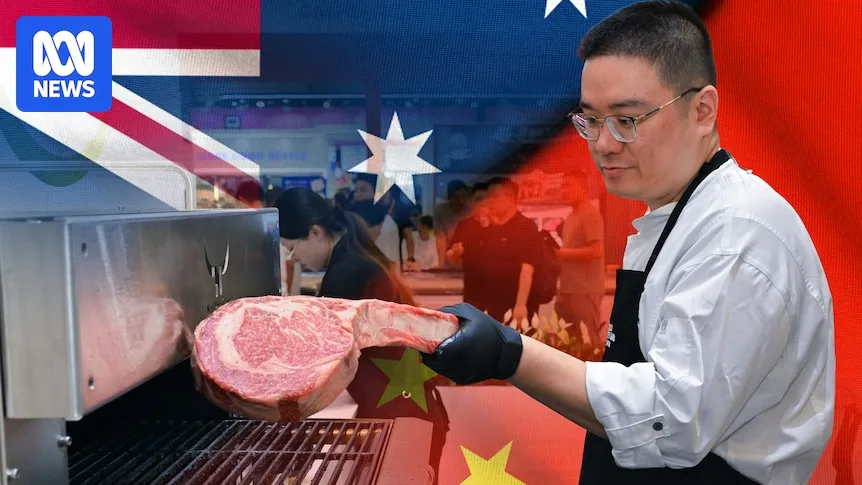
In a move that sent shockwaves through the global agricultural sector, China's Ministry of Commerce concluded a lengthy investigation and imposed a cap and tax on imported beef effective from New Year's Eve. The world's second-largest economy announced that Australian beef exports will be limited to 205,000 tonnes for 2026. Any shipments beyond this quota will be slapped with a punitive 55 per cent tax.

This action was not isolated to Australia. Other major beef producers including Brazil and the United States also faced similar restrictive measures. For Australia, the timing and severity of the announcement have sparked deep concern within the agricultural community and at government levels.

Western Australia's Significant Exposure Revealed

Data from the Department of Primary Industries and Regional Development (DPIRD), obtained by The West Australian, paints a clear picture of WA's vulnerability. China has been the top destination for WA beef for eight consecutive years. Through 2025, sales to China were worth $129 million, involving more than 13,000 tonnes of beef.

This volume represented approximately 29 per cent of Western Australia's total beef trade. Industry analysts now estimate that between 20 to 30 per cent of national production could be subject to the new tax. For WA, this translates to a potential financial impact on $25 million to $40 million of exports.

Major local suppliers, such as the state's largest processor Harvey Beef, are now forced to urgently seek alternative markets to offset the potential losses from their key Chinese trade.

Government Response and Industry Advocacy

The State Government has moved swiftly, seeking a detailed briefing from Federal officials to clarify the precise ramifications for WA producers. At a national level, the Federal Government is expected to leverage the existing China-Australia Free Trade Agreement (ChAFTA) in negotiations.

This agreement reportedly allows for 190,000 tonnes of tax-free beef exports, with a 12 per cent tariff applied to additional shipments. Federal negotiators will aim to secure a better outcome before the new quota is reached, with analysts predicting the threshold could be met by the middle of this year.

The political response has been one of unified concern for the sector. Nationals leader David Littleproud labelled China's announcement as "devastating to the beef industry". Prime Minister Anthony Albanese sought to reassure producers, stating the government would be "advocating" strongly for them.

"This is something that wasn't Australia being singled out, this is a general position that China has put," Mr Albanese said, while proudly declaring Australian beef as "the best in the world".

From Beijing, a spokesperson for China's Ministry of Commerce defended the measures as "moderately strong", telling reporters the purpose was "to help domestic industries overcome their current difficulties, not to restrict normal trade".

The coming months will be critical for Western Australian beef producers as they navigate this new trade landscape, diversify their markets, and rely on diplomatic efforts to mitigate the damage to one of the state's key agricultural exports.