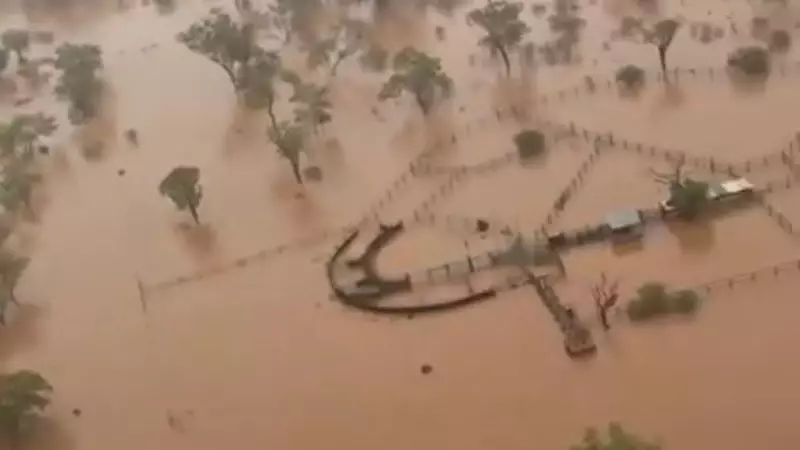
Farmers across Northwest Queensland are facing a monumental clean-up and heart-wrenching livestock losses after being blindsided by what locals are calling an "unprecedented" and terrifyingly rapid flash flood event.
A Deluge of Unimaginable Speed
The disaster began on Saturday, March 16, when an intense rain band, the remnants of ex-Tropical Cyclone Megan, parked itself over the parched region. While the land was thirsty, the sheer volume and speed of the downpour proved catastrophic. In less than 24 hours, some areas were inundated by more than 200 millimetres of rain.
For cattle graziers like Julia Creek farmer Shane McCarthy, the situation turned from concern to crisis with shocking speed. "We've never seen a flood this fast," McCarthy stated, capturing the sentiment of many. Water that was a manageable flow at 9 am became a raging, kilometre-wide torrent by early afternoon, cutting off properties and trapping livestock before many had a chance to react.

The flooding centred on the Julia Creek and Richmond shires, with the storm cell stubbornly sitting over the upper reaches of the Flinders River catchment. This caused creeks and rivers to rise at a rate that veteran farmers, accustomed to the region's typical slow-moving flood plains, found utterly bewildering.
Heartbreak on the Land and a Community Response
The human and economic toll is still being calculated, but the immediate impact on livestock has been severe. With water rising faster than cattle could move to safety, significant losses are feared. The sight of stranded and drowned animals is a devastating blow to producers already battling years of drought followed by recent bushfires.
Beyond the livestock, the floodwaters have caused extensive damage to critical infrastructure. Fences have been swept away, roads and bridges have been cut, and homesteads have been isolated. The damage to the region's road network is particularly severe, hampering both emergency response and the assessment of the full scale of the damage.
In the face of this adversity, the tight-knit rural community has immediately swung into action. Neighbours are helping neighbours, with those on higher ground using helicopters and boats to check on isolated families and drop supplies. Local councils and the Queensland Department of Agriculture and Fisheries have begun preliminary impact assessments.
The Long Road to Recovery Begins
As the waters slowly recede, the enormous task of recovery comes into focus. The immediate priorities are ensuring the welfare of isolated residents, attending to any remaining livestock in distress, and beginning the grim task of carcass disposal to prevent disease.
The longer-term challenges will be immense. Rebuilding hundreds of kilometres of fencing is a multi-million dollar, labour-intensive job. Restocking properties will take years, and repairing the region's battered roads will require significant state and federal support. The psychological impact on farmers who have endured consecutive natural disasters cannot be underestimated.
This unprecedented Northwest Queensland flood event has starkly highlighted the vulnerability of agricultural communities to increasingly volatile weather patterns. While the region is no stranger to flooding, the freakish speed of this inundation has left an indelible mark, prompting calls for a review of emergency warning systems for fast-onset events in remote areas.
The spirit of resilience that defines the outback is being tested once again, as farmers and towns across the Gulf of Carpentaria region dig in for a long and difficult recovery.