Terrain Minerals has launched one of its largest induced polarisation (IP) geophysical surveys to date at the company's Smokebush gold and silver project, situated 350 kilometres north of Perth in Western Australia. The survey is designed to identify repetitions of the Lightning-style gold target, a key focus for the company.
Survey details and objectives
The survey will cover the granted mining lease in the extreme northern section of the Smokebush project, which hosts the Lightning and Monza gold deposits along with untested surrounding ground. It has been carefully planned to pinpoint parallel or linked gold-bearing structures within the same north–south shear corridor and near-granite structural setting that hosts both deposits.
Terrain has a proven track record with IP technology at Smokebush. A 2023 IP program over Lightning, located 50 metres west of and parallel to the Monza structure, identified a 600-metre chargeability anomaly. Subsequent drilling delivered multiple high-grade gold intercepts, including 13 metres at 8.13 grams per tonne (g/t) gold from 122 metres depth.

More recently, an IP survey at the Wildflower prospect defined three targets extending over 800 metres. Reverse circulation drilling was completed earlier this year, with assay results expected shortly.
Exploration pipeline and resource estimate
This latest IP survey is intended to keep the company's exploration pipeline well-stocked as it approaches a maiden 'starter' mineral resource estimate at Lightning, scheduled for July. Management believes that the application of modern geophysics could sharpen targeting and unlock a robust follow-up program.
The new survey area lies within the Mt Mulgine intrusive corridor, situated between Lightning to the east and the historic Black Dog open-cut mine, which is located 4 kilometres west of Terrain's northern mining lease boundary.
The western portion of the company's granted mining lease has never been tested with modern IP and represents the largest remaining untested area within the lease. While in the field, Terrain will also conduct infill IP survey lines across the nearby historic Hurley prospect, 2 kilometres southeast of Lightning and Monza.
Previous exploration at Hurley
Shallow drilling at Hurley by previous explorers returned anomalous gold values, including 10 metres grading 1.4 g/t gold from 15 metres depth, within a 250-metre by 250-metre soil anomaly.
Terrain Minerals executive director Justin Virgin expressed enthusiasm about the target area: "What excites us the most is that this target area has never previously been tested with modern IP, despite sitting within the same structural corridor as Lightning. The geology, structure and regional setting all suggest there is strong potential for additional parallel gold-bearing structures across the broader Smokebush system."
Induced polarisation as a geophysical tool
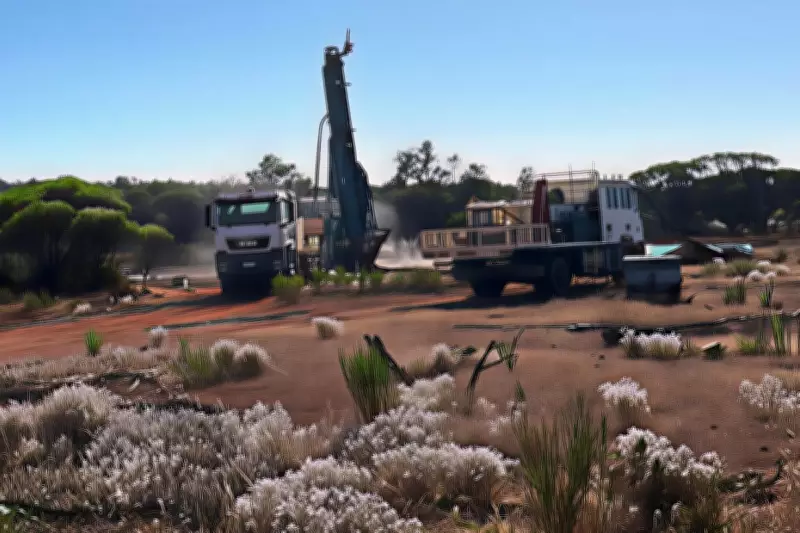
Induced polarisation is a handy, rapidly deployable and non-intrusive geophysical technique that can highlight chargeable sulphide minerals often associated with gold systems. This method assists explorers in aligning drill targets beneath shallow cover without the need for blind drilling.
Field data acquisition is expected to take between 11 and 20 days, followed by processing and modelling through June. Drill-ready targets are anticipated to be reported in July, alongside the company's upcoming Lightning resource numbers.
Follow-up drilling across the broader Smokebush system is planned for the second half of 2026.
With Wildflower assays on the horizon and a fresh batch of Lightning-style targets likely to emerge, Terrain is gearing up for a busy period of news flow as it aims to demonstrate that Lightning could be the first of many discoveries in a much larger mineralised system.