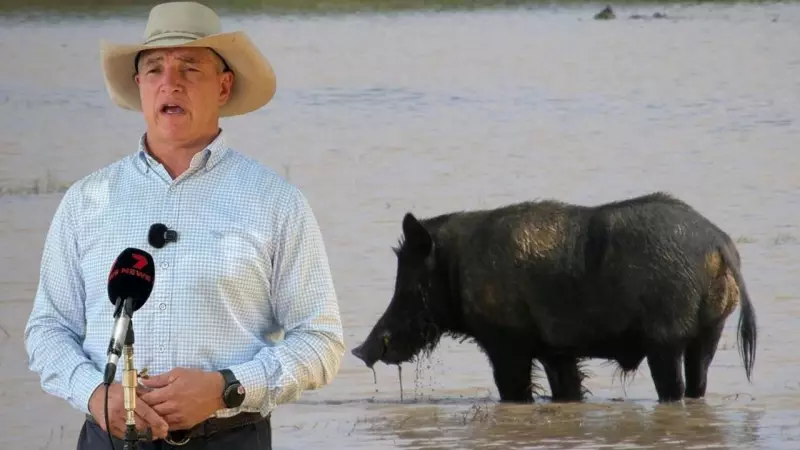
North Queensland federal MP Bob Katter has issued a stark call to arms, urging authorities to deploy aerial shooters against feral pigs currently stranded on islands in the Gulf of Carpentaria. The opportunistic pests have been marooned by recent floodwaters, creating what the politician describes as a perfect chance for a major cull.
A Unique Opportunity for Pest Control
Mr Katter, the member for Kennedy, argues that the unusual environmental conditions have presented a rare tactical advantage. Flooding from monsoonal rains and ex-Tropical Cyclone Kirrily has isolated large numbers of feral pigs on high-ground islands, making them highly concentrated and vulnerable targets.
"They are sitting ducks," Mr Katter stated bluntly, emphasising the effectiveness of aerial culling in this specific scenario. He pointed to the successful use of this method in other parts of regional Australia to manage out-of-control populations of invasive species.

The Severe Impact of Feral Pigs
The push for action is driven by the profound damage feral pigs inflict across Northern Australia. These animals are not merely a nuisance; they are a destructive environmental and agricultural force. Their activities include rooting up soil, preying on native wildlife and livestock, destroying crops, and contaminating water sources.
Mr Katter highlighted the direct economic threat to the cattle industry, a cornerstone of the regional economy. Feral pigs attack newborn calves and lambs, causing significant financial losses for graziers. Furthermore, they compete with livestock for pasture and are known carriers of diseases that can spread to domestic animals.
A Call for Immediate Government Action
The independent MP is now pressing both the Queensland and federal governments to approve and fund an immediate aerial shooting program. He stresses that the window of opportunity is limited, as waters will eventually recede, allowing the pigs to disperse back across the landscape and continue their destruction.
This proposal is framed as a necessary biosecurity measure, crucial for protecting the livelihoods of primary producers and the fragile ecosystems of the Gulf region. Mr Katter's appeal adds to the ongoing national conversation about managing the estimated 24 million feral pigs roaming the continent, a population that causes an estimated $100 million in agricultural damage annually.
Local landholders and conservation groups have long advocated for more aggressive control measures. They argue that while ground shooting and trapping have their place, the scale of the problem in remote, flooded terrain necessitates the use of helicopters to achieve a meaningful reduction in numbers.
The ball is now in the court of the relevant ministers. Whether they will act on this call and mobilise shooters while the pigs remain concentrated on these flood islands is the critical next step in this ongoing battle against a pervasive pest.