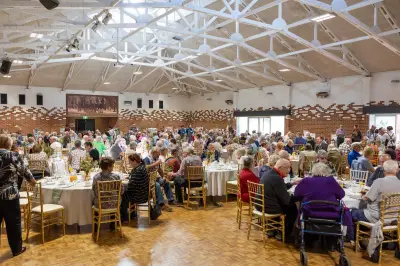
Hanson's Call for Monoculture Stirs Controversy
Senator Pauline Hanson has ignited a heated national debate after calling for a return to a 'monoculture' in Australia, arguing that the country's cultural diversity is undermining social cohesion. In a speech to the Senate, Hanson claimed that Australia's immigration policies have led to a 'fragmented society' and that a shared culture is essential for unity.
Hanson's remarks have drawn sharp criticism from multicultural advocates, political leaders, and community groups, who argue that diversity is a strength, not a weakness. According to a recent survey by the Scanlon Foundation, 85% of Australians agree that multiculturalism has been good for the country.
Political Reactions and Public Response
Prime Minister Anthony Albanese rejected Hanson's comments, stating that 'Australia's diversity is our greatest asset.' Opposition Leader Peter Dutton also distanced himself from the remarks, emphasizing the importance of social harmony. The Greens called for a parliamentary motion affirming support for multiculturalism.

Social media has been abuzz with debate, with hashtags like #MonocultureFail and #UnityInDiversity trending. Many users shared personal stories of cultural integration, highlighting the benefits of a multicultural society.
Expert Opinions on Diversity and Cohesion
Dr. Rachel Sharples, a sociologist at Western Sydney University, noted that 'monoculture is a myth in modern Australia. Our identity is inherently multicultural.' She added that Hanson's comments risk alienating communities and undermining social trust.
According to the Australian Bureau of Statistics, nearly 30% of Australia's population was born overseas, and over 300 languages are spoken in homes across the country. These figures underscore the reality of a diverse nation.
Impact on Policy and National Discourse
The debate has reignited discussions on immigration policy and national identity. Some commentators argue that Hanson's views reflect a broader anxiety about change, while others see them as a divisive attempt to gain political traction. The controversy is expected to feature prominently in upcoming election campaigns.
Community leaders have called for a renewed focus on integration programs and intercultural dialogue. 'We need to build bridges, not walls,' said Sarah Khan, president of the Australian Multicultural Council.
Conclusion
As the debate continues, it is clear that the question of national identity remains a deeply polarizing issue in Australia. Whether Hanson's monoculture vision gains traction or is rejected by voters will shape the country's political landscape for years to come.