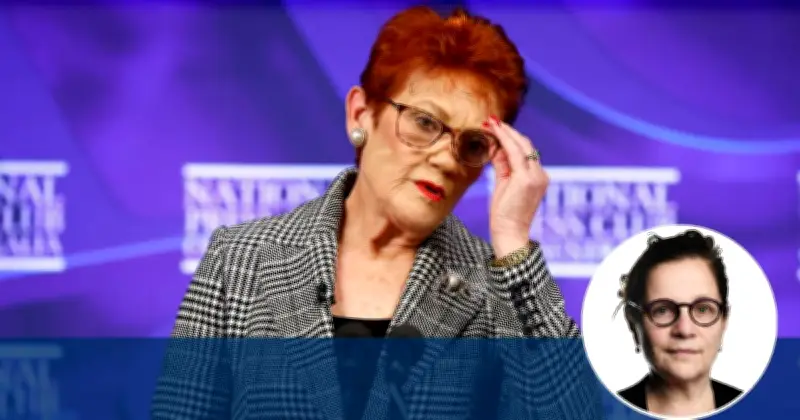
In a recent analysis, journalist Jenna Price delves into the contentious claims made by Senator Pauline Hanson regarding migration and its impact on housing affordability. Price consulted multiple experts to scrutinize Hanson's assertions, which have sparked debate across the political spectrum.
Expert Opinions on Migration and Housing
Price spoke with leading economists and housing policy analysts who provided data-driven insights. Dr. Rachel Ong, a housing expert from Curtin University, noted that while migration does influence housing demand, it is just one factor among many. "The primary drivers of housing unaffordability include supply constraints, tax policies, and low interest rates," she explained.
Similarly, demographer Dr. Liz Allen from the Australian National University emphasized that migrants often fill labor shortages and contribute to the economy. "Scapegoating migrants oversimplifies a complex issue," Allen said.

Fact-Checking Hanson's Claims
Price meticulously examined Hanson's specific allegations, such as the claim that migration drives up house prices disproportionately. Research from the Grattan Institute indicates that while high migration can increase demand in certain areas, the effect is modest compared to other factors like negative gearing and capital gains tax concessions.
Furthermore, the Housing Industry Association pointed out that Australia's housing supply has not kept pace with population growth, a problem exacerbated by zoning laws and construction costs, not solely migration.
Broader Implications
The article highlights the danger of using migration as a political scapegoat without addressing underlying structural issues. Price argues for a more nuanced conversation that includes solutions like increasing housing supply, reforming tax incentives, and investing in infrastructure.
Ultimately, the expert consensus suggests that while migration plays a role, it is far from the primary culprit in Australia's housing crisis. Price's investigation calls for evidence-based policy rather than populist rhetoric.