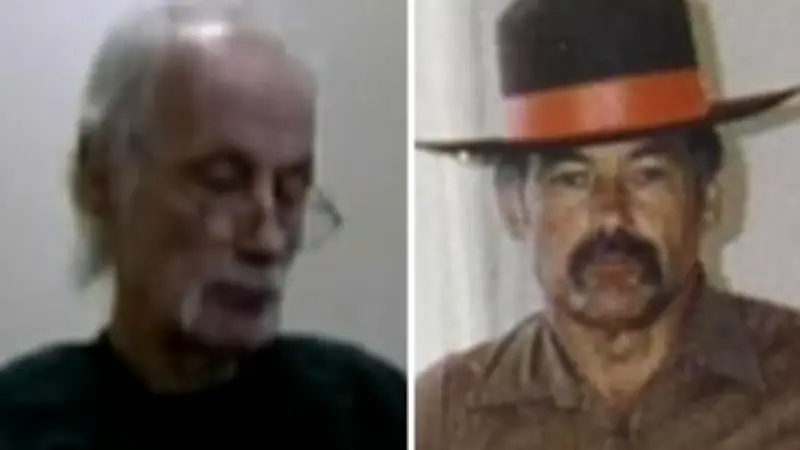
Newly released footage shows one of the final police interviews with notorious backpacker killer Ivan Milat, who refused to cooperate with authorities seeking a deathbed confession about other missing persons. The interviews took place in the lead-up to his 2019 death at Sydney's Long Bay Jail.
Milat's Refusal to Cooperate
Australia's most notorious serial killer, Milat was serving seven consecutive life sentences for the murders of seven backpackers whose remains were discovered in the Belanglo State Forest, about an hour's drive north of Goulburn, NSW. Detectives suspected he may have been involved in other disappearances and repeatedly questioned him about unresolved missing persons cases after he was diagnosed with terminal cancer.
In the footage aired on A Current Affair, retired Detective Chief Inspector Wayne Walpole is heard telling Milat: "The end result Ivan, is that in three weeks or three months or however long you've got left on this earth, and after in years to come, everyone left is still going to believe that you were responsible for those seven backpackers, and probably for an abundance of others." Walpole added, "I don't believe anyone is so devoid of decency that they would take to the grave the knowledge and location of people's loved ones."

Attempts to Elicit a Confession
Walpole told A Current Affair he had hoped Milat might be more forthcoming after asking for a Bible. In the interview, Walpole says: "Deep down, you've got to realise that if you don't do the right thing in relation to some of these young girls, I reckon you've got no chance with the bloke upstairs. But it'd be certainly good for the families to have some idea, perhaps some closure." Throughout the footage, Milat stares steadfastly ahead and at one point appears to feign sleep, with Walpole shaking him by the arm.
Walpole described Milat as "completely arrogant, he showed no empathy, he cared for nothing but his own incarceration." In another final interview, Milat told detectives: "You could put a blow torch to my ears or eyes or whatever and … I still can't help you." He was also shown videos of interviews with victims' families and responded: "I don't care … that's it. I don't feel sorry for them … why should I feel sorry for them?"
Parliamentary Inquiry and Background
A parliamentary inquiry starting Thursday will examine historic missing persons cases and alleged links to Milat. Milat died of oesophagus and stomach cancer at age 74, having been in prison since his 1994 arrest. He was convicted two years later for the murders of three Germans, two Britons, and two Australians. He was returned to jail from an intensive care unit at Prince of Wales Hospital in Randwick when death became imminent.