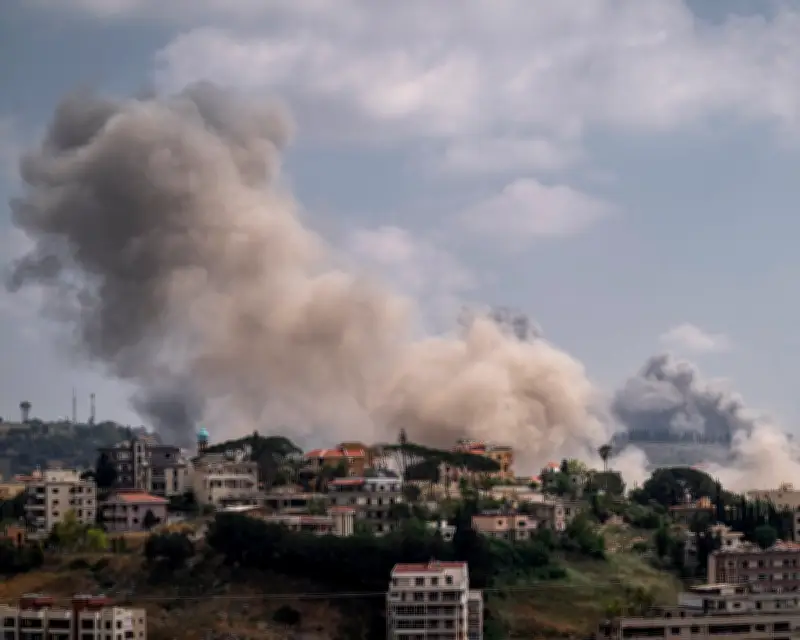
Smoke rises after an Israeli airstrike in Nabatieh, Lebanon, on 2 June 2026. The image captures the grim reality of a region where ceasefires collapse with alarming frequency. Donald Trump's failure to uphold these agreements is emblematic of a broader global disorder, and ordinary civilians are bearing the brunt.
The Diplomatic Void
There are visionary statesmen, high-minded negotiators, pragmatic mediators, and professional diplomats—and then there are meddling fools. As ceasefires implode, vast numbers of civilians die or flee, and wars that Trump started, fueled, or pledged to resolve rage unchecked, his category is clear. In baseball terms, Trump is “0 for 3” in Ukraine, Iran-Lebanon, and Israel-Palestine. He boasted he alone could cut deals and bring peace, but he has delivered neither. In striking out, he mostly makes matters worse.
The heroic age of 19th-century diplomacy, exemplified by Prince Metternich's balance of power and Benjamin Disraeli's “peace with honour,” is history. Yet it is not long ago that Nobel-winning peacemakers like UN chief Kofi Annan, Finnish diplomat Martti Ahtisaari, and US Senator George Mitchell, who brokered the Good Friday Agreement, tackled intractable conflicts. Where are the successors to Desmond Tutu, Andrei Sakharov, or Yitzhak Rabin when needed?

Ceasefires in Crisis
Nowadays, ceasefires fail with grim regularity. Lebanon's latest effort collapsed this week. Others, like that in Iran, are broken daily. Sudan has no ceasefire at all. Why has ending “forever wars” become so difficult? Amid record global strife, a lack of respected, impartial intermediaries and bold political risk-takers is a key reason. The gulf in ability between, say, Richard Holbrooke, who helped settle the Bosnian war, and Trump's amateur envoys Steve Witkoff and Jared Kushner is akin to that between Arsenal and a Sunday park football team.
Trump's Diplomatic Record
Trump's diplomatic record is lamentable. He promised to resolve the Ukraine war in a day, but it is now in its fifth year. He blatantly sided with Russia, told a browbeaten President Volodymyr Zelenskyy he had “no cards,” and cut weapons supplies. Yet Trump overplayed his hand, underestimating Russian President Vladimir Putin's propensity to cheat and Ukraine's resilience. Kremlin officials ran rings around the credulous Witkoff and Kushner during Moscow “negotiations.” The dynamic duo has yet to visit Kyiv. Trump, having lost face, has lost interest. Zelenskyy now proposes a ceasefire that Putin will likely reject.
After illegally attacking Iran in February, Trump declared a ceasefire in April with none of his main objectives met and the Strait of Hormuz largely closed to shipping. Violations occur daily, half-hearted “peace talks” via shadowy third parties lead nowhere, and the global economy splutters. Again, Trump underestimated the challenge, overestimated brute military force, followed his own bad instincts, sidelined European allies, and sought a quick victory. Now he faces a drawn-out conflict, a Congress in revolt, and an angry public.
In Gaza, the world-shattering triumph Trump proclaimed last October, when a truce was agreed and Israeli hostages freed, rings hollow. His 20-point plan, pivoting on disarming Hamas, quickly ran into the sand. His “Board of Peace” and grandiose ideas for Gaza's reconstruction lack credibility. The reality is continuing Palestinian suffering and expanding Israeli military occupation. Now Trump's co-conspirator, Prime Minister Benjamin Netanyahu, is doing to southern Lebanon what he did to Gaza—creating a depopulated desert—and obstructing a US-Iran deal. The two men had a furious row last week.
Broader Global Failures
Trump's serial failures reflect a bigger problem. Ceasefires and truces in Yemen, Myanmar, and the Democratic Republic of the Congo have come and gone without lasting settlements. In Sudan, agreement on a humanitarian pause remains elusive after over three years of civil war. Visceral lack of trust, intransigence, and a zero-sum belief in total victory are common factors.

The chronic inability to resolve wars often stems from absent peace processes. Gone are the days when empowered UN envoys engaged with all parties, created working groups, and proposed phased confidence-building measures. US secretaries of state like Henry Kissinger, Warren Christopher, and John Kerry undertook energetic shuttle diplomacy. In contrast, today's Secretary of State Marco Rubio stands back, telling his boss he is right when he is wrong. Only Trump and Rubio are surprised that Hezbollah, excluded from peace talks, rejected the latest Lebanon ceasefire.
The Nature of Modern Conflict
The obdurate nature of modern conflict mirrors today's world. In a global order lacking agreed rules, where major powers and non-state actors treat international law with contempt, war and peace grow anarchic. For unscrupulous regimes, no agreement is unbreakable, no dishonourable breach too shameful. Without rules, peace deals cannot be enforced.
Institutional weakness is exacerbated by the venality of politicians. Soft power, dialogue, logic, persuasion, moral imperatives, and historical context are devalued. Overwhelming force, instant results, and soundbites are prioritised. In this wasteland, the “long term” is foreign, truth and justice lost. Even peace is relative when a bellicose US president, bomber of multiple countries, claims he deserves a Nobel peace prize.
The Human Cost
Endless wrangling over ceasefires obscures the terrible impact on ordinary people. Since the Iran war began, at least 3,468 people have died inside the country, 26,500 have been injured, and millions displaced. The Minab primary school bombing on 28 February, where US forces allegedly killed over 100 children, remains unaccounted for. If full-scale fighting resumes, more atrocities will occur.
Civilian casualties increase across the Middle East. In Lebanon, where thousands have died despite a previous ceasefire, UNICEF reported that in late May, 77 children were killed or injured. These tragedies recall the mass child deaths during the Gaza war. They are reminders that ceasefire negotiations are not self-congratulatory political shows, as Trump suggests, but urgent matters of life and death.
None of these wars will be ended by military force. It is not about who has the biggest bombs or who declares a specious victory. It is about people's lives. As history shows, it is diplomacy—professional, active, skilled, and well-practised—that opens the door to peace.