The Iranian president has repeatedly warned of hard times ahead and the need to maintain social cohesion. As the nation considers the perilous prospect of peace, commentators highlight that the conditions leading to bloody prewar protests have worsened.
Economic and Social Challenges
Iran is preparing for a transition from wartime unity to a fractious peace marked by hyperinflation, a 10% contraction in the economy, power cuts, and calls for a triumphalist government to end its unprecedented crackdown on dissent. While peace is not yet secured, debates within the regime about the future are emerging. Rulers are clearly thinking about how to survive the peace after surviving the war.
Open discussions on channels such as Azad explore alternative postwar directions. Some advocate greater openness, while others, like Saeed Ajorlou, close to the Iranian negotiating team, argue that now the myth of a weak Iran has been shattered in Western minds, the country must pursue development through autonomy.

Impact of Economic Blockade
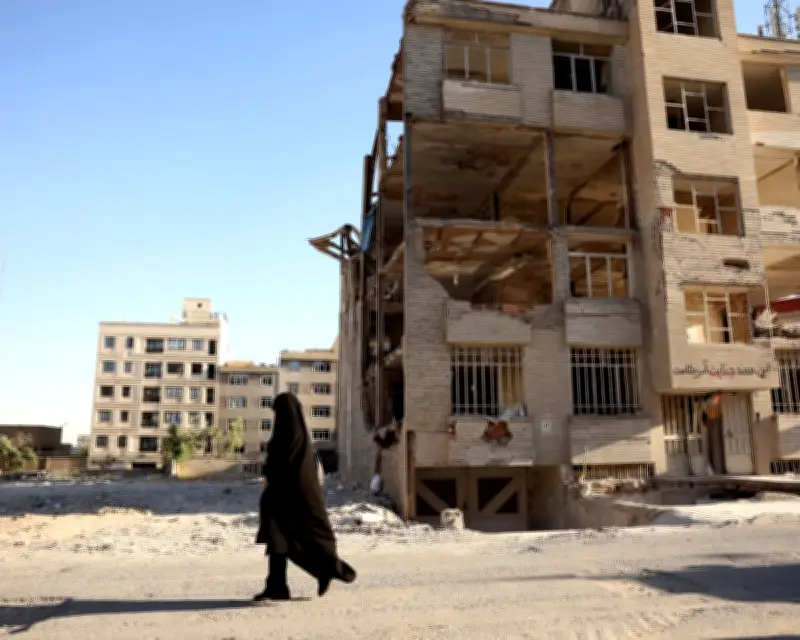
Much depends on whether Donald Trump will lift the economic blockade by reducing sanctions and ending asset freezes. Few Iranian economists expect relief to exceed a small fraction of the estimated $270 billion in losses inflicted on the economy, including infrastructure, schools, energy, steelworks, and housing.
Fuad Habibi, a sociology professor at the University of Kurdistan, warns that economic crises and livelihood dissatisfaction have increased significantly. Prices have risen due to the naval blockade and war consequences, while internet restrictions have led to direct or indirect unemployment of at least 2 million. He notes that without official channels for protest, surprises are inevitable.
The current cohesion is attributed to an external threat, but as Hegel said, the moment a front wins is when internal splits begin.
Peacetime Economic Woes
If a deal ends the war, Iran would face peacetime food inflation at its highest since World War II. Annual food inflation reached 130% in May, with meat and chicken inflation at 176%. Health experts warn of increased malnutrition, osteoporosis, and stunted growth due to the elimination of dairy products from diets.
Former communications minister Mohammad Javad Azari Jahromi warned on Telegram: "Trump and Netanyahu's next bomb may not be gunpowder; it may be inflation. The battlefield is the people's table, housing rent... Is the country's economic defence ready, or will we be surprised again?"
Government Measures and Blackouts
President Masoud Pezeshkian appears tasked with keeping domestic government functioning, repeatedly warning of hard times and the need for social cohesion. The energy ministry denied that controlled two-hour blackouts would start next month, despite infrastructure damage. Arash Najafi, head of the energy commission of the Iranian chamber of commerce, warned that people must prepare for daily two-hour shutdowns to maintain production. Incentives like 30% price discounts are offered for cutting energy consumption by 10%.
Internet censorship is slowly being lifted, a decision so controversial that hardliners in parliament are trying to impeach the communications minister.
Political Dissent and Repression
Rahim Ghomeishi, a political activist, wrote: "We had been thrown out of a broken boat. Fear of bloodthirsty whales and terrible waves had taken over. Now that we have returned to the boat, we cannot be content just because we have been rescued. Poverty was not supposed to become normal. We were not supposed to wake up to executions every morning."
Domestic political debate revolves around negotiating with America and the right to enrich uranium. Many believe the true prize from war is the end of the economic straitjacket, but the sums involved are not a bonanza. Albert Baghzian, economics professor at the University of Tehran, stated that an influx of $12 billion or $24 billion will not lead to major opening, as larger sums were previously wasted due to poor planning.
Debates about economic reorganisation and tackling corruption confront the power of the Islamic Revolutionary Guard Corps (IRGC). Economist Mousa Ghaninejad noted that the main issue is the dominance of command-based governance over rule-based governance.

Since the January protests, repression has worsened, with new espionage laws, asset seizures, executions, and denunciations of dissidents. The national parliament is still banned from meeting in person. The Islamic National Unity party urged President Pezeshkian to stop executions, which fuel internal divisions and tarnish the country's image. At least 22 political prisoners were executed between March 17 and April 27.
The chances of pluralism are slim. It took the hospitalisation of former prime minister Mir Hossein Mousavi, under house arrest since 2011, for the president to intervene with security forces.
International Relations and Future Outlook
Trump appears content to coexist with this enemy, stating he had a good call with Hezbollah and would be honoured to meet Khamenei. The IRGC and political leadership showed they could reorganise for battle between the 10-day war of 2025 and renewed war in February 2026. The test is whether they can reorganise for peace by addressing domestic and international problems.
If the economic blockade continues and international relations do not open for capital, technology, and resources necessary for reconstruction, devastation will become permanent. Destruction will turn from a temporary incident into a permanent social condition of scarcity, exhaustion, and instability.