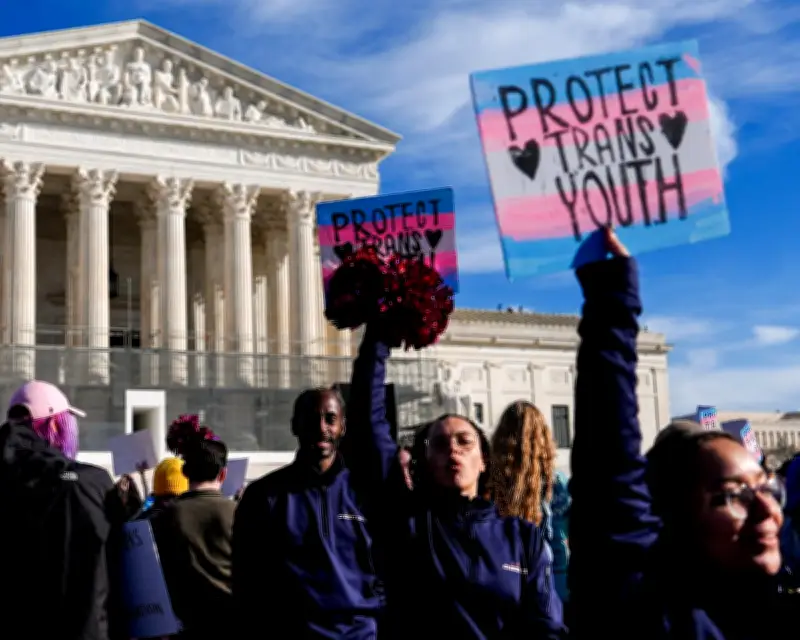
The United States Supreme Court on Tuesday upheld state laws that bar transgender women and girls from competing on female sports teams, delivering a major victory to conservative advocates who argue the restrictions protect fairness and safety in women's athletics.
Ruling Details
In a 6-3 decision, the court ruled that states have the authority to define eligibility for female sports categories based on biological sex at birth. The majority opinion, written by Justice Samuel Alito, stated that 'Title IX's promise of equal athletic opportunity for women is not undermined by policies that ensure competition remains fair.'
The case, West Virginia v. B.P.J., originated from a 12-year-old transgender girl in West Virginia who challenged a state law prohibiting her from joining the girls' cross-country and track teams. The law, passed in 2021, is one of at least 20 similar statutes enacted across the country.

Context and Impact
The ruling affects millions of student-athletes nationwide and is likely to embolden other states considering similar legislation. According to data from the Williams Institute at UCLA School of Law, approximately 1.4% of teenagers aged 13-17 in the US identify as transgender, though the number of transgender athletes is a fraction of that.
Justice Sonia Sotomayor, writing for the dissent, argued that the decision 'sanctions discrimination against a vulnerable group under the guise of protecting women's sports.' She noted that the majority ignored evidence that transgender girls do not have a significant competitive advantage over cisgender girls when they have undergone puberty blockers or hormone therapy.
Reactions
West Virginia Attorney General Patrick Morrisey praised the ruling, saying, 'This is a victory for common sense and for the integrity of women's sports. We will continue to defend the rights of female athletes to compete on a level playing field.'
On the other side, Joshua Block, senior staff attorney at the American Civil Liberties Union, called the decision 'a devastating blow to transgender youth.' He added, 'This ruling tells transgender children that they don't belong and that their identities are not valid.'
Legal Background
The Supreme Court's decision comes as a growing number of states have enacted laws targeting transgender participation in sports. The court's conservative majority has previously shown skepticism toward transgender rights, including in a 2020 ruling that interpreted Title VII of the Civil Rights Act to protect gay and transgender employees from workplace discrimination.
Tuesday's ruling does not affect college or professional sports, which are governed by separate rules. However, it may influence ongoing debates within the NCAA and other athletic organizations.