The United States and Iran exchanged new military strikes on Friday, jeopardizing a fragile ceasefire in the Middle East even as American officials confirmed that Tehran's national football team had received visas to travel to the 2026 FIFA World Cup.
Ceasefire Under Strain
Weeks of complex negotiations marked by threats and sporadic violence have failed to produce a lasting deal to end the war and reopen the Strait of Hormuz, a vital passageway for global energy shipments. The ceasefire, which took effect on April 8, was triggered nearly 100 days ago by US and Israeli strikes that decimated Iran's top leadership.
Tensions escalated sharply on Friday when the US military announced it had struck radar sites in Iran after intercepting drones heading toward the strait. Shortly thereafter, air raid sirens sounded in neighboring Gulf states Kuwait and Bahrain, both US allies, and AFP correspondents in both countries reported hearing explosions.

Missile Attacks and Responses
Iran's Revolutionary Guards said early Saturday that they had targeted "enemy bases in the area" with missiles in retaliation for a US "invasion" of the country's Sirik and Qeshm islands. US Central Command (CENTCOM) stated that Iran launched seven ballistic missiles toward Kuwait and Bahrain. Six were intercepted, while the seventh "did not reach its intended target." CENTCOM added, "There are currently no reports of harm to US personnel, and Iranian claims of damaging US 5th fleet headquarters in Bahrain are false."
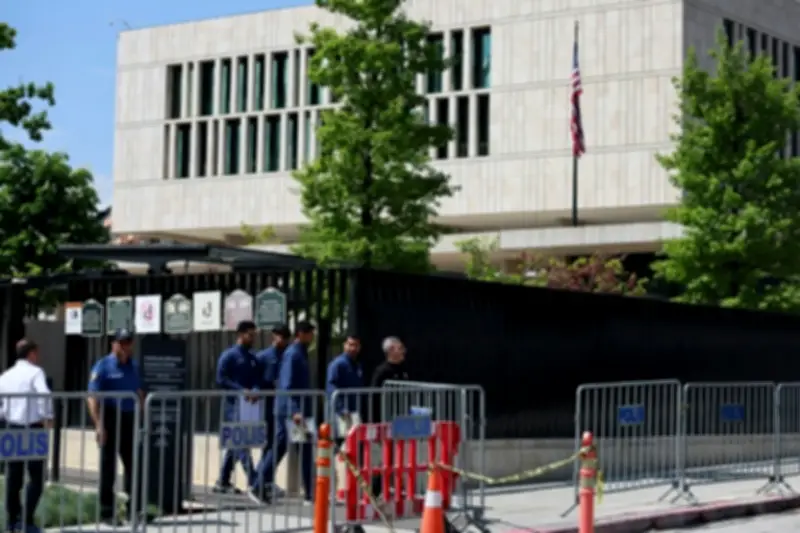
The latest violence occurred despite the United States proceeding with visa approvals for Iran's national football team to attend the World Cup, which it is co-hosting with Canada and Mexico. US Ambassador to Turkey Tom Barrack confirmed the visa issuances, saying that "sports transcends borders, and we look forward to welcoming competitors and fans from around the world." However, Iran's Fars news agency reported that visas had not yet been issued for some members of the team's technical and executive staff. An unnamed US administration official stated, "We will not allow the Iranian team to abuse this system to sneak terrorists into the United States under false pretenses." The team is scheduled to fly from Turkey to Spain on Saturday before traveling to their base camp in Mexico, arriving on Sunday.
Strikes on Radar and Drones
Earlier Friday, CENTCOM said its forces had downed four Iranian drones heading toward the Strait of Hormuz and then struck Iranian coastal radar installations in Goruk and on Qeshm Island. "The attack drones posed an immediate threat to regional maritime traffic," while the strikes on radar installations "defend against further attacks," CENTCOM stated. Iranian state television IRIB reported early Saturday that "several explosions were heard" in Sirik in southern Iran around 2:30 am local time. The Guards confirmed that after the US strikes, "enemy bases in the region were hit by aerial missiles." Kuwait's military said it was responding to "hostile" missile and drone attacks, days after a strike on the country's international airport killed one and wounded dozens.
Missile Stockpile and Political Pressure
US President Donald Trump told NBC News on Friday that Iran still retains roughly "21, 22 percent" of its missile stockpile, despite repeated US claims that Tehran's military capacity had been crippled. This figure is higher than the 18 percent Trump cited in May. Efforts to turn the truce into a lasting settlement have repeatedly stalled, while the conflict has rattled global markets and increased political pressure on Trump at home ahead of midterm elections.
Lebanon's Plea and Iran's Response
Lebanon, which was drawn into the war when Iran-backed Hezbollah attacked Israel on March 2, called on Iran to stop interfering in its affairs. Lebanese Prime Minister Nawaf Salam addressed Iran's leaders directly, saying, "Have mercy on our south, stop treating it and its people as merely a bargaining chip. We are the people of a sovereign nation that refuses to serve as an open battlefield for their wars." Iran's Foreign Minister Abbas Araghchi responded early Saturday, urging Lebanon's President Joseph Aoun to save Lebanon from its "real foe." Iran has insisted in peace negotiations that the fighting in Lebanon and the Gulf war are inextricably linked.