The Trump administration has raced to reconstruct a version of US history they prefer across national parks and federal lands, removing or altering scores of signs to present a sanitized view of America. Critics say this campaign erases the stories of Black Americans, Native Americans, and other marginalized groups.
Jerry Bransford and Mammoth Cave
Jerry Bransford, a former US National Park Service (NPS) ranger, has a deep connection to Mammoth Cave in Kentucky. His great-great-grandfather, Materson "Mat" Bransford, was an enslaved guide who explored the cave system in the mid-19th century. Enslavers rented him out for $100 a year to develop the site as a tourist attraction. Mat led notable guests like Emperor Dom Pedro of Brazil and Ralph Waldo Emerson through the underground labyrinth. "At the hotel, restaurant and slave quarters, they were in slavery, but once they went down inside that cave, they were free," said Jerry, 79, who worked at Mammoth Cave for over two decades. A sign honoring five generations of Bransford cave guides is now at risk of removal.
The Scope of the Censorship Campaign
Over the past year-and-a-half, the Trump administration has attempted to rewrite US history in the NPS system, which includes 433 parks, historic sites, and monuments. The Guardian reviewed thousands of images, files, and documentation, and interviewed current and former NPS employees. The administration removed at least 60 signs across 38 parks, from Alaska to the Virgin Islands, according to an official list revealed after a judge ordered the Interior Department to provide an inventory. The Interior Department noted there are more removed signs not accounted for.

How the Censorship Was Implemented
Last May, the Trump administration gave park employees three months to review all content. Staff, already cut by more than 25%, were overwhelmed. One park regional leader told staff to "guess what the offending language was." Another manager said: "If there's any doubt at all … whether you think it's appropriate or not, put it on there, report it." Employees flagged materials by asking themselves: "What would my bigoted neighbor not want to read about?" A leaked database of nearly 2,000 images and files revealed widespread confusion. At Cape Hatteras National Seashore, signs about sea level rise were flagged because they "reduce the focus on the grandeur, beauty and abundance." At Little Bighorn battlefield, staff used ChatGPT to determine if signs about US "harsher policies" and "hunger for land and gold" violated Trump's executive order.
Impact on History and Science
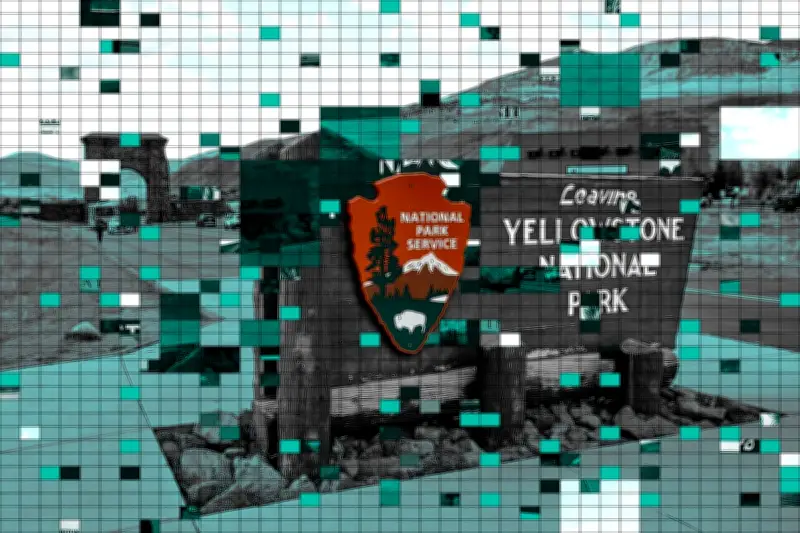
Stories about slavery, racism, discrimination against Black and Native Americans, and climate change were most at risk. The NPS has historically omitted these stories. Yellowstone, created in 1872, forcibly relocated Native peoples, but visitors were told it was a pristine wilderness. Shane Doyle, Indigenous relations director for the Nature Conservancy, said: "This is not a virgin paradise, like the Garden of Eden, people have been here for 12,000 years." The NPS began including more complete histories in the 1990s, establishing sites like Manzanar (1992) and Stonewall (2016). The Trump administration has turned back this progress, said Gerry Seavo James of the Sierra Club: "The goal now is just to sell a whitewashed and sanitized view of that history."
Pushback and Legal Challenges
Park staff sometimes subverted the order by reporting existing signage that disparaged Native Americans. At Padre Island National Seashore, staff flagged an exhibit stating the Karankawa "perished as a people," noting they still exist. At Horseshoe Bend, a monument "disparages and incorrectly honors destruction of the Muscogee (Creek) Nation." The public also opposed the campaign; a Pew survey found most Americans say it's important to discuss both positive and negative US history. In June, a federal judge blocked further removals and ordered signs restored. "This Administration seeks to share a limited history … telling half-truths," wrote US district judge Angel Kelley. Bill Wade of the Association of National Park Rangers said: "We've won that particular battle, but I'm not sure we've won the war yet."

The Bransford Legacy
At Mammoth Cave, a cemetery holds about 40 members of the Bransford family. In 1941, when the area became a national park, all residents were expelled, and Black guides were banned. Jerry Bransford became a ranger in the early 2000s to reclaim his family's story. "I've done my best to tell America a true American story of people of color," he said. Reflecting on the possible erasure, he added: "What more do you want to take away from them? The system has taken everything from them. So why would Mr Trump and his administration want to at least take away their story? Haven't they given enough?"