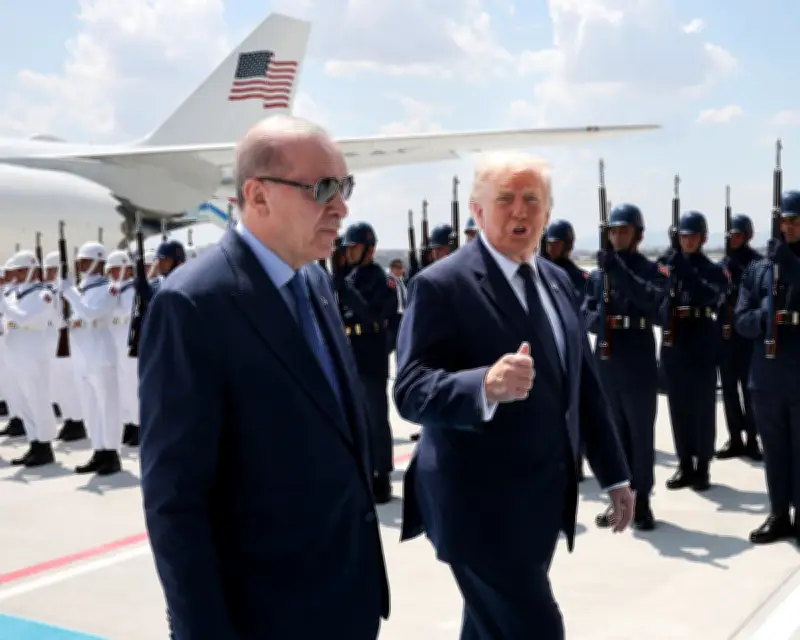
President Donald Trump is hosting a NATO summit in Washington, D.C., where key discussions revolve around Greenland, Turkey's security concerns, and European defense spending. The summit, which began on July 8, 2026, brings together leaders from all 32 member nations to address pressing transatlantic security issues.
Greenland on the Agenda
Trump has reiterated interest in purchasing Greenland, a semi-autonomous territory of Denmark, citing strategic and economic benefits. Danish Prime Minister Mette Frederiksen is expected to firmly reject any sale proposal during bilateral talks. The issue has strained US-Denmark relations, with Frederiksen calling the idea "absurd" in past statements. However, Trump insists the acquisition would bolster US security in the Arctic region, where Russia and China are increasing their presence.
Turkey's Demands and NATO Unity
Turkish President Recep Tayyip Erdogan is pushing for NATO allies to lift arms embargoes imposed after Turkey's 2019 incursion into Syria. Erdogan has also threatened to block Sweden's accession to NATO unless Stockholm takes tougher action against Kurdish militants. NATO Secretary General Mark Rutte is mediating talks to reach a compromise, with Sweden's membership ratification hanging in the balance. According to a senior NATO official, "Turkey's concerns must be addressed to maintain alliance cohesion."

European Defense Spending
Trump continues to pressure European allies to meet the 2% GDP defense spending target, with several countries still falling short. Germany, France, and Italy have pledged to increase budgets, but Trump has warned that the US may reconsider its security commitments if allies do not contribute more. European leaders are expected to announce new spending plans during the summit. According to NATO estimates, only 11 of 32 members currently meet the target.
Marine Le Pen and European Politics
French far-right leader Marine Le Pen is in Washington for separate meetings with Trump administration officials, sparking controversy among European partners. Le Pen, who leads the National Rally party, has expressed support for Trump's policies and criticized the EU's defense strategy. Her presence at the summit has drawn criticism from French President Emmanuel Macron, who called it "a provocation." Le Pen's visit underscores divisions within Europe over relations with the US.
Key Bilateral Meetings
Trump is scheduled for one-on-one talks with UK Prime Minister Keir Starmer, focusing on trade and security. Starmer, who took office in 2024, aims to strengthen post-Brexit ties with the US. Additionally, Trump will meet with Polish President Andrzej Duda to discuss defense cooperation and the ongoing conflict in Ukraine. Poland has been a staunch US ally, hosting NATO troops and contributing significantly to Ukraine's defense.
Ukraine and the War
Ukrainian President Volodymyr Zelenskyy is also attending the summit, seeking increased military aid and a clear path to NATO membership. While some members support Ukraine's accession, others, including the US and Germany, remain cautious to avoid direct conflict with Russia. The summit is expected to issue a statement reaffirming support for Ukraine but stopping short of a membership invitation.
Public Protests and Security
Thousands of protesters have gathered in Washington, demonstrating against Trump's policies and NATO's expansion. Security has been heightened with police barricades and increased patrols. A small group of counter-protesters chanting pro-Trump slogans has also been present. No major incidents have been reported so far.
Outlook
The summit is set to conclude on July 9 with a joint communiqué outlining commitments. Key outcomes may include a framework for Sweden's accession, a new defense investment pledge, and a statement on Arctic security. However, divisions over Greenland, Turkey, and Ukraine could overshadow the results. As one diplomat noted, "This summit will test the resilience of the alliance."