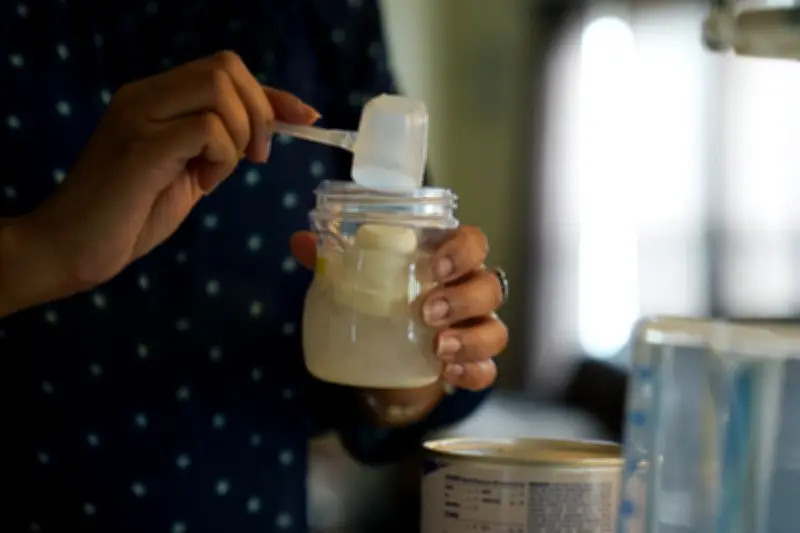
Recent recalls of infant formula have been linked to staffing cuts at the Food and Drug Administration (FDA) implemented during the Trump administration, according to critics and former officials. The recalls, which have affected major brands, have raised alarms about the safety of baby formula and the agency's ability to monitor production.
Recalls and Staffing Reductions
In the past month, three major infant formula manufacturers have issued recalls due to potential bacterial contamination, including Cronobacter sakazakii, which can be deadly for infants. The recalls have led to empty shelves in stores across the country, echoing the 2022 shortage that left parents scrambling for supplies. Critics point to a 15% reduction in FDA inspection staff since 2017, which they say has weakened oversight of formula plants.
"The FDA's ability to conduct routine inspections and respond to safety issues has been severely compromised by these cuts," said Dr. Susan May, a former FDA official. "We are now seeing the consequences."

Impact on Families
The recalls have forced families to search for alternative formulas or resort to homemade options, which pediatricians warn can be dangerous. "Parents are terrified," said Lisa Chen, a mother of two from Ohio. "We don't know which brands are safe anymore." The FDA has advised consumers to check lot numbers and avoid recalled products, but many parents report difficulty finding information.
According to the Centers for Disease Control and Prevention (CDC), there have been at least 12 reported illnesses linked to the contaminated formula, including two infant deaths under investigation. The FDA has launched an investigation into the manufacturing facilities involved.
Political Fallout
Democrats in Congress have seized on the issue, accusing the Trump administration of prioritizing deregulation over public health. "The FDA's mission is to protect consumers, but these staffing cuts have left us vulnerable," said Senator Elizabeth Warren. "We need to restore funding and ensure that formula is safe." The White House has defended the cuts, arguing that the FDA has become more efficient under Trump's leadership. A spokesperson said the agency has increased its use of technology and risk-based inspections.
However, former FDA Commissioner Dr. Scott Gottlieb, who served under Trump, acknowledged that the agency has been stretched thin. "We need more resources to keep up with the growing complexity of the food supply," he said in a recent interview. The Trump administration's proposed 2027 budget includes a 10% increase for the FDA, but critics say it is too little, too late.
Industry Response
The infant formula industry has also faced scrutiny. The three companies involved in the recalls—Abbott Nutrition, Reckitt, and Perrigo—have all stated that they are cooperating with the FDA and have implemented additional safety measures. Abbott, which was at the center of the 2022 shortage, said it has invested $100 million in facility upgrades. "We are committed to producing safe, high-quality formula," the company said in a statement.
Consumer advocacy groups are calling for mandatory reporting of contamination incidents and stricter penalties for violations. "The current system relies too much on voluntary compliance," said Jane Smith of the Consumer Federation of America. "We need stronger enforcement."
As the recalls continue, parents are left to navigate a precarious market. The FDA has set up a hotline for questions, but many are demanding more proactive measures. The situation highlights the delicate balance between regulatory oversight and industry efficiency—a balance that critics say has been tipped too far in one direction.