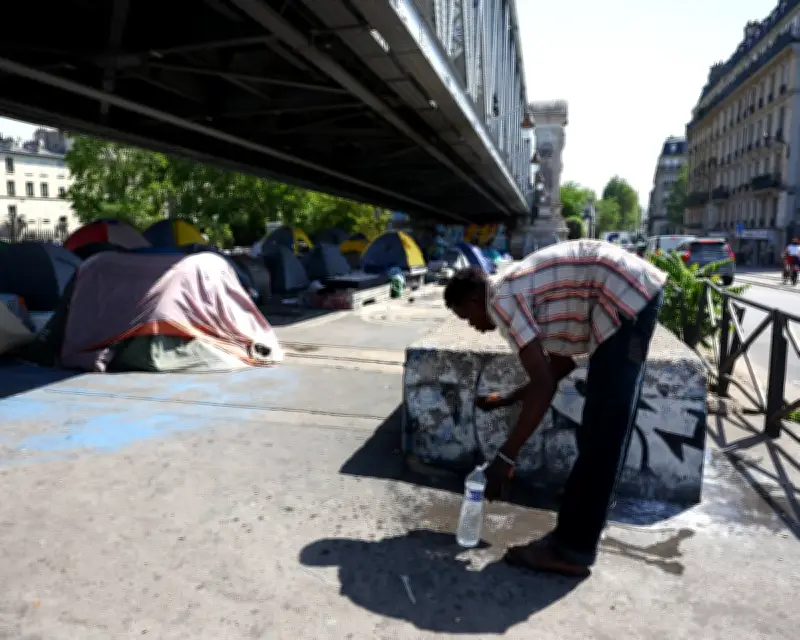
France experienced a surge in deaths during the hottest week on record in late June, with temperatures reaching 45.9°C in some regions. Preliminary data from the French health ministry showed more than 1,500 excess deaths compared to the same period in previous years.
Record-Breaking Temperatures
The heatwave, which lasted from June 24 to June 30, broke national records. The highest temperature was recorded in the southern town of Gallargues-le-Montueux at 45.9°C. Dozens of local records fell across the country.
Meteo France described the event as unprecedented, noting that it was the most intense heatwave since records began in 1900. The national average temperature exceeded 28°C, well above the seasonal norm.

Excess Deaths and Health Impact
The health ministry reported that the number of deaths during the heatwave week was 1,535 higher than the average for that period in the past five years. Most victims were elderly or had pre-existing health conditions.
“This is a tragedy that reminds us of the urgency of climate action,” said Health Minister Agnès Buzyn. “We must adapt our healthcare system to protect the most vulnerable.”
Hospitals reported a surge in emergency admissions for heatstroke, dehydration, and respiratory problems. The government activated its heatwave plan, opening cooling centers and issuing public health warnings.
Comparison to 2003 Heatwave
The 2003 heatwave caused an estimated 15,000 excess deaths in France. The recent event, though shorter, showed similar mortality patterns. Experts warn that such heatwaves are becoming more frequent due to climate change.
“The 2026 heatwave was a stark warning,” said climatologist Jean Jouzel. “Without mitigation, we can expect more record-breaking events.”
Government Response
Prime Minister Édouard Philippe announced an investigation into the preparedness of emergency services. He also pledged to accelerate the country’s climate adaptation plan, including better insulation for buildings and more green spaces in cities.
Opposition politicians criticized the government for not doing enough to prevent deaths. The Green party called for a national state of emergency on climate change.
Impact on Agriculture and Infrastructure
The heatwave also affected agriculture, with crop yields expected to drop by 20% in some regions. Nuclear power plants along rivers were forced to reduce output due to high water temperatures.
Rail services faced disruptions as tracks buckled in the heat. The national railway company SNCF advised passengers to avoid non-essential travel.