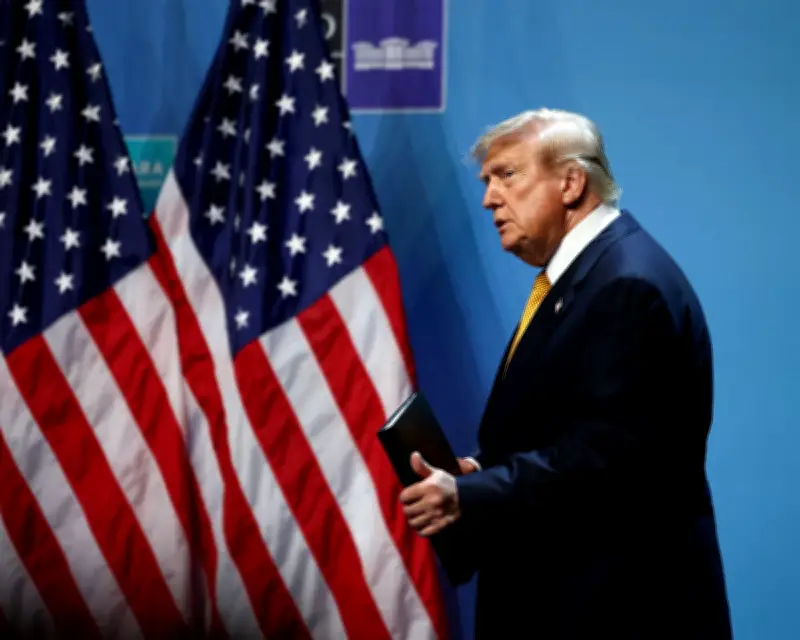
President Donald Trump has issued a dramatic ultimatum to NATO allies, demanding they raise defense spending to 5% of their gross domestic product (GDP) during the alliance's summit in Ankara, Turkey. The proposal, which far exceeds the current 2% target, has sent shockwaves through the 32-member bloc and reignited debates over burden-sharing within the alliance.
Trump's Bold Demand
Speaking at the opening session of the NATO summit on July 12, 2026, Trump argued that the United States has been unfairly carrying the financial burden of European security for decades. "The United States is paying for the defense of Europe, and it's not fair. It's not sustainable," Trump told assembled leaders. "You have to pay your fair share. I'm demanding 5% of GDP, and that's non-negotiable."
The current NATO guideline, established in 2014, calls for member nations to spend at least 2% of their GDP on defense. According to NATO estimates, only 11 of the 32 members met that threshold in 2025, with the United States spending approximately 3.5% of its GDP on defense. Trump's demand would require most allies to more than double their military budgets.

Mixed Reactions from Allies
European leaders reacted with a mixture of skepticism and alarm. German Chancellor Friedrich Merz called the demand "unrealistic" and warned that it could undermine alliance cohesion. "We are committed to increasing our defense spending, but 5% is not feasible in the short term," Merz said during a press conference. "We must find a balanced approach that ensures security without bankrupting our economies."
French President Emmanuel Macron echoed those sentiments, describing the proposal as "a provocation" that could damage transatlantic relations. "The United States cannot treat its allies as vassals," Macron stated. "Europe must take more responsibility for its own defense, but this demand is excessive."
However, some Eastern European nations, particularly those bordering Russia, expressed support for the higher target. Polish President Andrzej Duda noted that his country already spends over 4% of GDP on defense and would welcome a higher benchmark. "We have been warning about the Russian threat for years," Duda said. "A stronger NATO is in everyone's interest."
Strategic Implications
The demand comes amid heightened tensions with Russia and ongoing debates about NATO's future role. Analysts suggest that Trump's proposal could force a fundamental restructuring of the alliance. "If adopted, this would be the most significant shift in NATO defense policy since the Cold War," said Dr. Elena Petrova, a security expert at the Atlantic Council. "It would require dramatic increases in military spending across Europe, potentially straining public finances and political will."
Critics also point out that simply spending more money does not guarantee military effectiveness. "It's not just about the percentage of GDP; it's about how the money is spent," noted retired General James Mattis, former US Secretary of Defense. "We need to ensure that increased spending translates into real capabilities, not just bureaucracy."
Next Steps
The summit is scheduled to continue for two more days, with working groups expected to discuss the feasibility of the 5% target. A final communiqué is anticipated by July 14, though diplomats acknowledge that reaching consensus will be challenging. The United States has not yet outlined consequences for allies that fail to meet the new benchmark, but Trump hinted at potential trade measures or reduced US military presence in Europe.
"We have many options," Trump warned. "If they don't pay, we will have to reconsider our commitments. The United States cannot be the world's policeman forever."