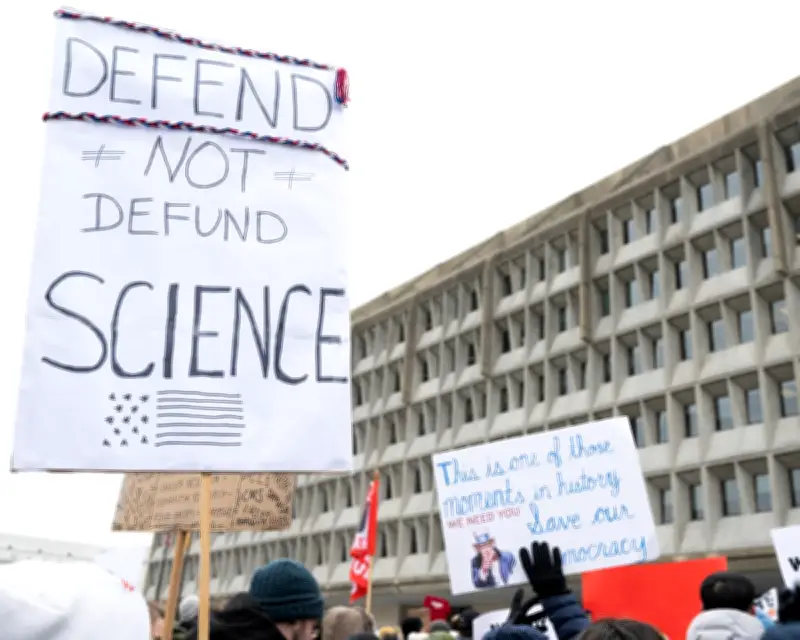
New Rules Curb Scientist Independence
The Trump administration has implemented sweeping new regulations that significantly curtail the autonomy of federal scientists, requiring them to seek political clearance before publishing research or speaking to the media. The rules, announced by the Office of Management and Budget, apply to all agencies under the executive branch, including the National Institutes of Health, the Centers for Disease Control and Prevention, and the Environmental Protection Agency.
According to a memo obtained by The Guardian, scientists must now submit all manuscripts, abstracts, and presentations for political review by agency appointees at least 30 days before submission. The policy also mandates that scientists coordinate any public statements with the agency’s communications office, which will ensure alignment with the administration’s priorities.
Critics Warn of Censorship and Brain Drain
Critics argue that these rules amount to political censorship and could drive top researchers out of government service. "This is a direct assault on scientific integrity," said Dr. Jane Lubchenco, former head of the National Oceanic and Atmospheric Administration. "Scientists must be free to share their findings without fear of political retribution. These rules will stifle innovation and undermine public trust."

The administration defends the policy as necessary to ensure that taxpayer-funded research does not contradict official messaging. "We are simply ensuring that federal science is consistent with the goals of this administration," said a White House spokesperson who spoke on condition of anonymity.
A 2019 survey by the Union of Concerned Scientists found that 55% of federal scientists felt pressured to suppress or alter their findings to fit political narratives. The new rules could exacerbate this trend, experts warn.
Impact on Key Agencies
The EPA, which has seen a wave of resignations under the Trump administration, will be particularly affected. The agency’s acting administrator, Andrew Wheeler, has already faced criticism for delaying the release of a study linking air pollution to increased COVID-19 mortality. Under the new rules, such delays could become routine.
At the CDC, scientists have already been barred from using certain terms like "evidence-based" and "transgender" in official documents. The new rules extend these restrictions to all forms of communication, including scientific papers.
"This is not just about politics; it’s about public health," said Dr. Anthony Fauci, director of the National Institute of Allergy and Infectious Diseases, in a recent interview. "When scientists are muzzled, the American people suffer."
Legal Challenges Loom
Civil liberties groups and scientific organizations are preparing legal challenges to the new rules, arguing that they violate the First Amendment and the Hatch Act, which prohibits federal employees from engaging in partisan political activity. The American Civil Liberties Union has already filed a lawsuit on behalf of several anonymous scientists.
The administration, however, shows no signs of backing down. In a statement, the White House said the rules are "fully consistent with the law" and will "improve the efficiency and effectiveness of federal science."
As the 2024 election approaches, the issue of scientific independence is likely to become a major campaign theme. Democratic candidates have already condemned the rules, with Senator Elizabeth Warren calling them "an unprecedented attack on truth."