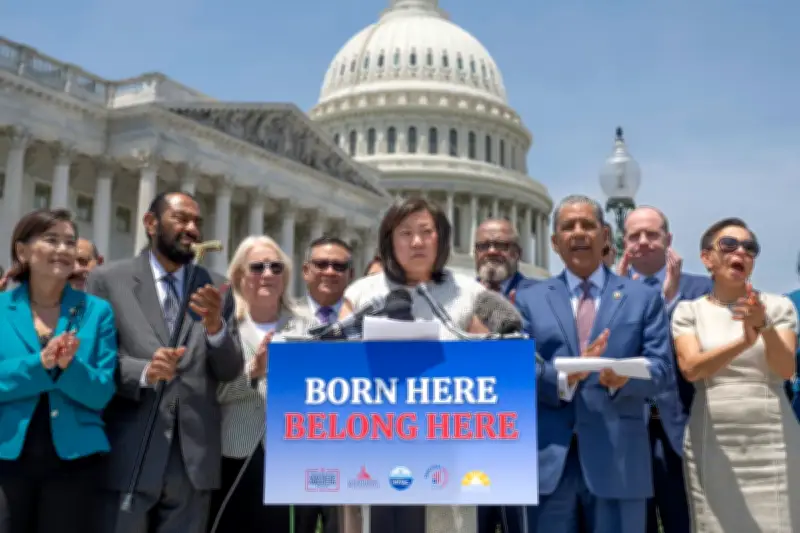
The Supreme Court on Tuesday upheld birthright citizenship in a landmark 6-3 decision, affirming that children born in the United States are citizens regardless of their parents' immigration status. The ruling struck down a challenge to the 14th Amendment's Citizenship Clause, which has been the law for over 150 years.
What the Court Decided
The case, United States v. Morales, originated from a lawsuit brought by 18 states seeking to restrict birthright citizenship for children of undocumented immigrants. The Court ruled that the Citizenship Clause's phrase 'subject to the jurisdiction thereof' includes virtually everyone born in the US, except for children of foreign diplomats or enemy soldiers.
Chief Justice John Roberts wrote the majority opinion, stating that 'the text, history, and precedent all confirm that birthright citizenship is a constitutional bedrock.' The decision reaffirms the principle established in the 1898 case United States v. Wong Kim Ark.

Impact on Immigration Policy
The ruling effectively blocks any legislative or executive efforts to end birthright citizenship, which had been a goal of some conservative groups. According to the Migration Policy Institute, about 250,000 children are born annually in the US to undocumented parents, and this decision ensures they retain citizenship.
Immigrant rights advocates celebrated the decision. 'This is a victory for the fundamental American principle that all people born here are equal citizens,' said Omar Jadwat, director of the ACLU's Immigrants' Rights Project.
Dissenting Opinions
Justice Clarence Thomas, writing for the dissent, argued that the majority misinterpreted the 14th Amendment. 'The Citizenship Clause was never intended to grant citizenship to children of illegal immigrants,' he wrote. Justices Samuel Alito and Neil Gorsuch joined the dissent.
The dissent also raised concerns about 'anchor babies' and incentives for illegal immigration, though the majority dismissed these as policy arguments not grounded in constitutional law.
Political Reactions
President Joe Biden praised the decision, calling it 'a reaffirmation of our nation's commitment to fairness and the rule of law.' Former President Donald Trump, who had pledged to end birthright citizenship via executive order, criticized the ruling as 'a disaster for American workers.'
Republican lawmakers vowed to pursue a constitutional amendment to overturn the decision, though such an effort faces steep odds given the requirement for two-thirds approval in both chambers and ratification by three-fourths of states.
Broader Implications
Legal experts say the ruling settles a long-debated constitutional question and could affect other areas of immigration law, such as the rights of US citizen children to sponsor parents for visas. The decision may also influence cases involving birthright citizenship in other countries, as the US is one of about 30 nations that grant automatic citizenship to anyone born on their soil.
The ruling is expected to have a significant impact on the 2026 midterm elections, with immigration once again becoming a central issue.