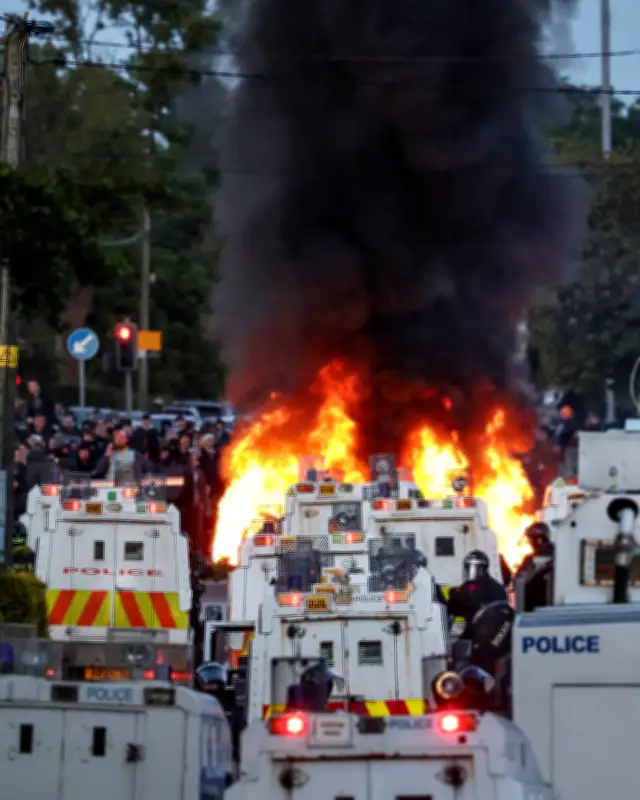
Racial violence has erupted in Belfast and Southampton, with clashes between far-right groups and anti-racism protesters leaving dozens injured and widespread damage across both cities. The unrest has reignited a national debate about systemic racism, economic inequality, and the role of social media in fueling hatred.
The Outbreaks
In Belfast, on the night of June 12, a demonstration organized by a far-right group quickly turned violent. Rioters threw petrol bombs and bricks at police lines, while counter-protesters from anti-racism groups faced off in tense standoffs. Nine officers were injured, and several vehicles were set ablaze. The violence spread to the city's east end, where shops and homes were vandalized.
Simultaneously, in Southampton, a similar pattern emerged. A rally against immigration descended into chaos as participants clashed with local residents. Witnesses reported seeing masked individuals wielding weapons and chanting racist slogans. Police made 14 arrests, and the city center was cordoned off for hours.

Roots of the Violence
Experts point to a toxic mix of factors: rising economic insecurity, a housing crisis, and the relentless spread of misinformation online. Far-right influencers have used platforms like Telegram and X to amplify fears about immigration, often targeting Muslim and Black communities. In Belfast, sectarian tensions—long simmering since the Troubles—have been exploited by extremists seeking to stoke division.
Dr. Amina Khan, a sociologist at the University of Manchester, says: “These riots are not spontaneous. They are the result of years of neglect, where communities feel left behind and scapegoats are found in minorities. The far-right capitalizes on legitimate grievances, but their solutions are based on hate.”
Government Response
Prime Minister Keir Starmer condemned the violence, calling it “unacceptable in any civilized society.” He announced increased police presence and a review of social media regulations. However, critics argue that the government’s own rhetoric on immigration has legitimized far-right narratives. The Home Secretary has faced calls to resign after suggesting that “some communities need to integrate better.”
In Northern Ireland, First Minister Michelle O’Neill appealed for calm, warning that the violence threatens the fragile peace process. The Police Service of Northern Ireland has deployed additional officers, but tensions remain high.
Community Reactions
In both cities, community leaders have organized vigils and clean-up efforts. In Southampton, a coalition of religious groups and local charities set up a helpline for victims of racial abuse. In Belfast, residents formed human chains to protect mosques and ethnic businesses. “We will not let hate win,” said Father John O’Malley, a Catholic priest who helped mediate between rival groups.
Broader Implications
The unrest has drawn international attention, with the United Nations expressing concern about the rise of xenophobia in the UK. Analysts warn that if left unchecked, such violence could spread to other cities. The events also come ahead of local elections, where far-right parties are expected to gain ground.
As the UK grapples with these challenges, the question remains: What will it take to break the cycle of violence? For many, the answer lies in addressing the root causes—poverty, inequality, and the politics of division.