Peruvians head to the polls on Sunday in a presidential runoff election that offers a stark left-right choice. The contest pits perennial rightwing candidate Keiko Fujimori against leftist congressman Roberto Sánchez. Both are vying to become Peru's ninth president in a decade, as the nation grapples with rising crime, chronic political instability, corruption scandals, and widespread voter apathy.
The Candidates
Fujimori, the daughter of late president Alberto Fujimori, secured 17% of the vote in the first round in April. Sánchez, a former trade and tourism minister, took 12% of the vote, narrowly defeating ultra-conservative former Lima mayor Rafael López Aliaga. This sets the stage for a polarized replay of the 2021 election.
This is Fujimori's fourth presidential bid, and it may be her strongest yet. She was thrust into politics at age 19, becoming first lady after her parents' marriage ended during her father's authoritarian rule in the 1990s.

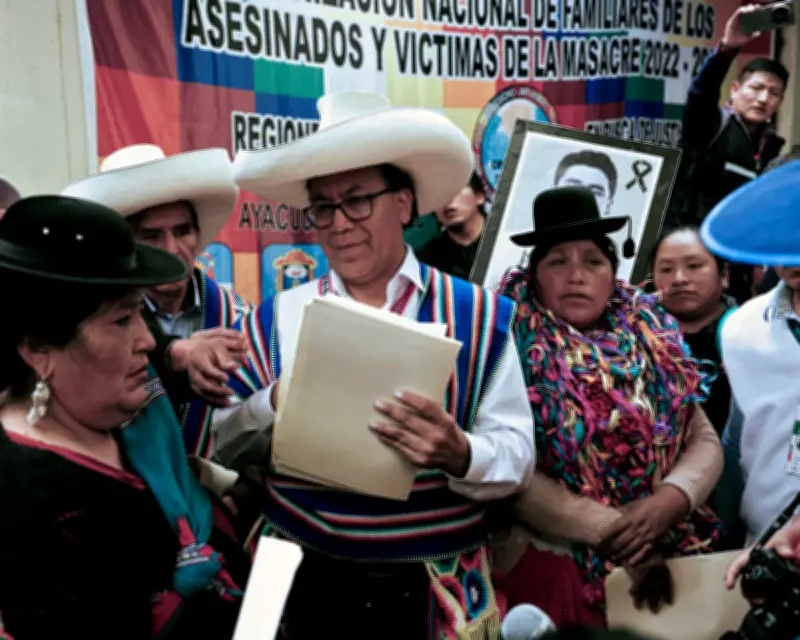
Sánchez, 57, served as a minister under populist leftist president Pedro Castillo and has embraced his legacy, gaining support from rural voters—even donning Castillo's trademark sombrero. Castillo was ousted in December 2022 after attempting to dissolve Congress and rule by decree. In November 2025, he was sentenced to 11 years and five months in prison for rebellion. Sánchez has attracted votes in the rural Andes, where many sympathize with Castillo and believe he was unfairly removed.
Tight Race
Pollsters predict an extremely close vote, consistent with Peru's last three election runoffs. According to an Ipsos poll published on Thursday, the candidates are statistically tied: Sánchez at 43.8% and Fujimori at 43.2%.
The election campaign, which began with a record 35 candidates in April, has ended with a choice between two candidates who together represent only 29% of the first-round vote. Voters are exhausted and deeply skeptical after a period of unprecedented instability: Peru has had eight presidents since July 2016, only three of whom were elected. The others assumed office through an unrepresentative congressional system and were, in most cases, unsuited for the highest office.
The last president to be ousted, José Jerí, 39, was accused of influence-trafficking in secret meetings with Chinese businessmen. He was replaced by the current head of state, José María Balcázar, 83, best known for his support for child marriage.
"Politicians have lost a lot of credibility, and very few people trust them anymore," said Santiago Pedraglio, a sociologist and professor at Lima's Pontifical Catholic University. "If voting weren't mandatory in Peru, the abstention rate would be much higher."
Voter Discontent
More than 6 million Peruvians did not vote in the first round in April, despite fines for non-compliance. Another 3 million spoiled their ballots in protest, leaving them unreadable or blank. The blank or spoiled ballots would have won the vote.
"The level of popular discontent and mistrust was already high 20 years ago; now it's through the roof," Steven Levitsky, a political scientist and professor of government at Harvard University, told the Peruvian newspaper La República last month.
Campaign Issues
Fujimori carries the legacy of her father, who spent 16 years in jail for authorizing kidnappings and murders during his government's "war against terrorism" before his death in 2024. Despite facing a strong anti-Fujimori movement, she has capitalized on her father's "mano dura" (iron fist) reputation, promising a tough-on-crime stance as Peruvians face soaring rates of extortion and murder.
Pedraglio said some voters fear Fujimori would lead an "authoritarian government and that the separation of powers won't be respected." Her Fuerza Popular party holds more seats than any other in Congress, which recently reinstated the bicameral system.
Sánchez has sparked fear among some that he would lead not just a "leftwing government" but a "bad government" like Castillo, who was widely seen as incompetent. Sánchez has pledged to free Castillo, whom he describes as the victim of a "coup plot." He also says he wants to restore the government "to the people" and draft a new constitution. However, he has backed down from an earlier pledge to remove the head of the central bank, Julio Velarde.

"The time has come for the true rebirth of our nation: a sovereign, just nation built from the foundations of the Peruvian people," Sánchez told foreign reporters last month.