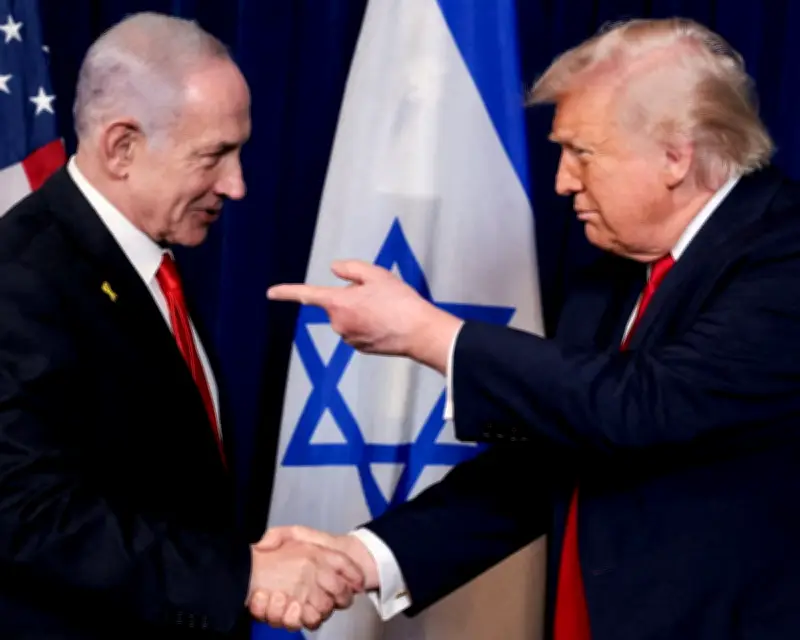
The alliance between Israeli Prime Minister Benjamin Netanyahu and former US President Donald Trump is dangerously escalating tensions with Iran, pushing the United States closer to a full-scale war in the Middle East, according to analysts and former officials.
Netanyahu's Push for US Military Action
Netanyahu has long advocated for a hardline approach to Iran's nuclear program, and with Trump's return to the White House, he sees an opportunity to pressure the US into military action. Trump's withdrawal from the Iran nuclear deal in 2018 and his subsequent 'maximum pressure' campaign have already heightened hostilities.
According to a recent report by the International Crisis Group, the risk of a US-Iran conflict has increased significantly since Trump's re-election. The report notes that Netanyahu's influence over Trump's Middle East policy is unprecedented, with the Israeli leader frequently briefing Trump on intelligence and advocating for strikes on Iranian facilities.

Trump's Willingness to Engage
Trump, who has a history of aggressive rhetoric toward Iran, has shown willingness to consider military options. In a recent interview, Trump stated, 'Iran cannot be allowed to have nuclear weapons, and if they don't negotiate, we may have no choice.' This echoes Netanyahu's own warnings.
Former US National Security Advisor John Bolton, who served under Trump, told the Guardian, 'The combination of Netanyahu's determination and Trump's impulsiveness is a recipe for disaster. They are both convinced that only military force can stop Iran, but they underestimate the consequences.'
Regional and Global Implications
A US war with Iran would have catastrophic consequences for the Middle East and beyond. Iran has threatened to close the Strait of Hormuz, a critical chokepoint for global oil supplies, which could trigger a worldwide economic crisis. Additionally, Iran's proxies in Lebanon, Syria, Yemen, and Iraq could launch attacks on US allies and interests.
European allies have expressed alarm. French President Emmanuel Macron warned, 'We cannot afford another war in the Middle East. The diplomatic path must be pursued.' However, Trump and Netanyahu have shown little interest in diplomacy, viewing negotiations with Iran as futile.
Domestic Opposition in the US
Within the US, opposition to a new war is growing. A recent poll by the Pew Research Center found that 62% of Americans oppose military action against Iran. Democratic leaders have called for congressional approval before any strikes, but Trump has argued that as commander-in-chief, he has the authority to act unilaterally.
Senator Bernie Sanders, a vocal critic, said, 'The American people are tired of endless wars. We cannot let Netanyahu drag us into another conflict that will cost thousands of lives and trillions of dollars.'
Conclusion: A Dangerous Path
The Netanyahu-Trump alliance represents a clear and present danger to peace in the Middle East. As both leaders push for confrontation, the world watches with bated breath. The coming months will determine whether diplomacy can prevail or if the region is headed for another devastating war.