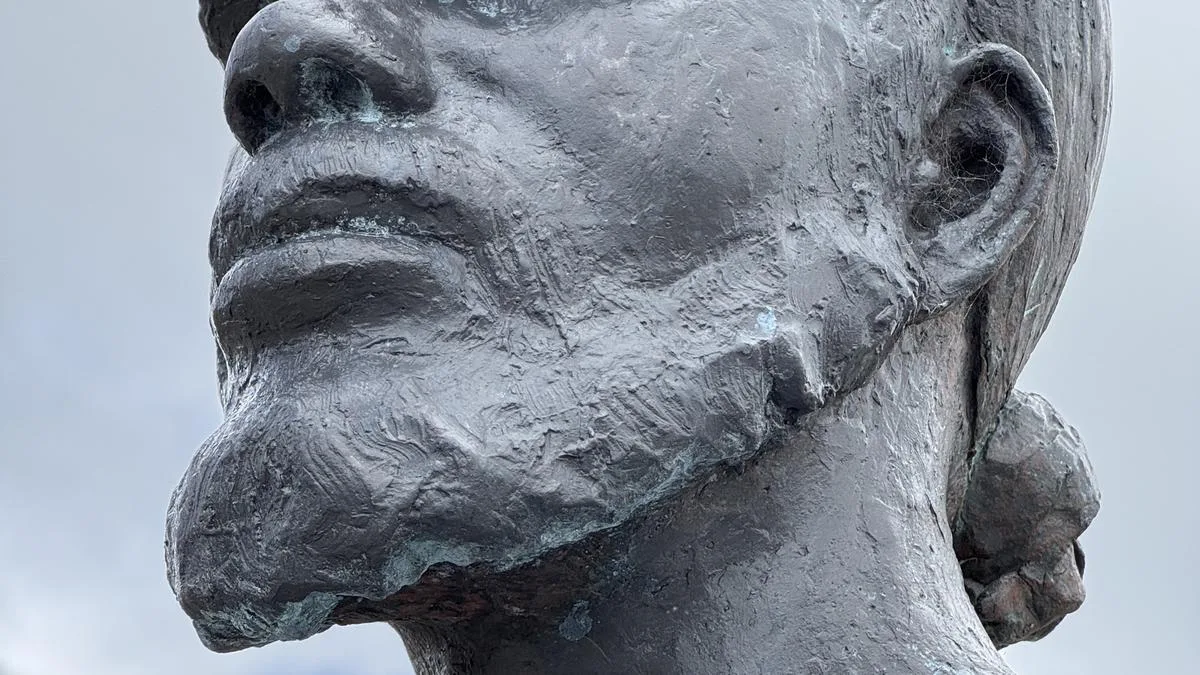
Menang leader Mokare was a diplomat and negotiator who shared his cultural knowledge with settlers who came to Albany. He was a very influential figure in the early days of Albany (Kinjarling) and such a close friend of the first Government Resident that they were buried together. Even before the British arrived in 1826, it is possible that Mokare had already interacted with the French who previously visited King George Sound. It seems likely he was the “helpful young man” described in French expedition documents.
Mokare showed optimism and amiability towards the settlers, a period referred to as “the friendly frontier”, despite previous mistreatment by whalers and sealers. After the arrival of the Amity, Mokare soothed relationships between the newcomers and his family and friends of the Noongar Menang people. He developed a real friendship with the first Government Resident, Dr Alexander Collie, a medical doctor and amateur botanist. Dr Collie wrote about Mokare and his brother Nakina as his “house guests”, and Mokare was the guide and interpreter on an expedition to the Porongorups in April 1831.
Information from Mokare and Nakina gave Dr Collie the basis for his essay The Aborigines Of King George Sound, published in the Perth Gazette in 1834. He wrote, “We certainly had come into their country and set ourselves down.” He also described Mokare’s illness and death, possibly from influenza. When Mokare was dying, Dr Collie nursed him in his home and helped bury him according to Aboriginal custom. Aboriginals and Europeans assembled at Dr Collie’s house and walked together to a site chosen by Nakina. Europeans dug a grave under Nakina’s instruction and Mokare was laid in it, with his cloak and some possessions.

When Dr Alexander Collie was dying in 1835, he asked to be buried alongside Mokare, who had died in 1831. The Town Hall was built on the burial site between 1886 and 1888, and Dr Collie’s remains were moved to the Memorial Park Cemetery. The fate of Mokare’s remains is unknown. A statue of him stands in Alison Hartman Gardens.
Other Menang leaders include Wandinyil, or King Tommy, who watched the relationship form between traditional owners and newcomers. He helped plant a Norfolk Island pine tree that still stands at Strawberry Hill (Barmup). Wandinyil valued his culture and had a camp on Mt Melville. He was imprisoned on Rottnest Island after questioning the actions of newcomers. He became a whaler but protested against the killing of whales in 1843, was arrested and sent again to Rottnest Island. He dropped the name Wandinyil in favour of “King Tommy of Albany”. In October 1890, he presented a petition to the Governor claiming Albany belonged to his tribe and had been taken by agents of the British Crown, more than 100 years before Mabo land rights.
The Menang people were worldly, having seen people come and go before, and lived with those who stayed. For 200 years, the community of Albany has lived with diversity.