Subpoena Targets Reporter's Communications
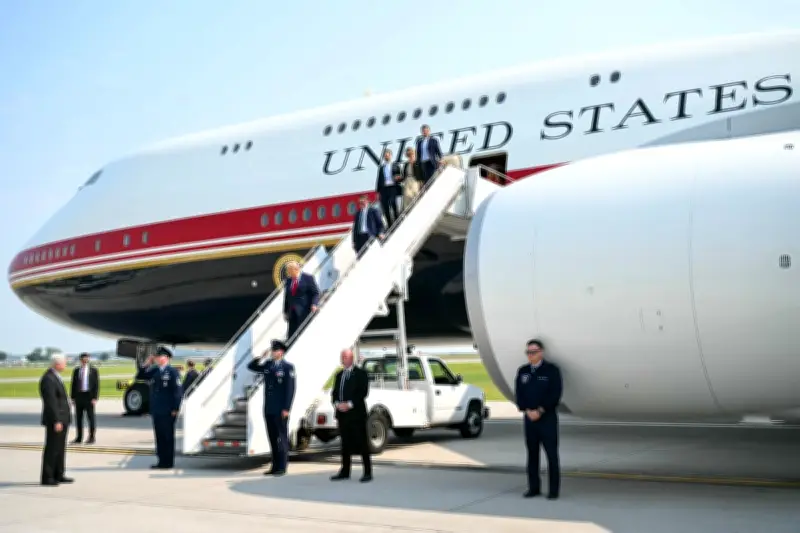
The United States Department of Justice has issued a subpoena to the New York Times seeking information about the sources for a 2019 article concerning Air Force One, the official presidential aircraft. The subpoena, disclosed by the newspaper on Friday, demands records of communications involving reporter Annie Karni, who co-authored the piece. The article detailed how President Donald Trump and his aides used the iconic plane as a backdrop for political activities, including campaign-style events.
Details of the Subpoena
The subpoena, issued by a federal grand jury in Washington, D.C., specifically requests email and phone records related to Karni's reporting. It also seeks any documents or communications between Karni and individuals within the White House or the Trump campaign. The Justice Department is investigating possible violations of the Hatch Act, which prohibits federal employees from engaging in partisan political activity while on duty. The 2019 article included descriptions of Trump's political rallies held at military bases and aboard Air Force One, raising questions about the use of government resources for political gain.
Reaction from the New York Times
The New York Times has vowed to fight the subpoena, calling it an unprecedented intrusion into press freedom. In a statement, the newspaper's deputy general counsel, David McCraw, said, "We are deeply concerned by this action, which appears to be an attempt to uncover the confidential sources who helped us report on matters of significant public interest." McCraw added that the Times would seek to quash the subpoena in court. The Reporters Committee for Freedom of the Press also condemned the move, warning that it could have a chilling effect on investigative journalism.

Context of the Investigation
The subpoena is part of a broader inquiry by the Justice Department into potential Hatch Act violations by Trump administration officials. In 2019, the Office of Special Counsel, an independent federal agency, found that then-White House counselor Kellyanne Conway had violated the Hatch Act multiple times by making political statements in her official capacity. The current investigation appears to focus on whether other officials similarly used official resources for political purposes. The Air Force One article highlighted instances where the president's travel and the aircraft itself were used for campaign-style events, blurring the line between official duties and political activities.
Escalating Tensions Between Trump and Media
This subpoena marks another escalation in the Trump administration's contentious relationship with the media. President Trump has frequently labeled the press as "the enemy of the people" and has called for stricter scrutiny of news organizations. The Justice Department's action comes amid a broader pattern of aggressive legal tactics against journalists, including the seizure of phone records and email metadata in leak investigations. Critics argue that such measures undermine the First Amendment protections for press freedom. The subpoena also follows a recent executive order aimed at limiting social media companies' liability protections, which many see as an attack on free speech.
Legal and Political Implications
Legal experts say the subpoena could set a dangerous precedent if allowed to stand. "Compelling a journalist to reveal sources is a serious step that should only be taken in the most extraordinary circumstances," said Jameel Jaffer, executive director of the Knight First Amendment Institute at Columbia University. "This case does not appear to meet that high bar." The investigation into Hatch Act violations, while important, does not typically involve subpoenas directed at the press. The move has also drawn criticism from Democratic lawmakers, who accuse the administration of using the Justice Department to target political adversaries. Senate Minority Leader Chuck Schumer called the subpoena "a blatant abuse of power" and urged the department to withdraw it immediately.

What Happens Next
The New York Times is expected to file a motion to quash the subpoena, arguing that it infringes on the rights guaranteed by the First Amendment. The case will likely be heard in federal court, where judges have historically been protective of journalists' ability to keep their sources confidential. However, courts have also recognized that the government's interest in certain investigations can outweigh that protection. The outcome of this legal battle could have far-reaching implications for the relationship between the press and the government, particularly in an era of heightened political polarization.