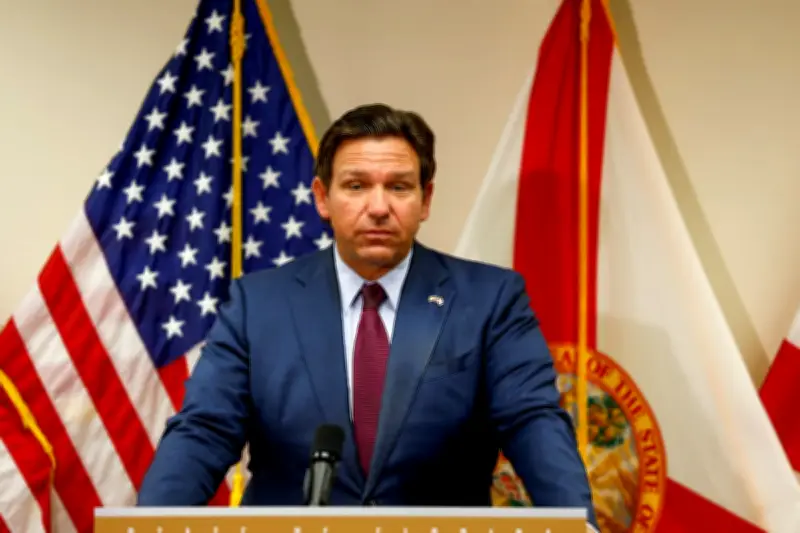
A federal appeals court is set to hear arguments over Florida's controversial Stop Woke Act, a law championed by Governor Ron DeSantis that restricts certain race-based discussions in workplaces and educational settings. The law, formally titled the Individual Freedom Act, was blocked by a lower court last year, which found it likely violated the First Amendment.
Background of the Stop Woke Act
Signed into law in April 2022, the Stop Woke Act prohibits workplace training and classroom instruction that suggests individuals are inherently racist or sexist based on their race or gender, or that they bear responsibility for past actions by others of the same race. The law also bars teaching that a person's moral character is determined by their race or sex. Governor DeSantis argued that the law protects Floridians from compelled speech and divisive concepts.
Legal challenges and lower court ruling
Several businesses and advocacy groups, including the ACLU of Florida and the NAACP, sued to block the law, arguing it violates free speech rights. In November 2022, U.S. District Judge Mark Walker issued a preliminary injunction, ruling that the law is likely unconstitutional because it suppresses speech based on viewpoint. Judge Walker wrote that the law 'chills speech' and 'is a classic example of viewpoint discrimination.' The state appealed, leading to the 11th U.S. Circuit Court of Appeals hearing.

Arguments before the appeals court
During oral arguments on Wednesday, lawyers for the state argued that the law is necessary to prevent discrimination and harassment in workplaces and schools. They contended that the law only restricts compelled speech, not voluntary discussions. However, attorneys for the plaintiffs countered that the law is overly broad and stifles academic freedom and open dialogue. Judge Charles Wilson questioned whether the law could be applied to university classrooms without violating academic freedom.
According to the ACLU of Florida, the law 'targets speech based on its viewpoint, which the First Amendment forbids.' The organization emphasized that the law would have a chilling effect on discussions about racism and inequality.
Impact and next steps
The 11th Circuit's decision could have far-reaching implications for similar laws being considered in other states. At least a dozen states have introduced or passed legislation restricting how race and gender can be discussed in schools and workplaces. The court is expected to issue a ruling in the coming months. If the law is upheld, it could set a precedent for other conservative states seeking to limit critical race theory and diversity training.