The Albanese government is facing calls to detail its plan for phasing out fossil fuels after Australia signed the Belém declaration at the COP30 climate summit in Belém, Brazil. The declaration, led by Colombia, commits signatories to a “just, orderly and equitable” transition away from coal, oil and gas to limit global heating to 1.5°C. Climate activists hailed it as the strongest statement on reducing fossil fuel use ever backed by an Australian government.
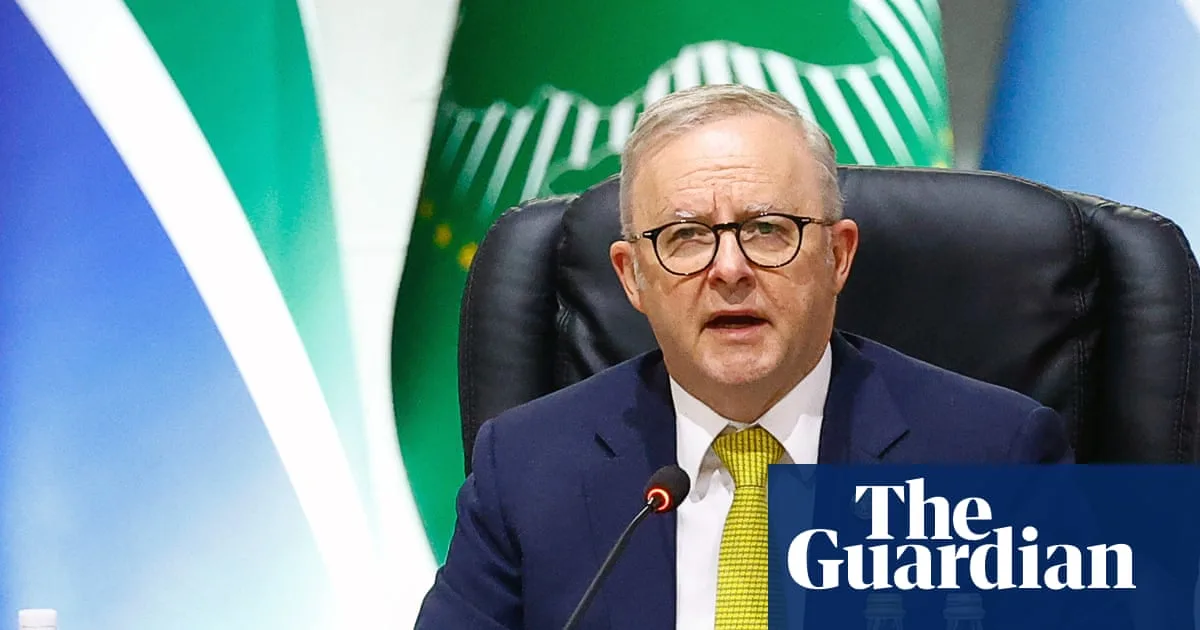
However, Prime Minister Anthony Albanese immediately raised doubts about the government's commitment. Speaking at a G20 meeting in South Africa, he rejected suggestions that Labor should not develop new gas fields, citing the Narrabri gas project in New South Wales. He argued that renewables are the cheapest form of new energy but require gas, batteries and hydro as backup, without addressing Australia's role as a major fossil fuel exporter.
The declaration explicitly states that emissions from continuing fossil fuel production, licensing and subsidies are “incompatible” with the 1.5°C goal and calls for phasing out inefficient fossil fuel subsidies. Greenpeace Australia Pacific chief executive David Ritter said the declaration means a “critical mass of nations” acknowledges that limiting heating to 1.5°C requires “no new fossil fuels”. He urged the government to “match its words with actions” and commit to a clear timeline for phasing out fossil fuels, including exports.

COP30 ended with a fragile agreement after conflict between countries seeking stronger action and oil-producing nations like Saudi Arabia and Russia. The transition away from fossil fuels was referenced as a voluntary commitment, not binding. The push to phase out fossil fuels is expected to grow, with Colombia and the Netherlands co-hosting the first international conference on a just transition in April.
Observers called on Climate Change Minister Chris Bowen to attend that conference, given Australia's support for the declaration and his new role as president of negotiations at next year's COP31 in Turkey. Under a compromise deal, Bowen will have “exclusive authority in relation to the negotiations”, but any differences with Turkey will be resolved through consultation.