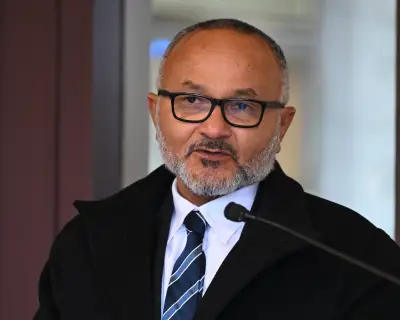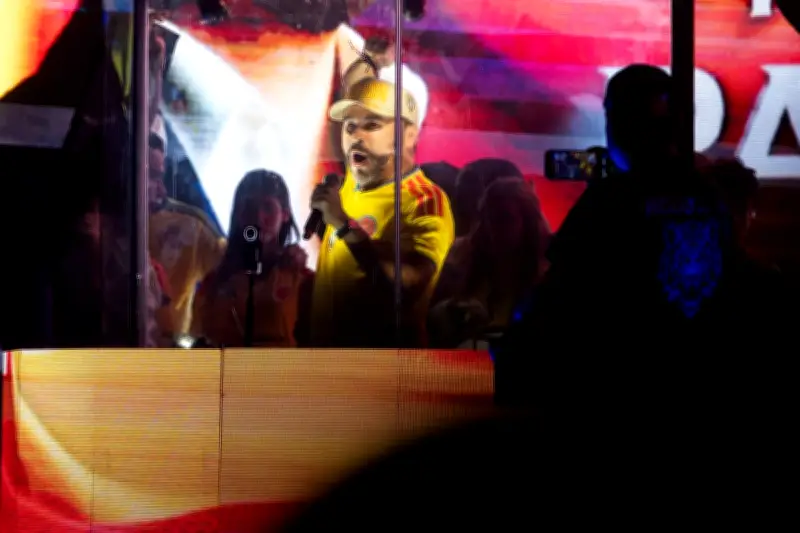
Abelardo de la Espriella, the far-right lawyer leading polls ahead of Colombia's presidential runoff election, has built a brand around his rum, wine, and menswear lines, as well as his novels and music albums. But his recent shift from business suits to T-shirts, baseball caps, and a trimmed beard reflects the influence of El Salvador's populist autocrat, Nayib Bukele.
The similarities extend beyond appearance. Like many far-right Latin American leaders, De la Espriella has vowed to adopt Bukele's "mano dura" (iron fist) approach to crime. Bukele has imprisoned at least 2% of El Salvador's adult population in a controversial gang crackdown. De la Espriella promises to end Colombia's decades-long armed conflict in 90 days by building private "mega-prisons" and eliminating criminals "like cockroaches and rats."
On 21 June, De la Espriella will face leftwing Senator Iván Cepeda in the runoff. Backed by President Gustavo Petro, Cepeda advocates continuing the "total peace" plan of negotiating with criminal groups, which has so far failed to curb rising violence.

De la Espriella, a criminal lawyer with a lavish lifestyle, has never held public office. He gives military salutes despite never serving in the armed forces and has filed over 100 lawsuits against journalists. Analysts see his lead as part of a wave of far-right admirers of Bukele and Donald Trump winning elections across Latin America.
While comparisons to Bukele are most obvious, De la Espriella has borrowed from other neighbors. Following Trump, who gave him a "complete and total endorsement," he speaks behind bulletproof glass and promises to sink suspected drug trafficking vessels. Echoing Argentina's Javier Milei, he pledges "chainsaw" austerity cuts (except to military spending). Copying Ecuador's Daniel Noboa, he plans states of emergency to fight gangs. Inspired by Brazil's Bolsonaro family, he has turned Colombia's national football shirt into a far-right symbol.
Tiziano Breda, a senior analyst at ACLED, says De la Espriella has modeled himself on Bukele. "He wants to be a Bukele," Breda said, but notes that unlike Bukele, who controls his congress, De la Espriella's party holds only four of 108 senate seats and one of 188 lower house seats. "He would not have the legislative majority that allowed Bukele to dismantle the rule of law."
Breda warns that De la Espriella's election could risk Colombian democracy, given his disregard for checks and balances and human rights. "Security operations could become more lethal, with little impact on armed groups but serious consequences for civilians," he said.
Breda attributes De la Espriella's lead to an "anti-incumbent wave" rather than a far-right surge, along with dissatisfaction with political parties and US pressure for ideological alignment. Colombia is one of the few Latin American countries still governed by the left, alongside Mexico, Uruguay, and Brazil. Peru holds its runoff on Sunday between far-right Keiko Fujimori and leftwing Roberto Sánchez. Brazil's October election will see incumbent Luiz Inácio Lula da Silva face far-right Senator Flávio Bolsonaro.
De la Espriella has secured endorsements from third-place candidate Paloma Valencia and Trump. Meanwhile, Cepeda's campaign has amplified Petro's debunked allegations of electoral fraud and criticized De la Espriella's use of the national football shirt. Political analyst Gabriel Cifuentes says Petro is "doing considerable damage to Cepeda" by acting as his campaign chief, violating electoral law. "Cepeda's campaign has not distanced itself from Petro, alienating centrist sectors that see his interventions as authoritarian."