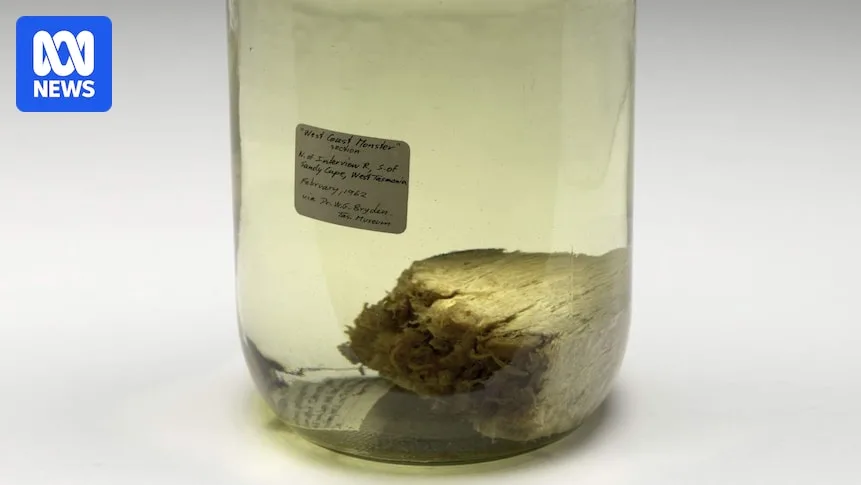
In 1962, global media erupted over a bizarre discovery on a remote Tasmanian beach: a massive, decomposing chunk of an unknown creature, dubbed the Tasmanian or West Coast Sea Monster. The find sparked international speculation, prompting the CSIRO to reluctantly dispatch a scientific team to investigate.
According to National Archives of Australia records, stockmen who found the foul-smelling object in June 1960 described it as 'shapeless and fibrous and furry,' measuring about six metres long and weighing up to 10 tonnes. One likened its wool to a six-month clip from a border Leicester sheep.
When researchers—including CSIRO scientists, University of Tasmania zoologists, and the Tasmanian Museum director—arrived two years later, little remained. Samples were sent to labs in Australia and overseas for testing, eventually identified as whale blubber that had fallen from a whaling ship.

The NAA file contains letters from a Moscow headmistress, US schoolchildren, and wild theories, including an irradiated Japanese fish or sea dragons from Norse mythology. The CSIRO politely declined to investigate ancient myths.
A telegram in the file, described as 'droll bureaucratic humour,' read: 'Blubber sealed in cans dispatched today. No preservative added. Open outside building.' The last document is a museum letter urging the CSIRO to reopen the case due to public skepticism, but the agency stood by its 1962 conclusion.