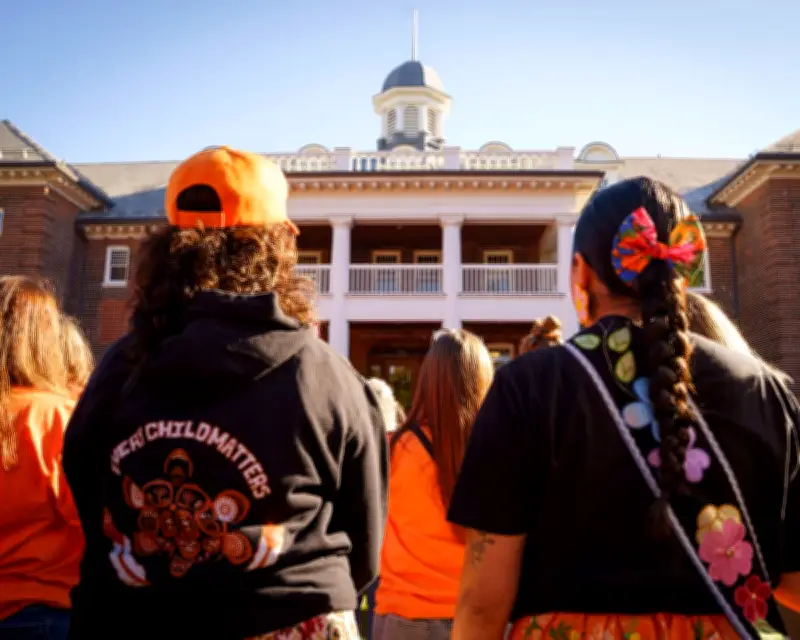
Survivors of Canada's residential schools are transforming former sites of trauma into spaces of healing and cultural reclamation. For decades, these institutions forcibly separated Indigenous children from their families, erasing languages and cultures. Now, survivors and their communities are reclaiming these grounds, turning them into centers for language revitalization, cultural ceremonies, and intergenerational healing.
A Long-Awaited Reclamation
In a powerful act of resilience, Indigenous communities across Canada are taking back former residential school sites. The Kamloops Indian Residential School in British Columbia, where the remains of 215 children were found in 2021, is now a site for community gatherings and healing walks. Survivor Mary Jack, 78, told the Guardian: 'I can still hear the children. But now we are bringing them home. This land will no longer be a place of pain but a place where we heal.' According to the National Centre for Truth and Reconciliation, over 150,000 Indigenous children attended these schools, with thousands never returning home.
Transforming Trauma into Hope
The reclamation process involves more than physical ownership. Communities are hosting cultural camps, language classes, and traditional ceremonies on these grounds. At the former Blue Quills Residential School in Alberta, now the University nuhelot'įne thaiyots'į nistameyimâkanak Blue Quills, Indigenous students learn in their ancestral languages. The site has become a beacon of educational sovereignty. 'We are reclaiming our identities,' said Elder Wilson Bearhead, 72, a survivor who now teaches there. 'This school once tried to kill our spirit, but we have brought it back to life.'

Government and Community Partnerships
Federal funding has supported some of these initiatives. In 2022, the Canadian government allocated $2.8 billion for Indigenous-led healing programs, including site reclamations. However, many communities say more support is needed. The legacy of the schools persists: Indigenous children were disproportionately removed from their families, and intergenerational trauma affects mental health, substance abuse, and family violence. According to the 2023 Canadian census, Indigenous youth are four times more likely to die by suicide than non-Indigenous youth. Reclaiming these sites is seen as a critical step toward reversing these trends.
Challenges and Controversies
Not all reclamation efforts have been smooth. Some sites remain under church or government ownership, requiring lengthy negotiations. The Mohawk Institute in Brantford, Ontario, now a museum, faced debates over whether to preserve the building's history or demolish it. Survivor groups have argued that maintaining the structures can serve as a reminder of past atrocities, while others prefer to erase them entirely. 'We need to decide what we want these places to mean for our grandchildren,' said Chief Roberta Jamieson, a survivor advocate. 'It's not easy, but it's our decision.'
Healing Through Cultural Revitalization
At the former St. Anne's Residential School in Fort Albany, Ontario, the community has built a healing lodge where elders lead traditional ceremonies. Sweat lodges, feasts, and storytelling circles now occupy the grounds where children once endured abuse. 'This is where we reclaim our power,' said healer and survivor Joseph Snake, 65. 'We are not victims; we are warriors of healing.' The lodge has become a model for other communities, with over 30 similar sites across Canada.
Intergenerational Impact
Young Indigenous people are at the forefront of these efforts. Many are descendants of survivors who are learning their ancestral languages and traditions for the first time. At the former Gordon's Indian Residential School in Saskatchewan, youth-led groups have planted a medicine garden and host annual powwows. 'We are breaking the cycle of trauma,' said 22-year-old activist Tanya Bird. 'Our ancestors survived so we could thrive. Now we are reclaiming these spaces for our future.'

Looking Forward
The reclamation of residential school sites is part of a broader movement toward Indigenous sovereignty and reconciliation. While the wounds of the past remain, survivors and their communities are turning these landscapes of pain into places of hope. As Mary Jack put it: 'We cannot change what happened, but we can change what happens next. These lands will heal us.'